Our journey from Oslo to Malmo, Sweden was welcome as we would travel by train instead of forced to by bus.
Part of the way we chatted in our shared train car table with an elderly retired Norwegian gentleman. He was travelling to a small town to work on his sailboat. He had been a small farmer or a bonde, growing wheat, barley, rye and other basic crops. It was interesting to meet an older Norwegian as it gave a pretty good picture of what contemporary life was like Norway in the later half of the 20th century. This gentleman had given his eldest son the farm to run and lived on a decent pension due in large part to Norwegian oil wealth to be able to afford such amenities such as a boat and a cabin near the fjords.
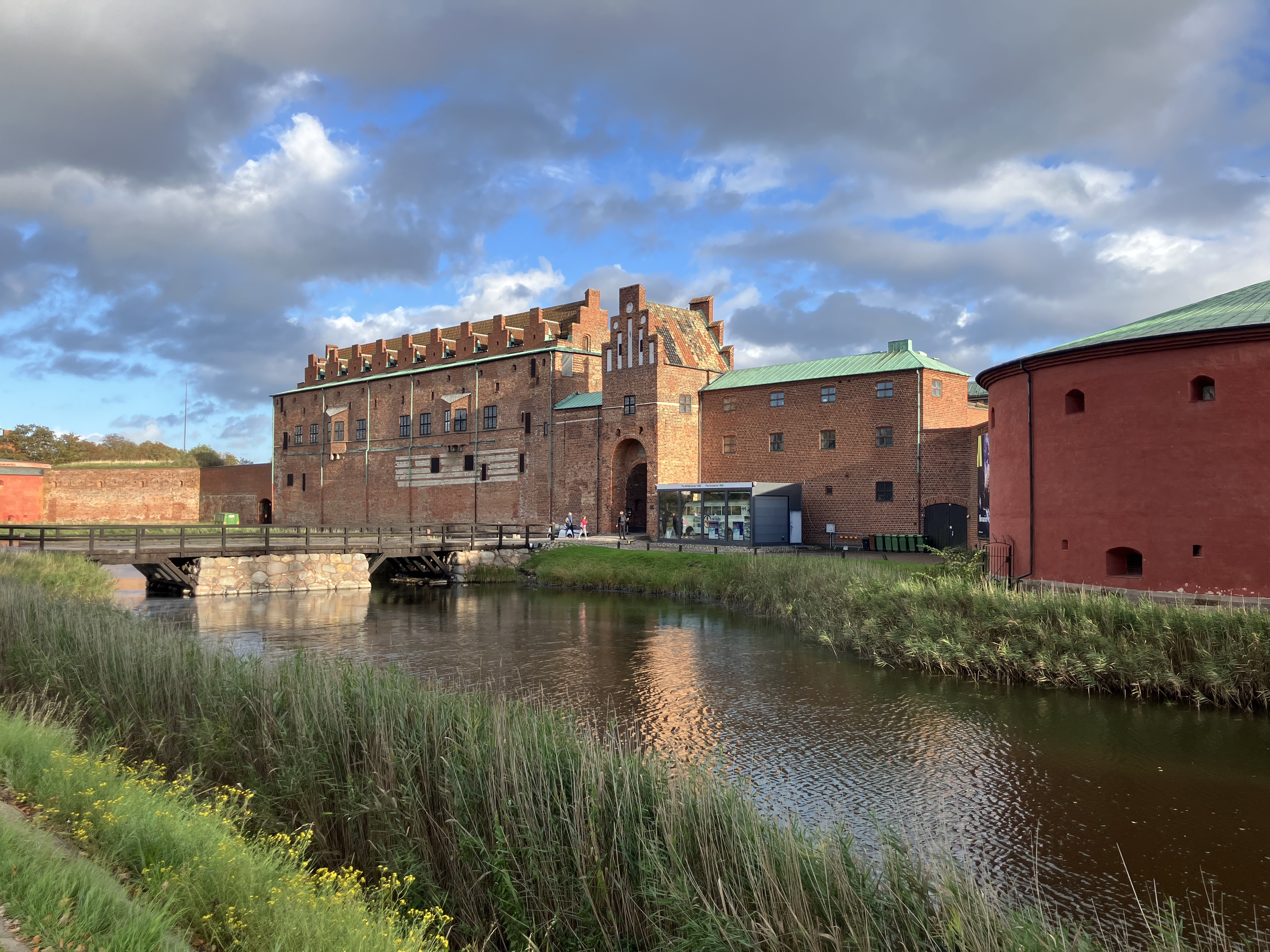
Malmo was where our hotel would be for the next three days. Its close proximity to Copenhagen with a 20-minute or so train across the Øresund bridge made it relatively easy and more affordable to go between countries, though it also made one of my goals difficult to achieve. I had hoped to meet up with a running group in each country, but so far as of 9/23/2026, I have only managed to find a Stockholm running group and probably won’t locate another until Berlin, as my search in Hamburg revealed nothing.
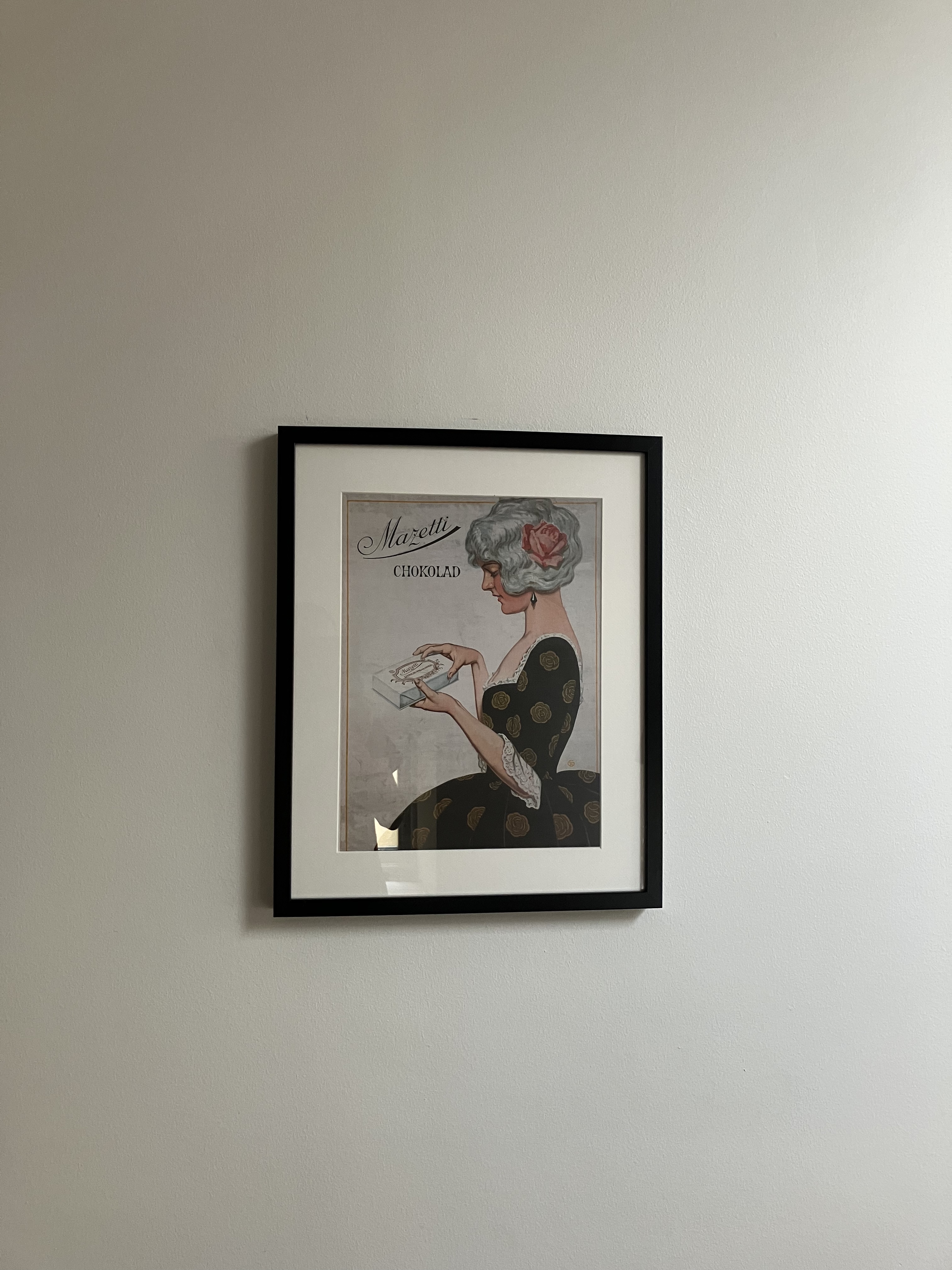
Our hotel in Malmo was unique. Like many converted industrial buildings in Europe, this hotel used to be a chocolate factory. There were several chocolate product souvenirs and the artwork consisted of advertisements from when the factory was open. The hotel was also much nicer than our hotel or VRBO considering the separate rooms between me and my parents. The kitchen also was amazingly compact as we didn’t learn, for example, until the last day that there was a dishwasher underneath the stovetop.
Malmo is a delightfully small town with a similar youthful, college student vibe, as it is only a few kilometers south of the Lund college. My parents explored Lund for my mother’s research on her mother, which I slightly regret missing. They will write their own entry for that part of their journey for this blog later after they return to the US starting today, September 24, 2026.
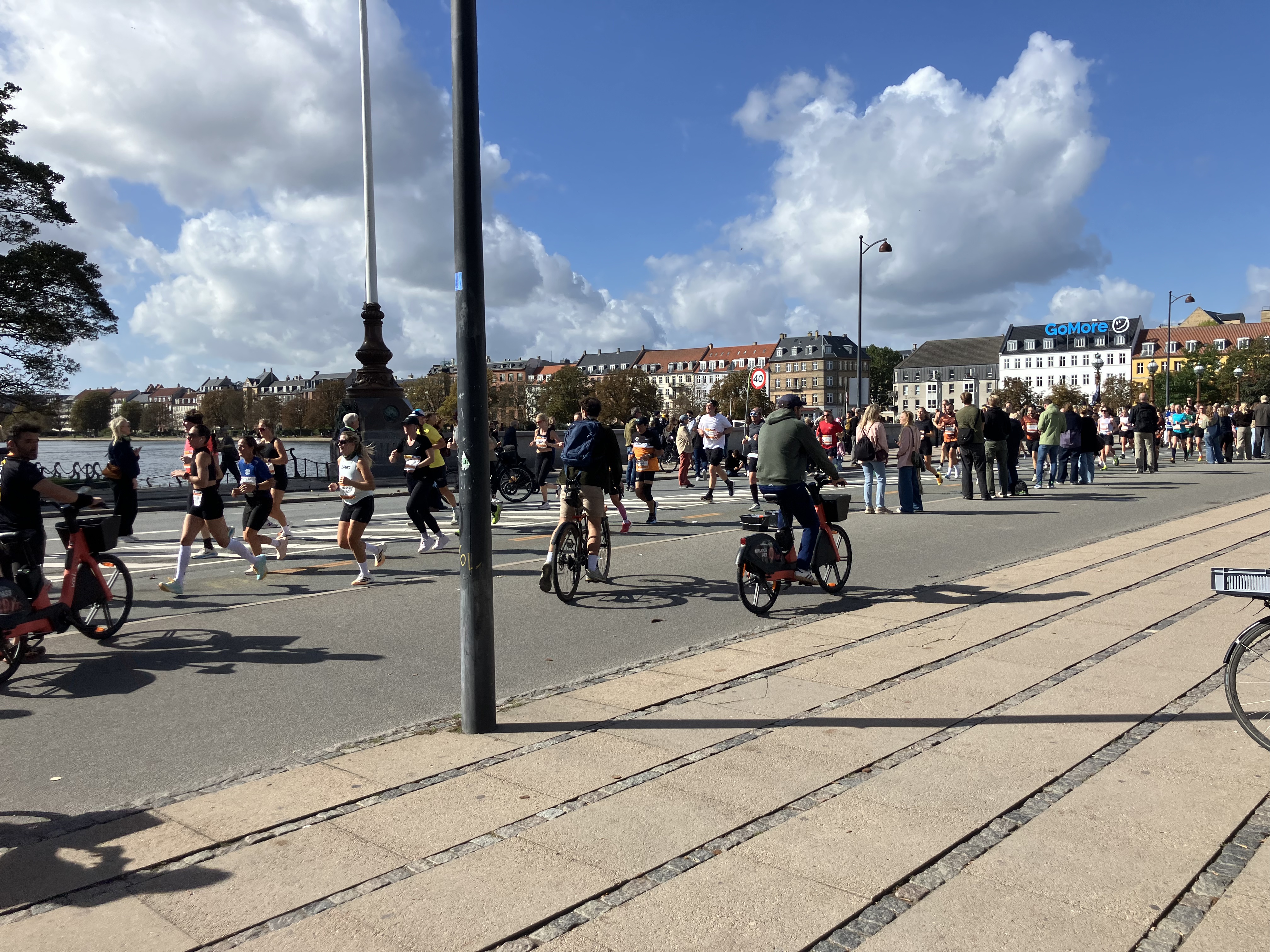
We all decided we all needed a break from each other, so I decided to explore Copenhagen solo. I particularly wanted to witness the Copenhagen marathon which I gathered was happened this day, Monday, September 21, after seeing some Swedish runners with bibs and running clothes at the hotel and the transit station. I asked some runners the neighborhood or location it took place and took the transit, to which they answered Øster Allé. This was even was even larger than Oslo’s, evidenced by the size of the start and finish location, Fælledparken, a park where tens of thousands had congregated. While I appreciate the chance to witness not one, but two marathons, I admit it is not ideal to walk around the city when one has to cross specific roads to enter transit areas. Like in Oslo, there were hardly any gaps between runners at any time on the designated roads set for runners and hundreds of thousands if not near a million onlookers filled the cities. I’m particularly glad I did not convince my parents to join as this would have been chaotic for their general health.
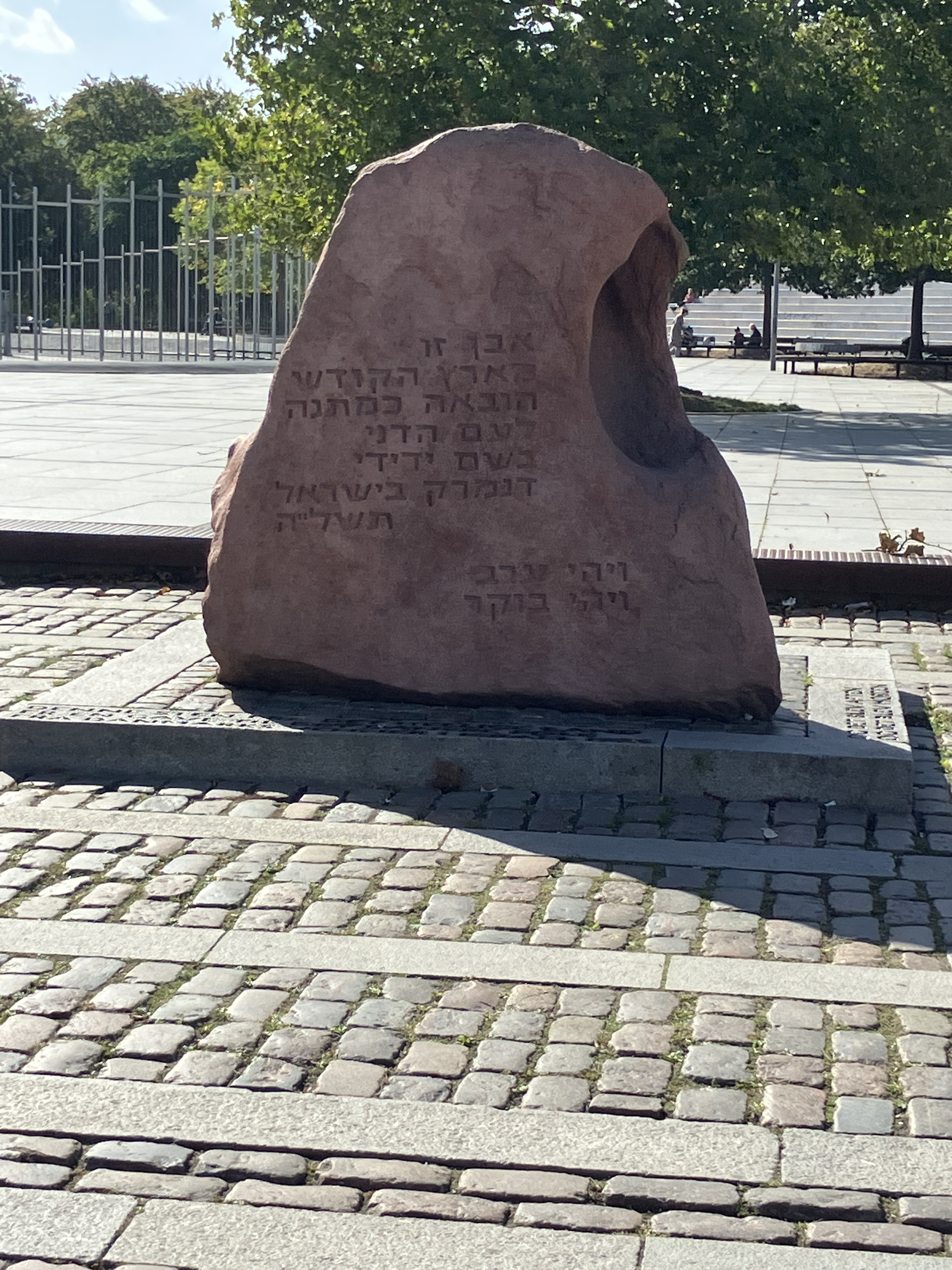
I eventually found a nice place for a lunch in Isreal Plads, a large tented market with about two dozen restaurants for consumers to take their lunch out on the several benches near the famous Copenhagen waterfront canals. I ordered an overpriced pita to eat a bench near the Gratitude monument near the waterfront where a memorial stone written in Hebrew for those in the Copenhagen underground railroad that helped jews escape to Sweden during or before the German occupation.
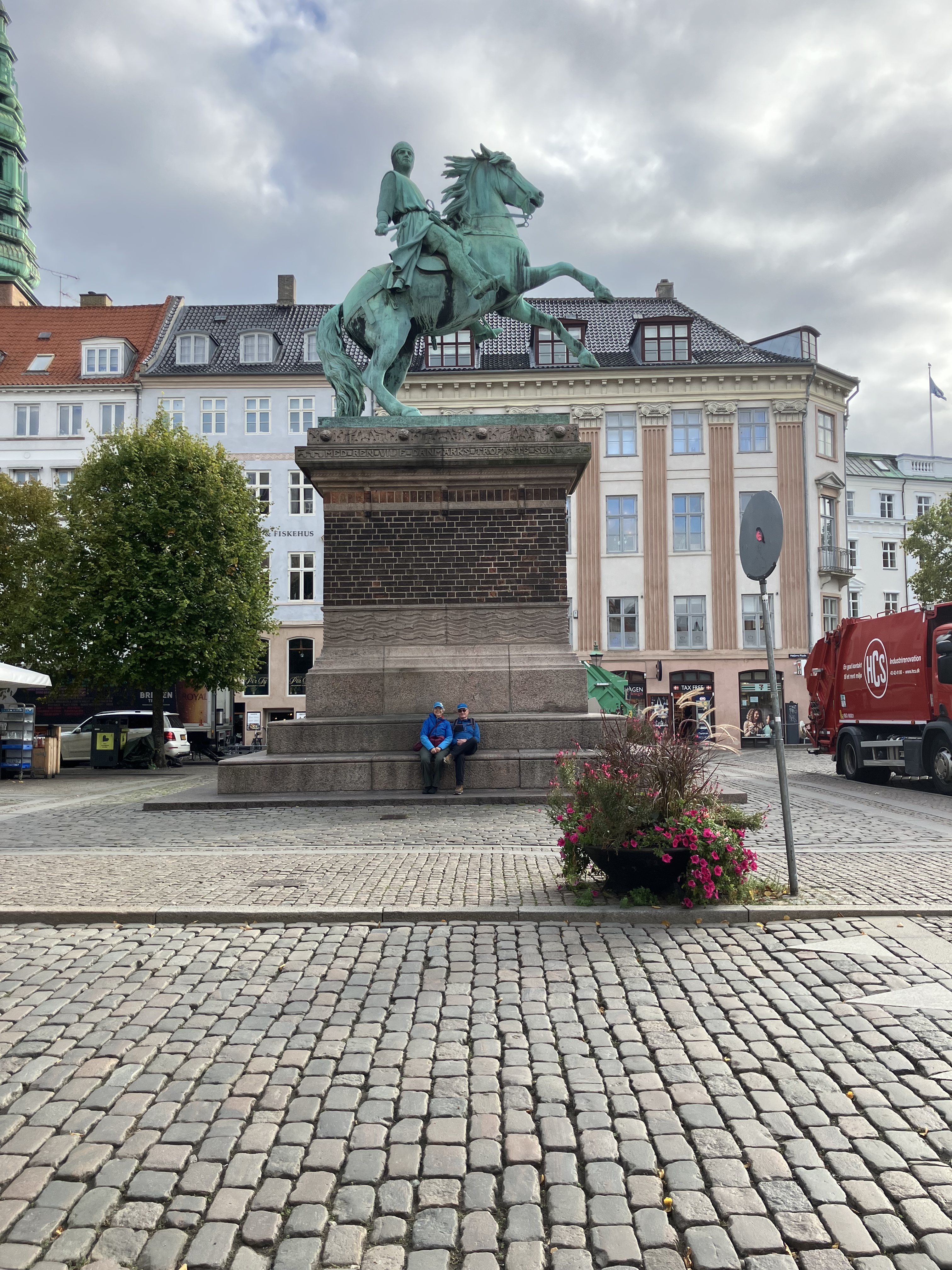
Walking around the canals and converted old architecture is not unlike the streets of Stockholm or to a lesser extent Oslo, except that Copenhagen is larger and older, so naturally there’s a grandiose nature of its comparable landmarks including the Parliament, the Royal Palace, and the City Hall, which we would explore on the next few days.
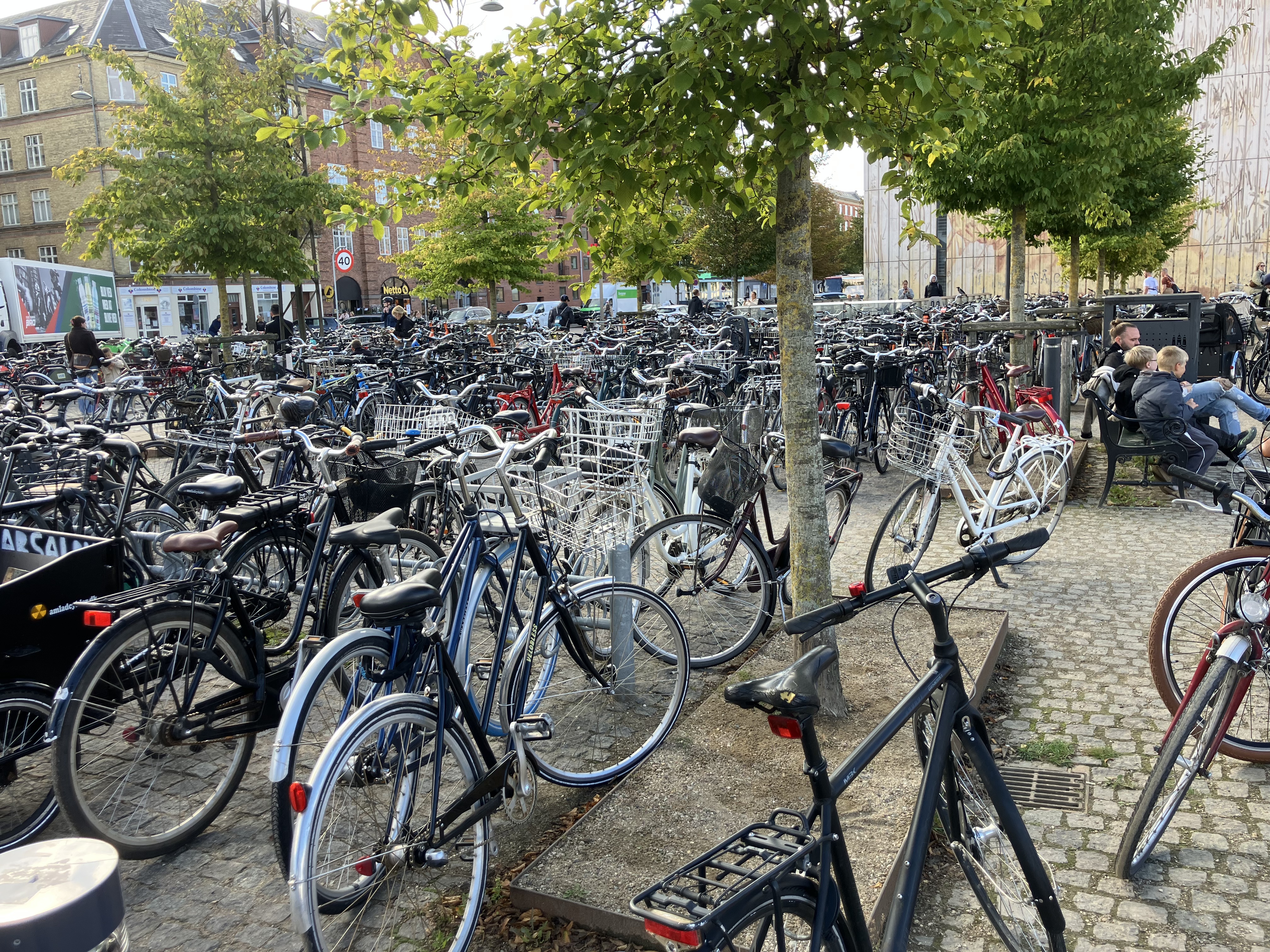
It is hard not to describe Copenhagen without talking about the abundance of bicycles which are locked or available for rent on most if not all city blocks in Downtown Copenhagen. I debated whether to rent a bicycle, but I found that downloading an app for the brand of rental bicycle proved too long with my network.
Navigating the city metro or subway system is not difficult with some practice. There are trains which stop at most of the major Copenhagen attractions. Venturing back to Malmo, I learned a little about my parents’ experience in Lund, which I was glad to hear it sounded like a smaller, less congested crowd.
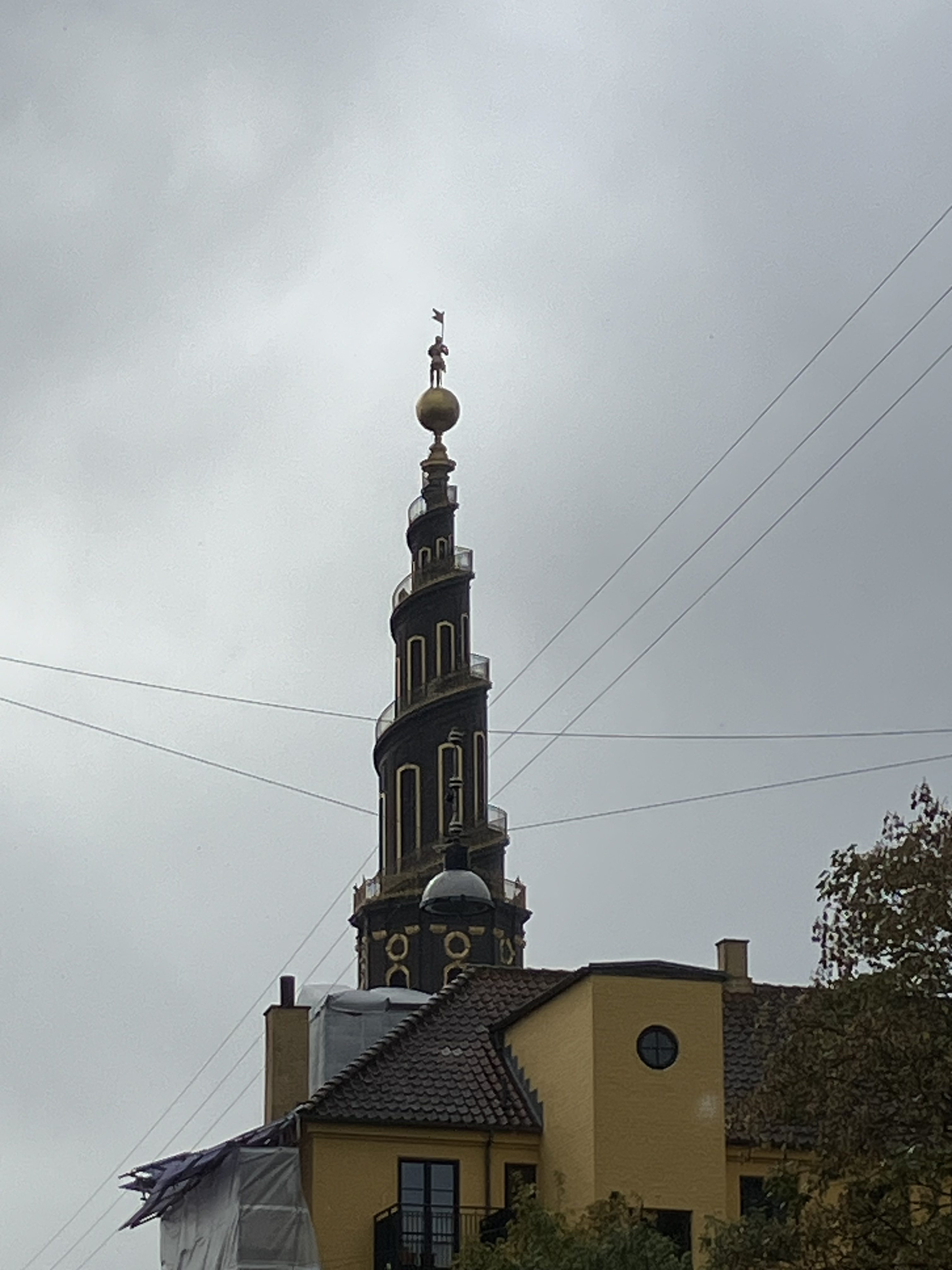
On the recommendation of one of my friends, I decided to explore Freetown or Christiania, a pseudo-anarchist neighborhood where the vibe of counterculture is celebrated. Located near the also famous Church Of Our Savior Cathedral (pictured above), which like several buildings, was under construction, the graffiti leads one to an exit from contemporary Copenhagen life. It reminded me of certain sections of Eugene and Portland, Oregon or perhaps Olympia, Washington. Hemp and cannabis shops, second-hand clothing stores, and even a shop which showcases Christiania’s soccer team attract tourists.
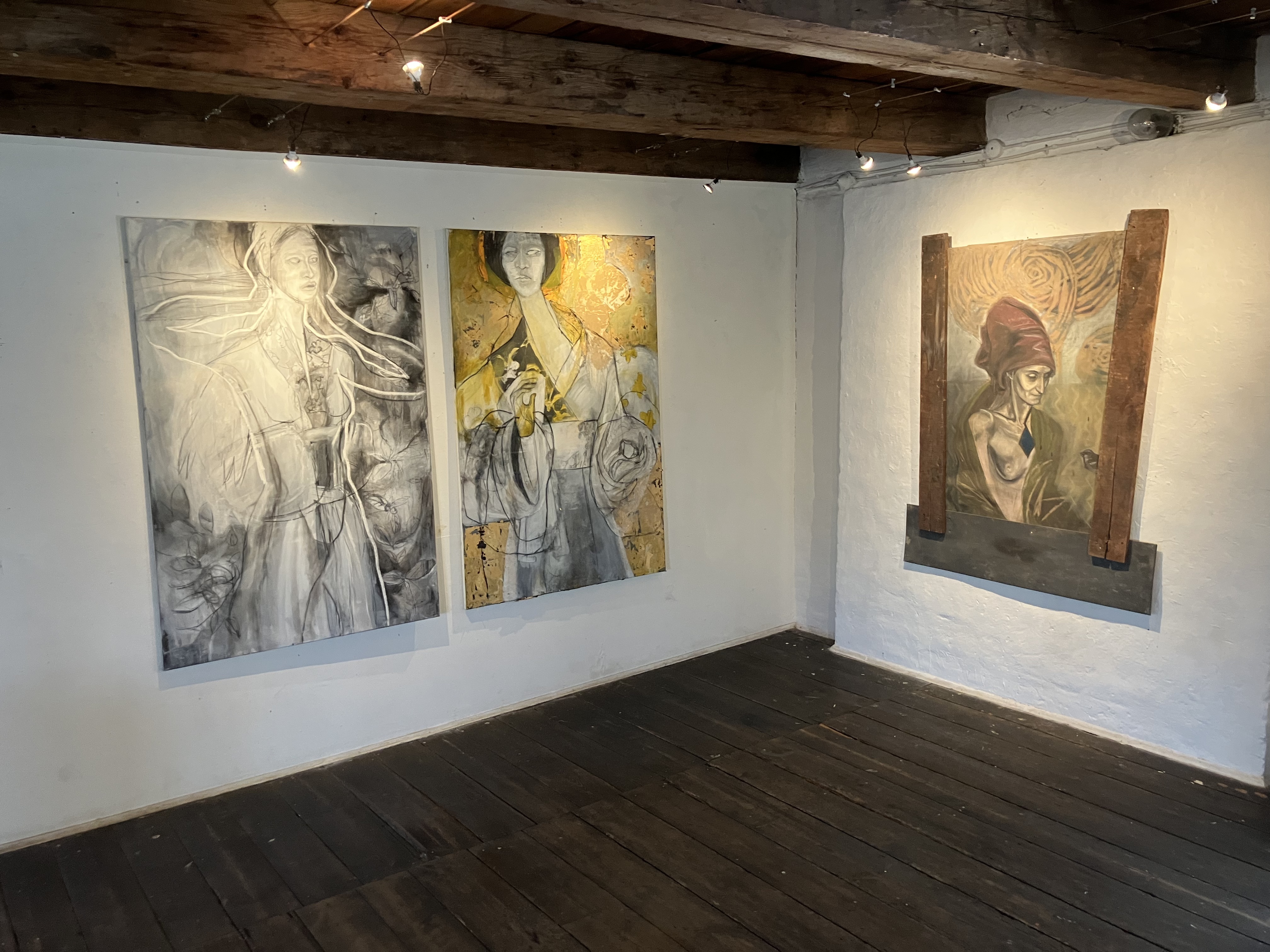
Upon first entering Christiania, I went into their free museum (pictured above), where you climb some stairs through some corridors all covered in Graffiti, reminding one of entering more of a hole-in-the-wall nightclub than a museum. There are self-published zines, folk art, and a variety of other art throughout the small museum monitored by a shy and/or bored skinny young adult I asked if I could take photos, which she affirmed. I asked specifically as I had read that taking photos was discouraged, and perhaps the locals of this community considered it taboo. I can imagine why, as this place had, like many alternative communities, eventually attracted commercialism and tourism, probably to the annoyance of some of the residents I encountered in the couple of houses near the river. It reminded me of an off-the-grid community on the swampy outskirts of Olympia, Washington where residents could be either inviting and warm or conservative and wary of outsiders like me.
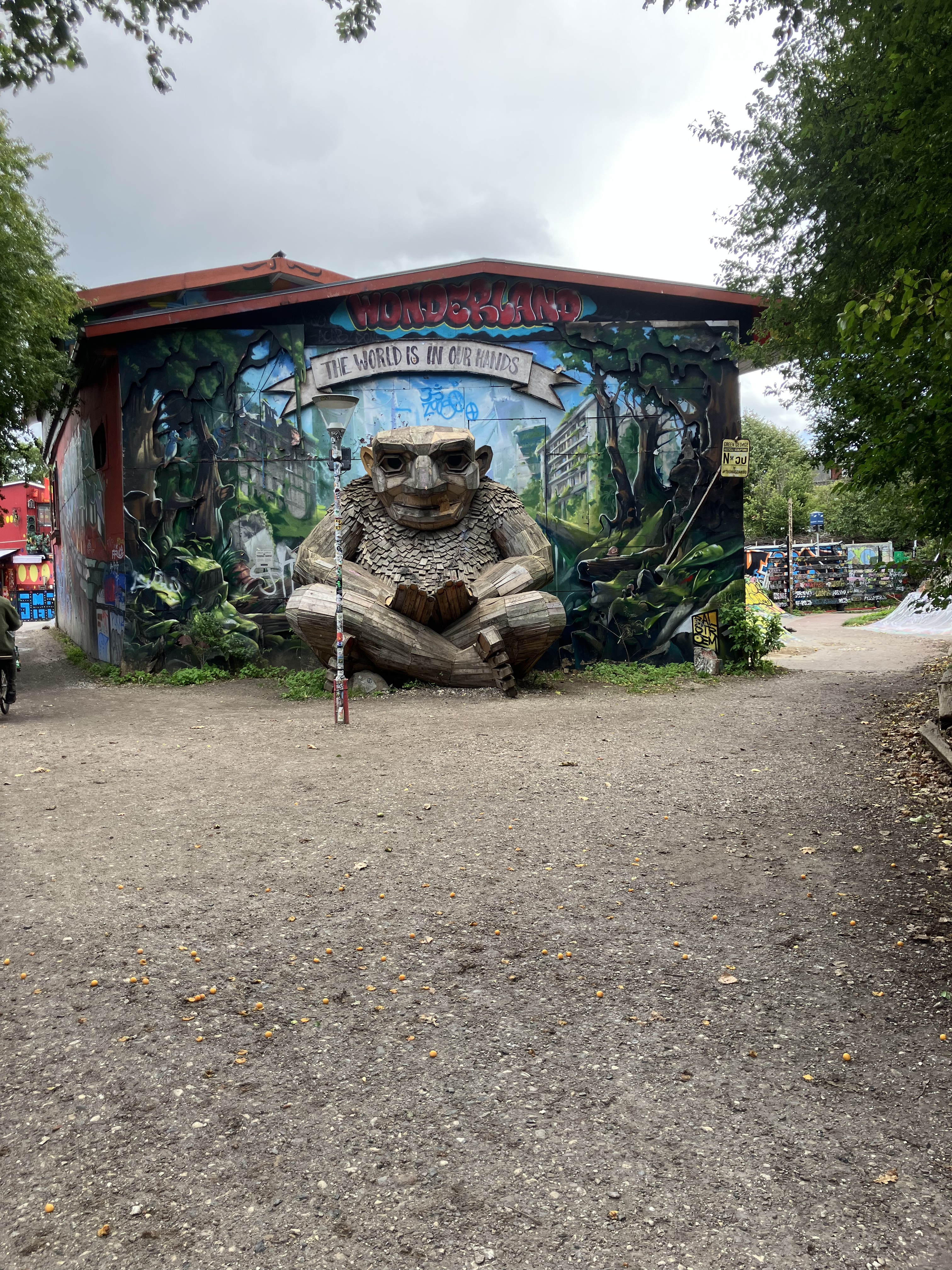
Like a lot of unique communities, this one has a symbol, which is this troll, called Green George (pictured above). Originally, I thought this troll was drawn as more graffiti, but it is a three-dimensional representation of the beast originating from Norse myth. From one of my academic advisors who married a Scandinavian – I can’t remember which country – troll statutes with this ascetic can be found throughout the forests of Scandinavia, reminding me of various places in the United States and Canada that have claimed to have seen Sasquatch.
Due to the inflation of Denmark relative to Sweden, we tended to eat from Malmo’s restaurants and grocery stores for the rest of the journey with the exception being our last afternoon in Copenhagen on the 23rd of September. We reserved breakfast at the hotel each day in Malmo/Copenhagen, which had much better selection than even some of the ritzier hotels in the U.S., especially with the selection of bread and cheeses. This proved useful for preparing lunch too, as we would routinely create our sandwiches to bag using the breakfast buffet’s resources.
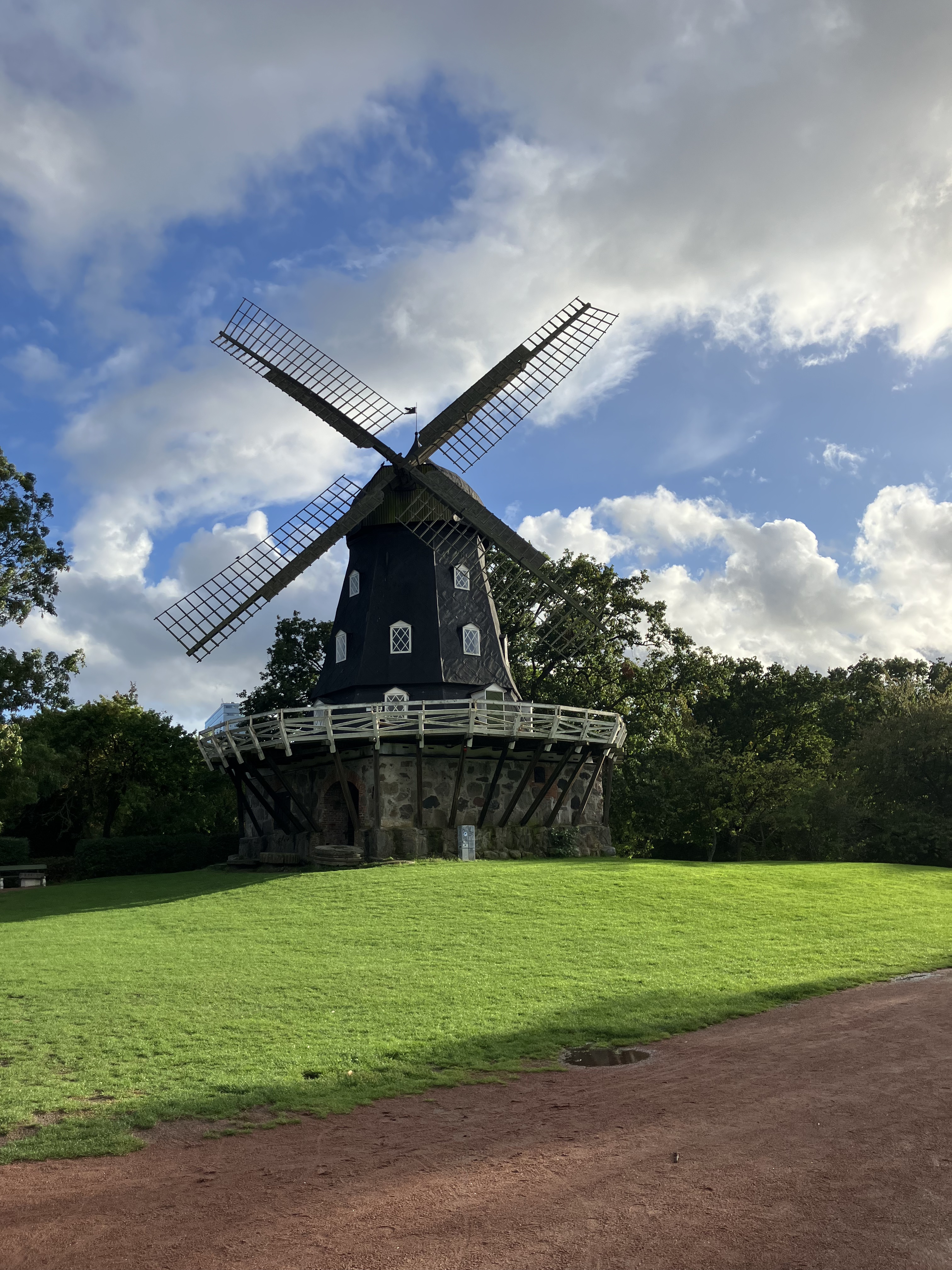
I managed to get a run in on Malmo, unlike crowded and busy Copenhagen, and chance crossed paths with an old school windmill (pictured above).
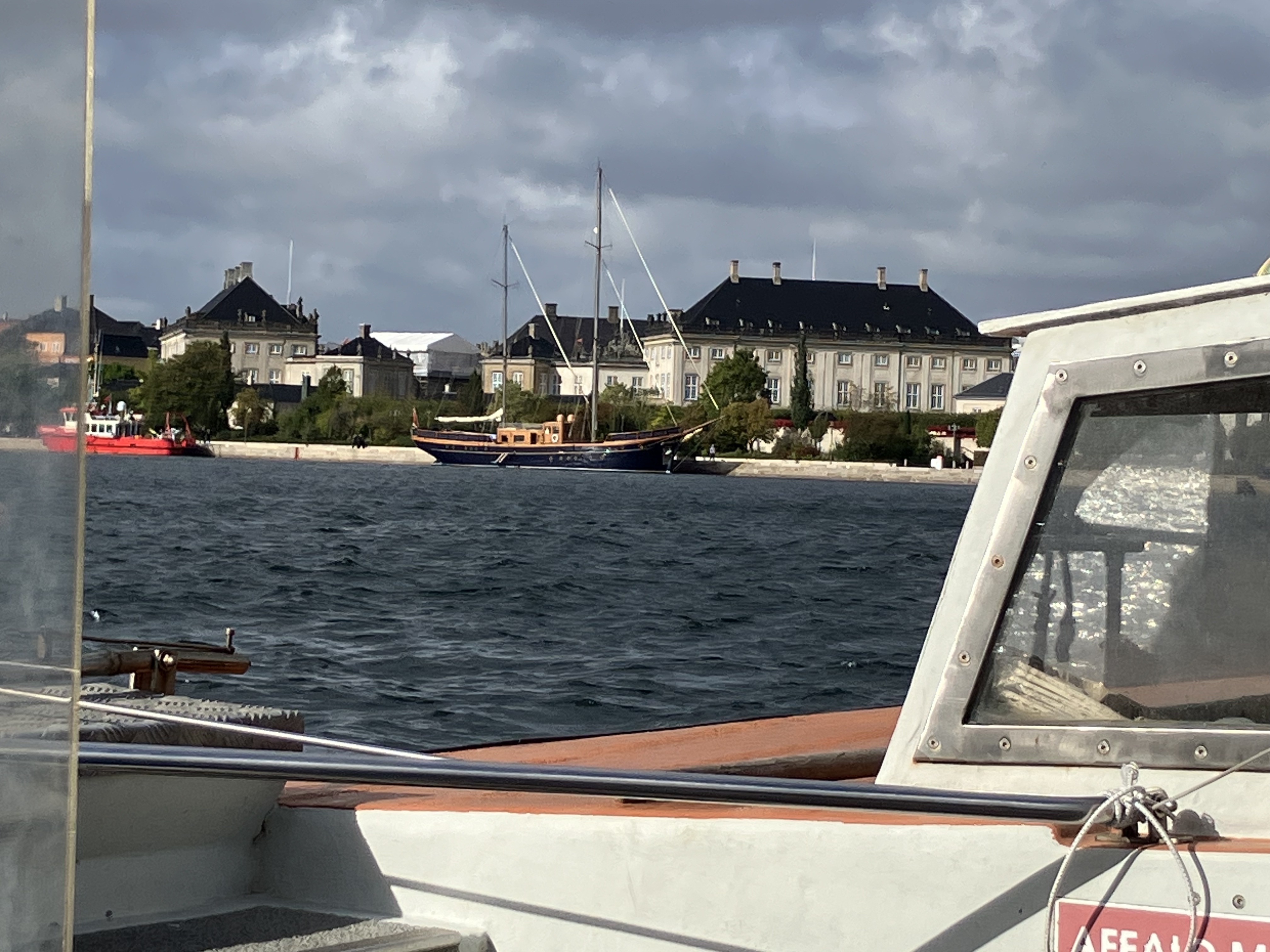
The following day, we discovered the famous Parliament building was closed on Mondays, so we decided instead to go take a boat tour through the canals followed by the National Museum.
I admit the tour was underwhelming, as is one of the key attractions to Stockholm, the little mermaid statute based on the Hans Christian Anderson book that we passed by. Copenhagen’s harbor is interesting and we saw some unique ships from restored clipper ships to navy PT boats. We also saw a huge Swiss yacht, perhaps one belonging to a billionaire on a pleasure cruise, and a French naval vessel performing some ceremony perhaps on shore leave.
Segueing to the 1930s, Bill describes Copenhagen as where he and Sam were “…bicycling madly to old churches, climbed towers, and looked at old houses, steep tiled roofs with dormer windows, and old canals,” guided by a befriended Swede after first touring the Tuborg Brewery, something not on my family and I’s itinerary.
Bill wrote in interesting detail his first encounter with a Danish youth conservative, and a Nazi sympathizer while touring Copenhagen. The conservative claimed that those among his minority party “are periodically beaten up around election time” as most Danes were not sympathetic to the growing appeal of fascism to the southeast. Bill writes: “He is a perfectly fascinating kid, the kind you read about – flashing white teeth, black hair, and a quick spontaneous smile. About as likeable at first sight as anyone I’ve seen here. He sat on a bench talking quite good English, sipping a glass of beer, smoking tiny thin cigars, and showing his teeth in quick, friendly smiles. He talked of election fights, of Danish politics, of the trouble in Spain. He described the need for Danish coast defenses, the aim of Nazi Germany, and American movies. He communicated something of his enthusiasm to us. For the first time I think we really sensed the boiling turmoil, the seething undercurrent of European jealousies”
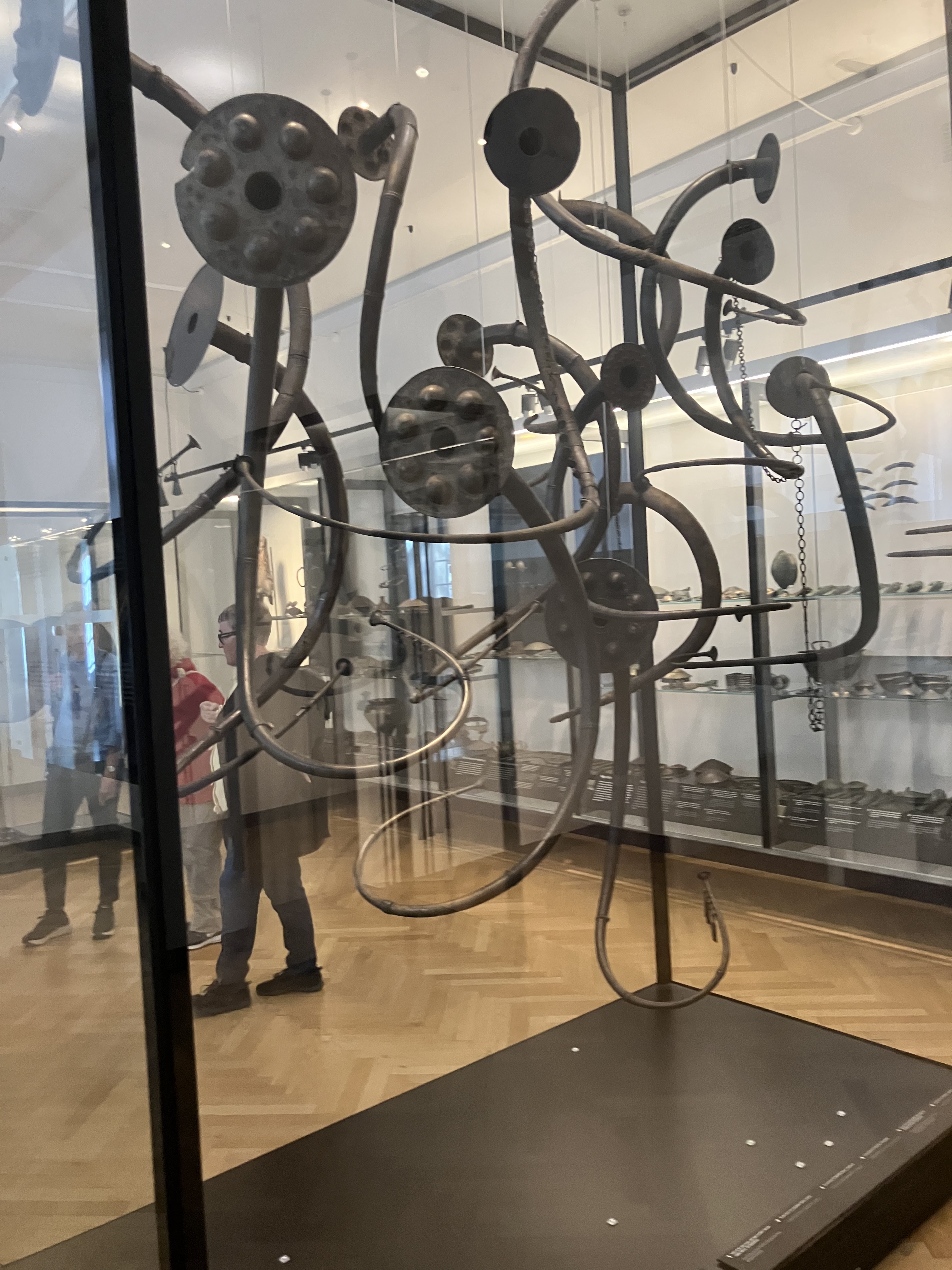
Copenhagen’s national museum is very well organized and diverse in offerings. This was a nice reprieve from the variety of royal portraits and baroque architecture, and while that was occasionally here, the artifacts on the first level go as far as the stone age. What’s unique about the geography around Denmark for archeological study are the poisonous bogs which like the sand of ancient Egypt or the ice of the alps can preserve a variety of biomatter such as bones and wood and other artifacts that would be otherwise lost to the elements.
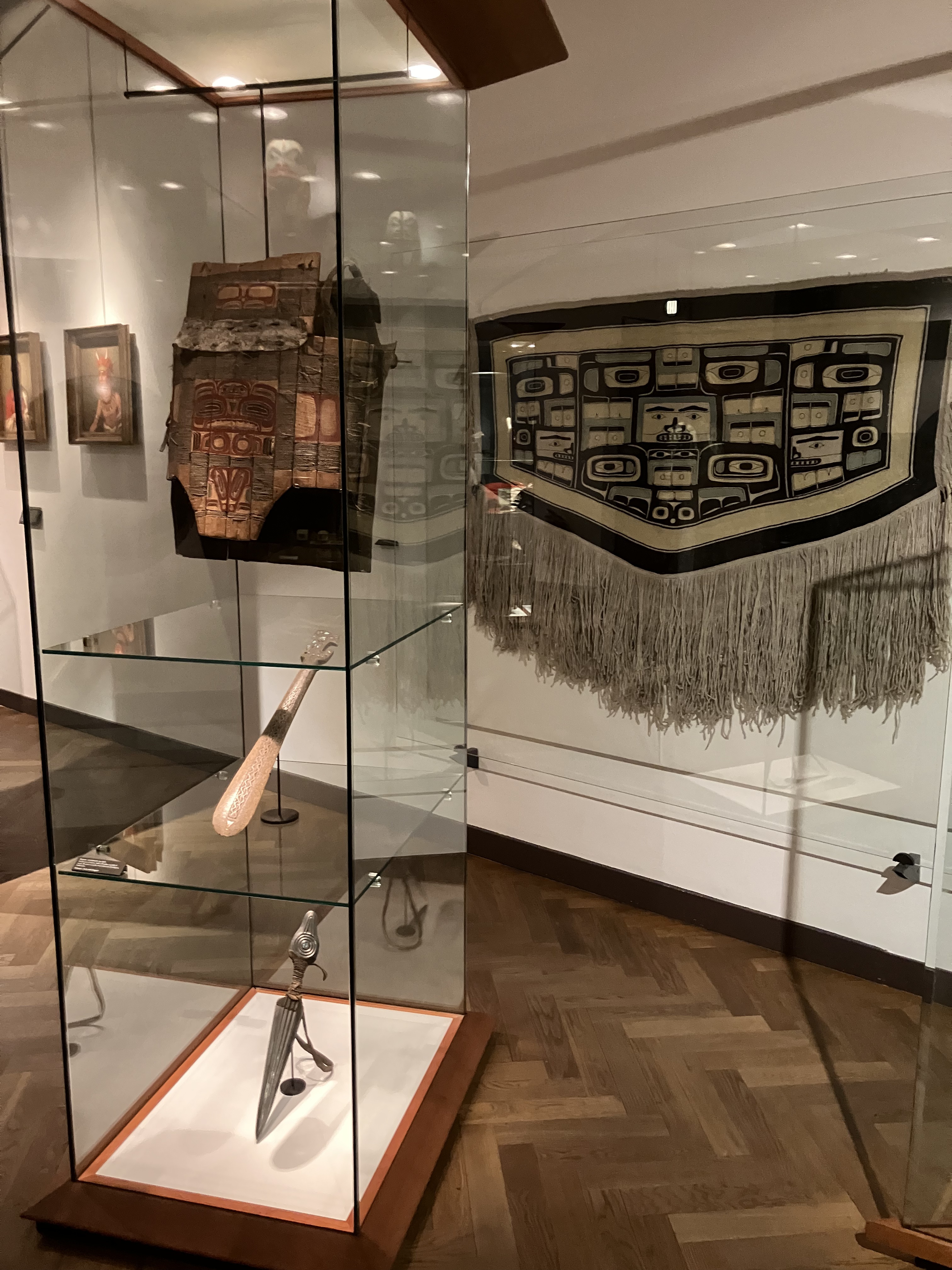
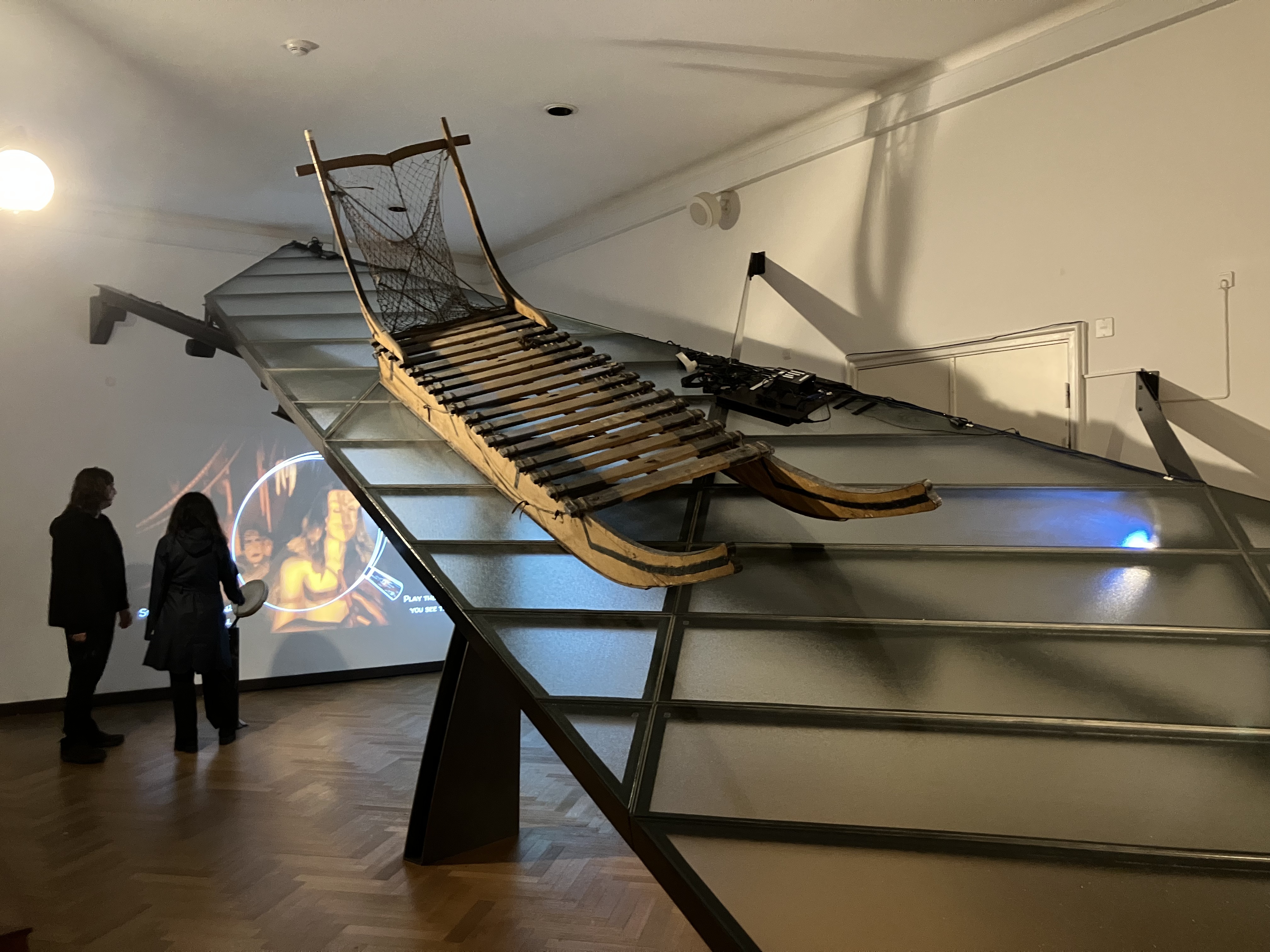
The second floor was dedicated to international culture and a special exhibit to examine the Danes’ pagan roots. Each room showcased a different part of the globe from Samurai armor to ceremonial masks of the Nok in west Africa. There were also Native American artifacts that I was used to seeing at museum, particularly the Pueblo peoples of the Southwest and the Pacific coast peoples nearest to where I live. It’s interesting seeing anthropology from the point of view of another nationality. Also unique to Denmark is its variety of Greenland indigenous artifacts, such as a replica of this sled pictured below.
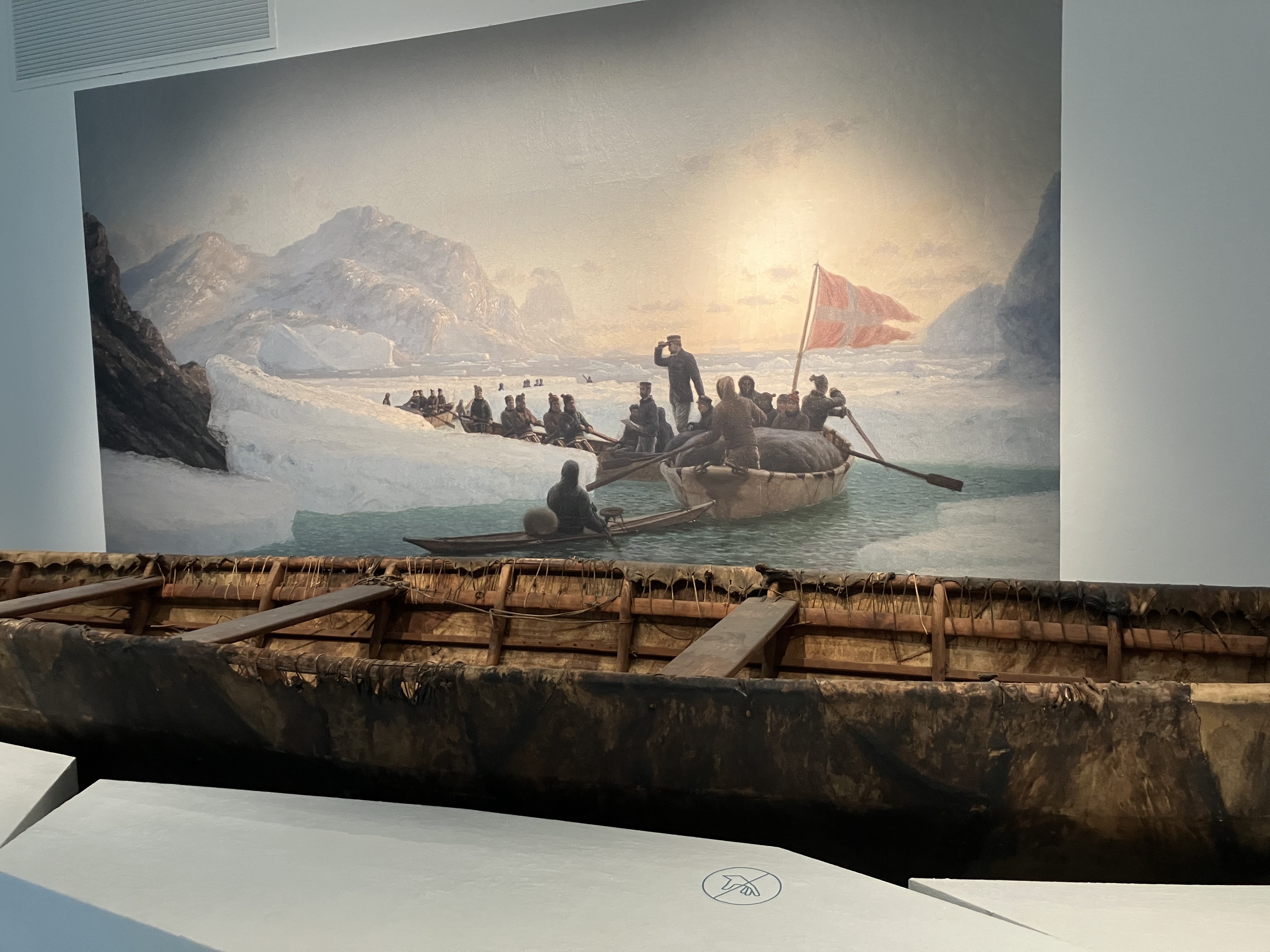
The special exhibit on the Norse religion and artifacts of Danish pre-Christian peoples was very thematic, almost like a theme park ride. You are given a set of headphones in your native language and are guided by the voice of a völva or a Norse sorceress/witch that speaks warnings and riddles as you walk through what I assume is the Norse spirit world until you reach the exhibit’s midpoint which is a rendition of Ragnarok, the Norse apocalypse. When you exit you are then given a chance to view the various early-medieval Danish artifacts not unlike the Viking museum we had toured in Stockholm before, with various swords, armor, coinage, jewelry, and other artifacts.
As I exited the museum, I was very tempted to buy for my niece a macabre stuffed animal, Fenrir, the dreaded giant wolf from Norse myth with the god Týr’s severed hand in his jaws. Once again, however, shopping in Denmark, though I encourage exploring the various thrift shops and whatnot for deals, is expensive, so I relented.
That evening, my family and I debated on which of the three locations we’d like to see tomorrow: Frederiksborg Castle, Cronberg Castle, or the Parliament building in Christiansborg palace. While it may have been possible to see two attractions in a day, we eventually decided to sacrifice Cronberg Castle for Frederiksborg Castle. Either would take us out of Copenhagen for the first time since coming to Denmark.
Our journey to Frederiksborg Castle had a unique delay. While taking the train, most of the passengers left the train at a certain stop unexpectantly until we were the only ones who hadn’t gathered what had happened. The delay was not a strike but a roadblock on the track forcing everyone to get either a taxi or an Uber, which we chose the latter. As there were several passengers who needed to share taxis at that time, an elderly Danish woman asked us and joined us to the castle, as she was headed near the same town, Hillerød. The lady remarked that her son’s favorite castle was Frederiksborg, so I think we made the right choice of which castle to tour.
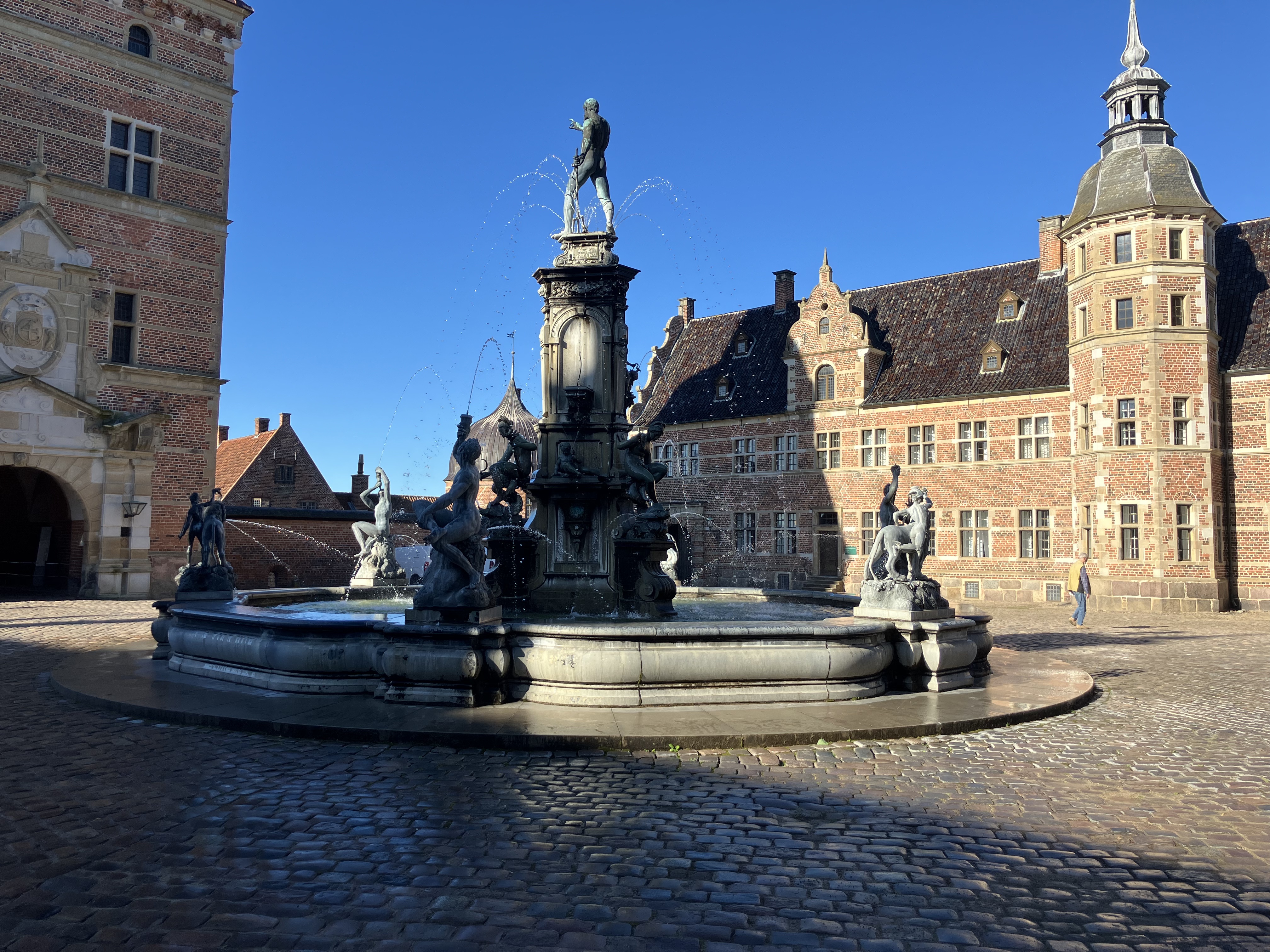
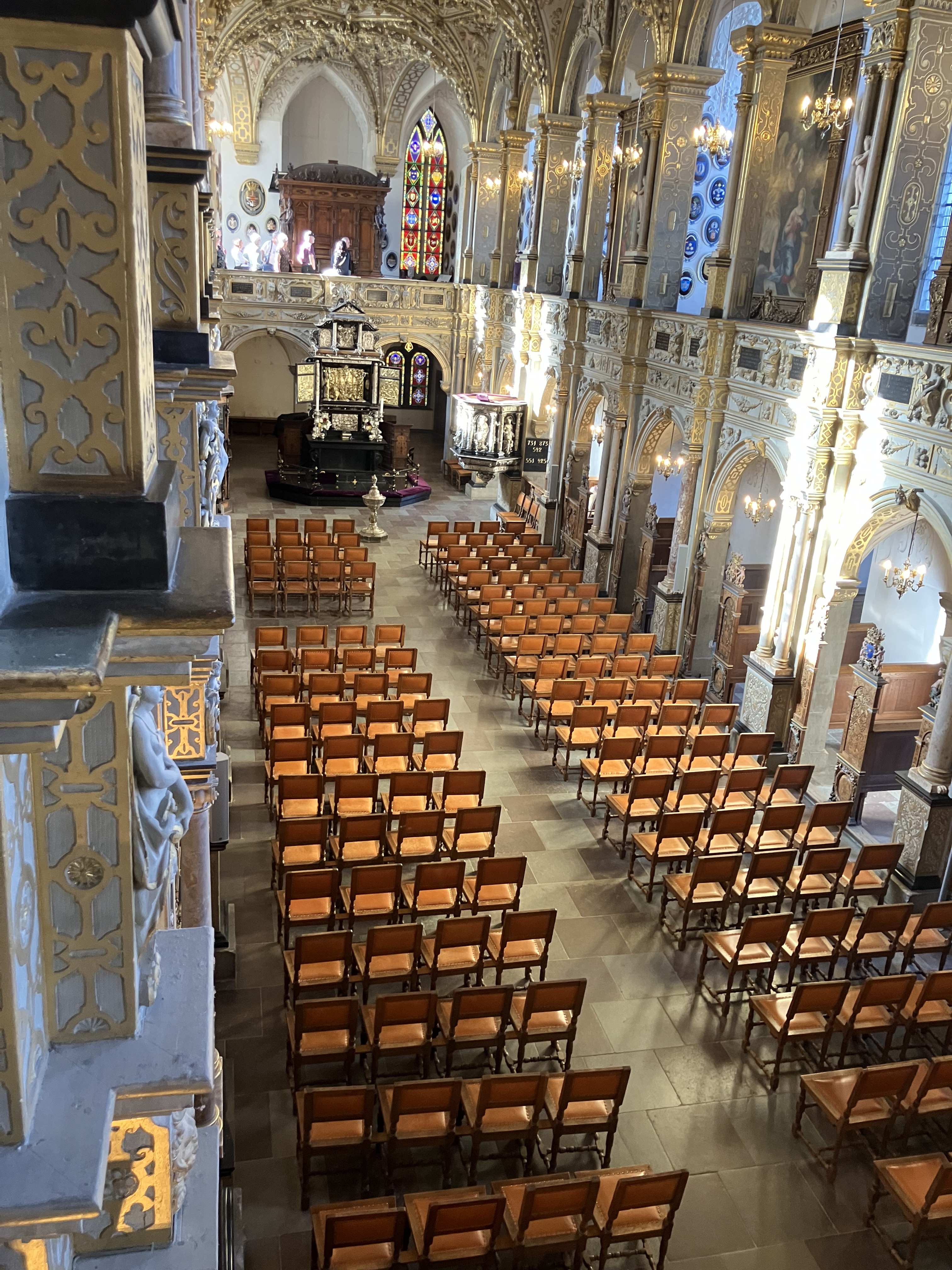
Unlike Stockholm’s royal palace, this museum includes more space, art, and particularly more modern art than I anticipated. It also includes one of the bombastically elegant cathedrals in Europe I’ve been to. Frederiksborg is often referred to as the Versailles of the North, and I can understand why with the sheer size and scale of the palace/castle.
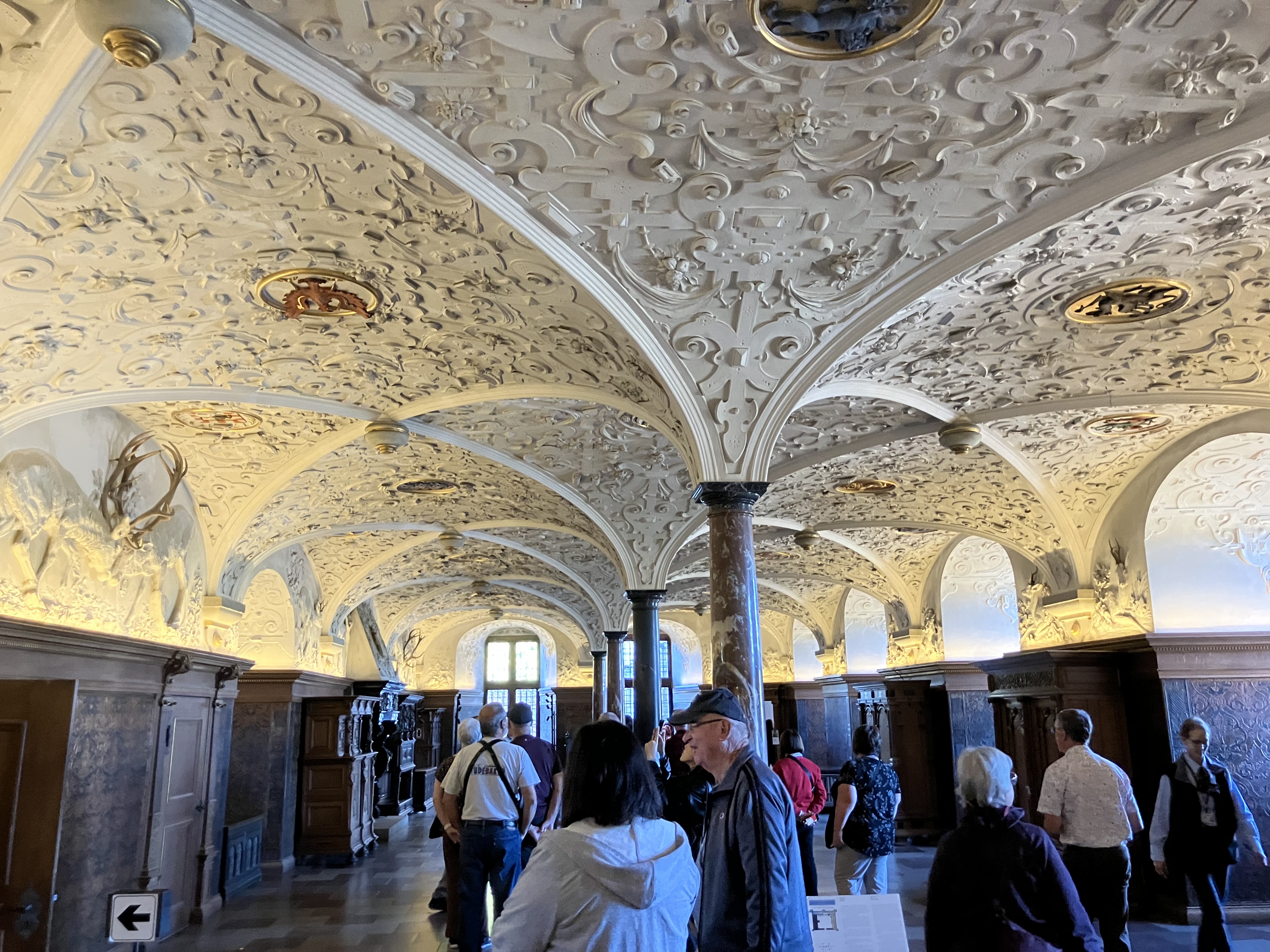
This was clearly more of a castle than the Swedish one we visited in Stadholmen with its concrete fixtures, a true moat, a very large lake and garden, and anything to showcase the Danish royalty, particularly its most powerful monarch, Christian IV’s power over its rivals/conquered states particularly Sweden and Norway.
As I predicted, my parents were too fatigued to walk through another monument such as the Parliament building once we reached Copenhagen, especially after almost circumnavigating the entire adjacent lake. I however stayed a little later to explore another city hall, Copenhagen’s Københavns Rådhus.
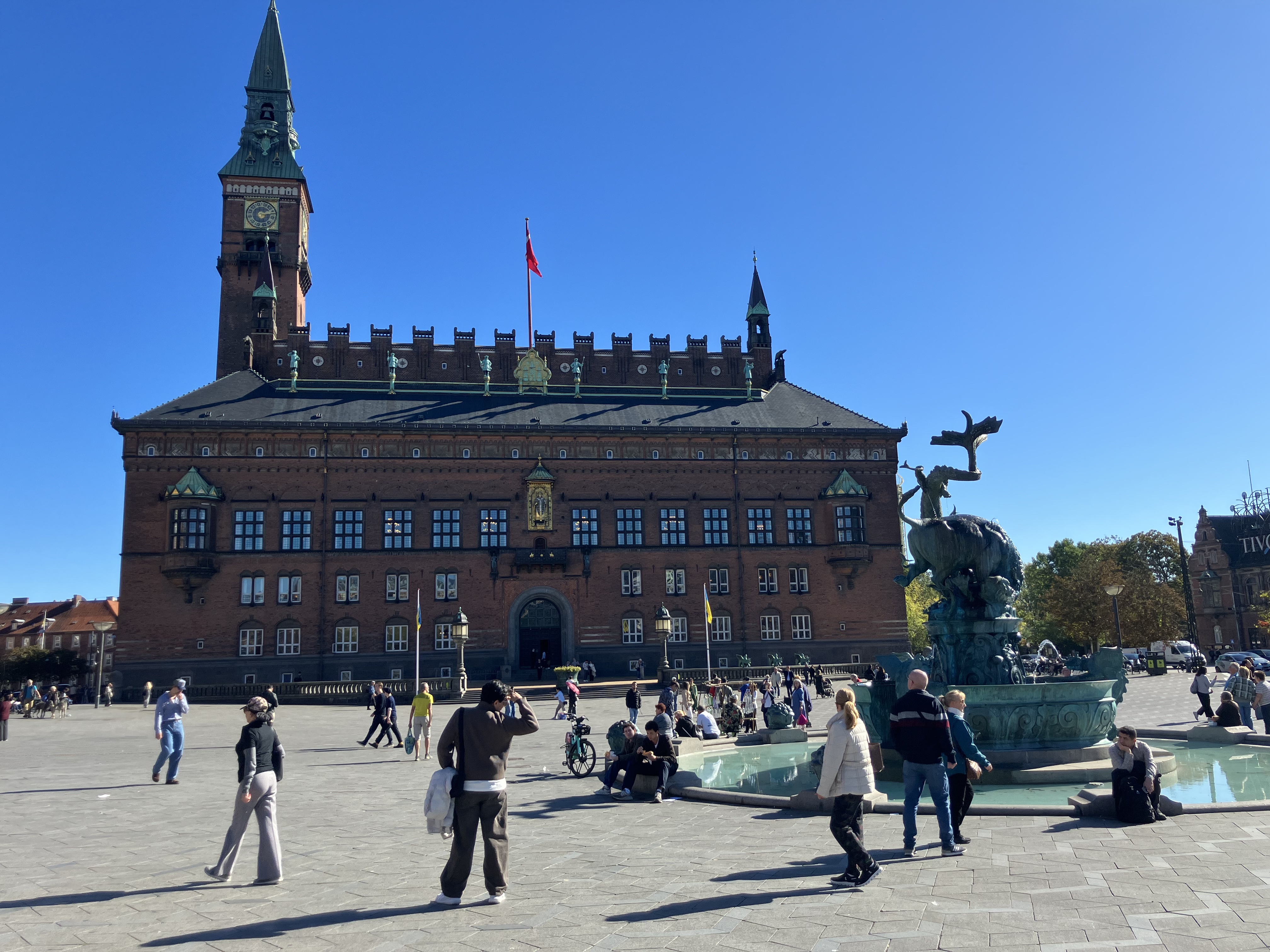
The outside is just as interesting as what’s inside, a large public plaza, a sculpture of Hans Christian Anderson and an impressive clock tower. I, however, found myself with less impressive artwork in the Rådhus than in Oslo or Stockholm or at least I didn’t explore further once I had found myself in the middle of an administrative setting with traditional offices and various administrative staff and civil staff doing errands. I started to feel self-conscious and out-of-place with my elegantly buttoned attired, worried I may be confused with one of the city clerks as traditional offices dotted the hallways, so I left the building without exploring the courtyard or whatnot.
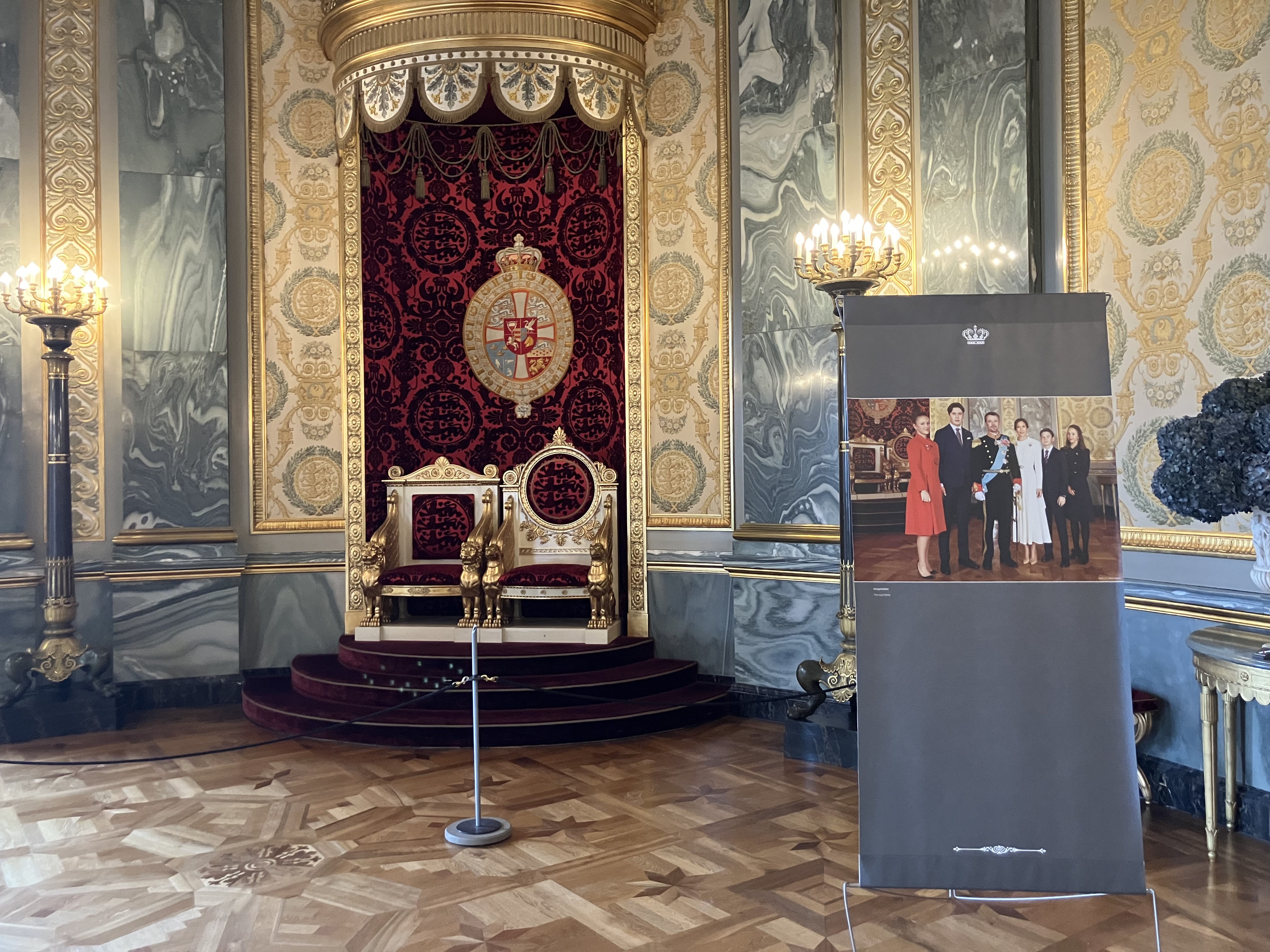
Fortunately, the following day made up for that potential loss as the main highlight of Copenhagen is its Parliament building/palace. This building a mix of the royal grandeur of a palace but in some areas, more dedicated to the people of Denmark.
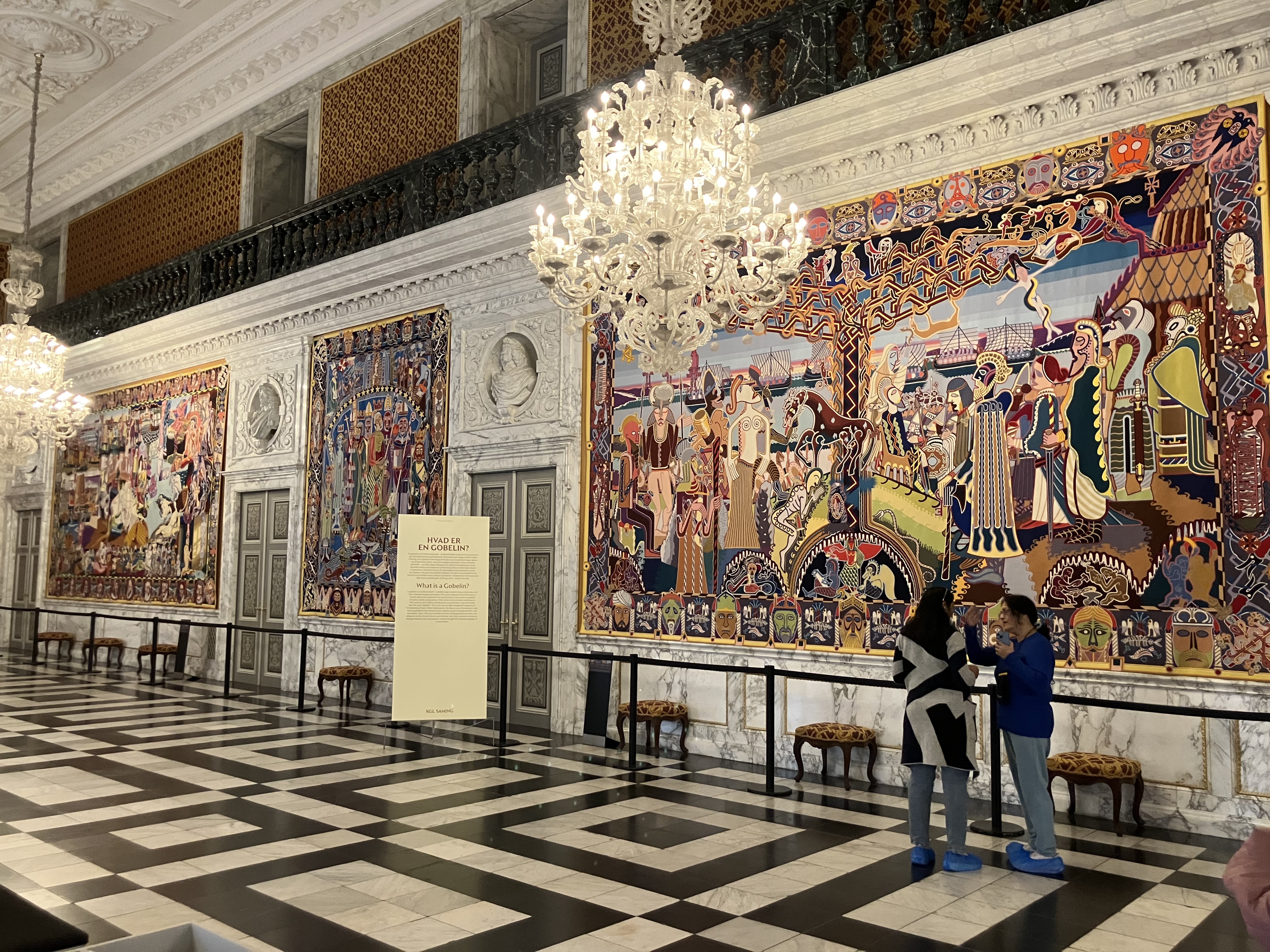
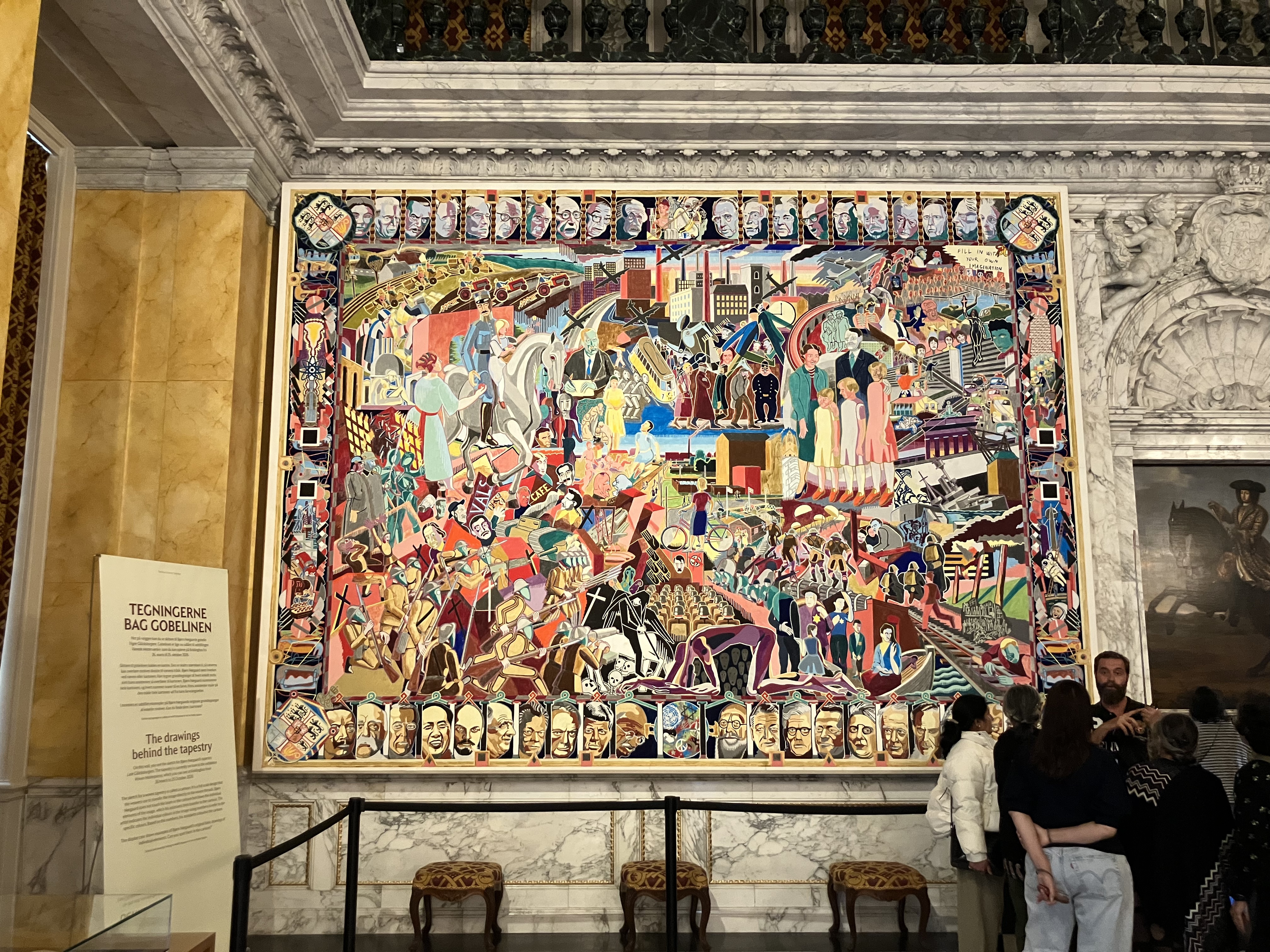
If the golden room of Stockholm’s city hall is its crowning site or Oslo City Hall’s artwork, Copenhagen’s prime room is with its more people-centric Gobelin tapestries, a weaving style originating from Paris or artistically tailored tapestries that are a must-see.
That is not to say other artwork of Christiansborg is not splendid, particularly its royal library is worth examining or portraits of the royal family as seen below, but the tapestries gave a uniqueness to Danish pride ingenuity in my opinion.
Unlike Sam and Bill, who received a guided tour, and possibly received a tower view of the city from the palace’s presumably tallest spire, but my parents and I were “museum-ed out” and opted just to explore until my mother’s legs started to annoy her.
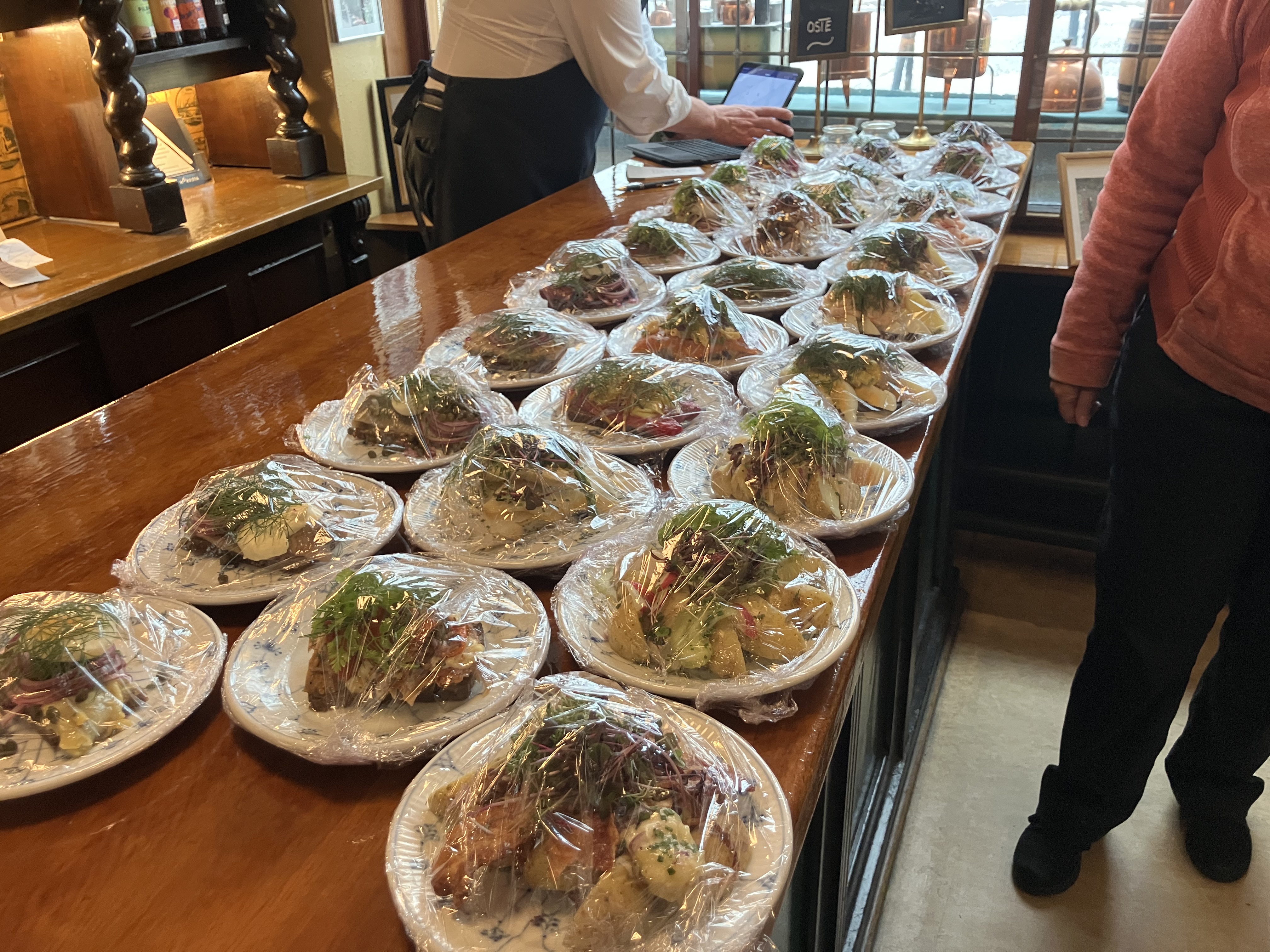
My family and I decided to splurge for our last afternoon in Copenhagen with a traditional Danish lunch of smørrebrøds (pictured above). The restaurant was old, small, and close to Christiansborg, suggesting that many political compromises, policies, and whatnot were decided in this room. Unlike a typical restaurant, one only lets the waiter at your table know their choices of drink and dessert. One needs to order from the counter near the kitchen and decide between the varieties of smørrebrød in a selection as laid out in the image below.
I selected some halibut with egg salad on top of rye bread and some of the most carbonated sparkling water I’ve had on the trip. We also ordered dessert for the first time on this trip, a dish I can’t remember the spelling of, so I’ll call it a chocolate fudge delight with strawberries, while both my parents selected an apple cake served in in a goblet, more apple than cake.
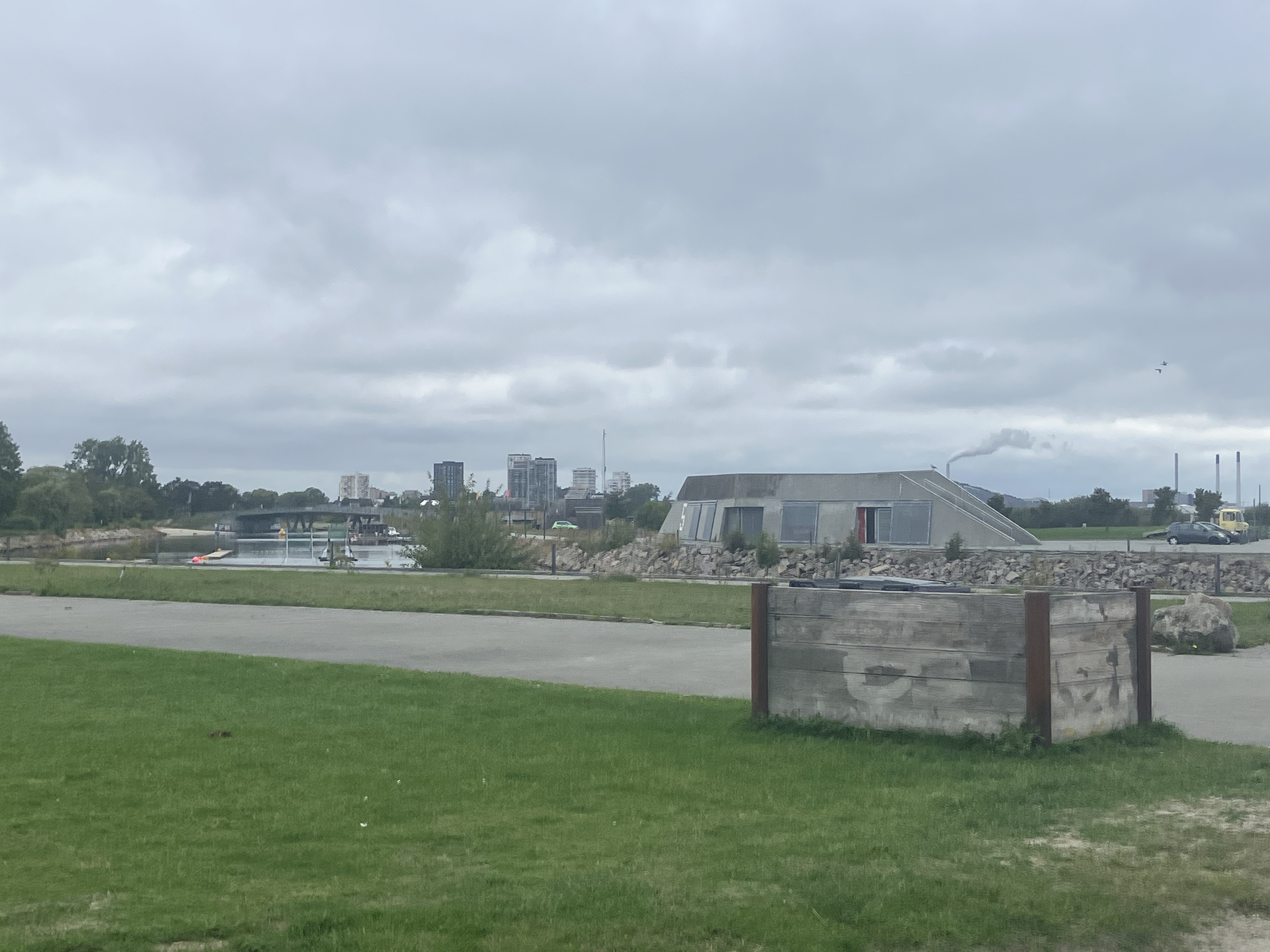
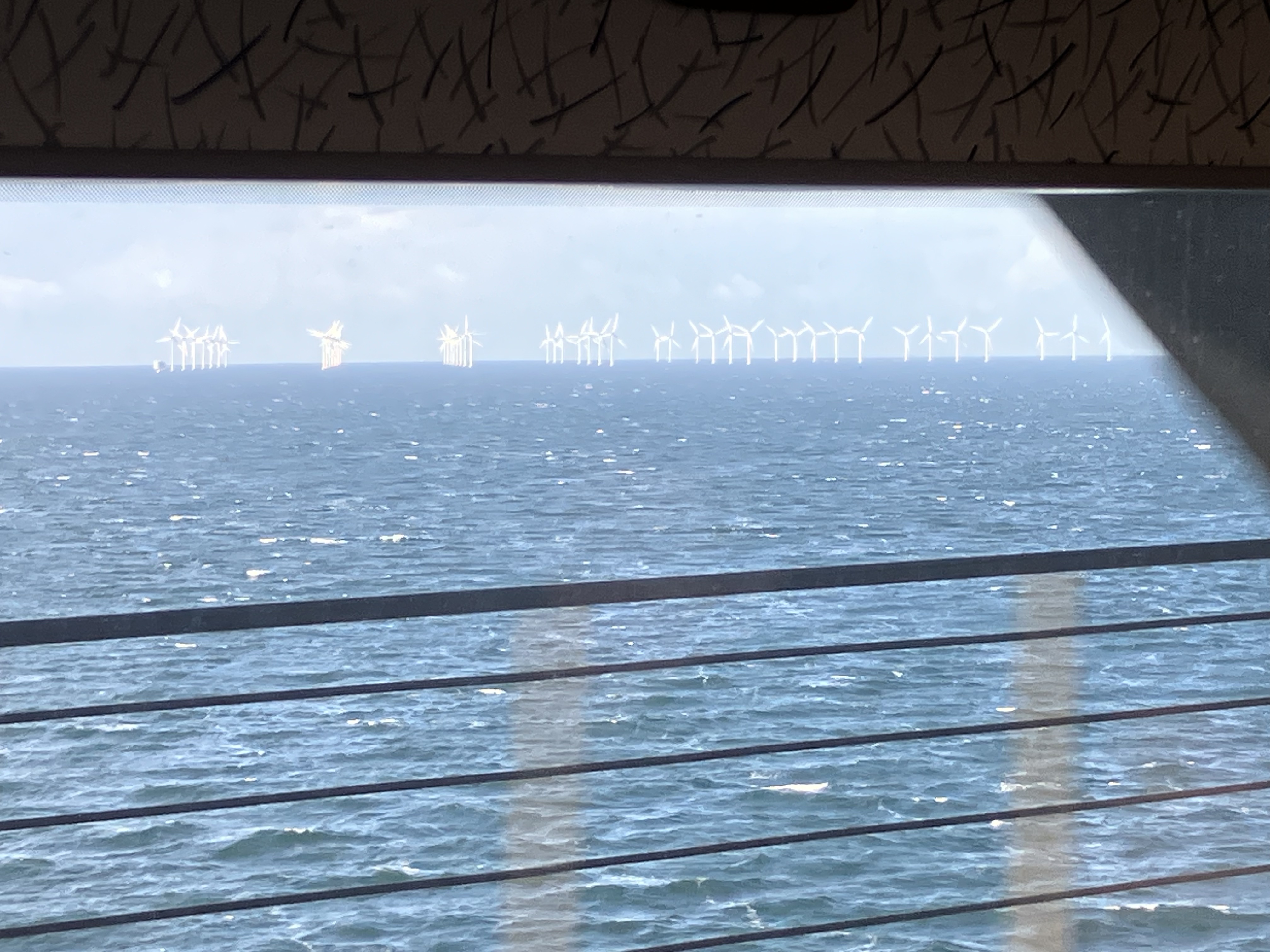
This evening was our last day in Copenhagen, and we booked a hotel near the airport. Since I had only run in Malmo so far, I decided to take advantage of my last evening by running along the beach on the Amager island where the airport and the Amager Naturpark or Nature reserve is. The latter is a place I considered exploring on my run, but it was too far, and I decided instead to keep to the northwest beach of the island. Notably, there are several bunker-like structures, possibly from World War II, but proved very useful for runners as they are public toilets. Like everywhere I’ve travelled so far, runners are not uncommon. The other sport that is popular on the Amager beaches is kayaking, as there was a school I came across that appeared to be teaching how to roll. Also, I finally got a better camera shot of the offshore wind power plants we’d see every day from the train.
Reflecting, Scandinavia has been an eye-opener for me not so much as an out-of-culture experience, but as a parallel culture experience with just slight differences in language, urban planning, and political organizing. Yes, there are less people playing baseball, eating burritos, or drinking decaf coffee on our travels, but they’re using the same technology, comparing sports teams, talking about how much is too much or too little government, corralling hyperactive children on trains and buses, and all the other day-to-day minutia one can expect in North American contemporary life. The differences that stand out are the efficiencies in managing a metropolis like Copenhagen to powering small hamlets on the fjords near Vik with small hydroelectric generator turbines. The social safety nets that allow many to live with fewer anxieties, and the education that allows almost everyone to be multilingual is nothing if not impressive.
I’m sure I’m not the first American to ask him or herself: Can the US accomplish such Scandinavian means of problem solving? The U.S. is obviously much larger; as Norway is the near the population of Minnesota and Sweden near the population of Michigan, and thus I’ll leave to the social scientists, economists, and anthropologists to answer, but perhaps entering the relatively more populated cities of Hamburg and Berlin, Germany will shed more light on this question.
Until next time, as my station in Hamburg is pulling up.

