Norway has been rainy most days, but that doesn’t particularly bother me. Its green, lush atmosphere is a nice reprieve from the dry, forested climate with potential forest fires looming. While the rain can dampen – no pun intended – one’s prospects when one wants to photograph the countryside from a bus or train or ferry window, I was more worried that I was going to run out of memory with so many nature pics taken of the Norwegian countryside.
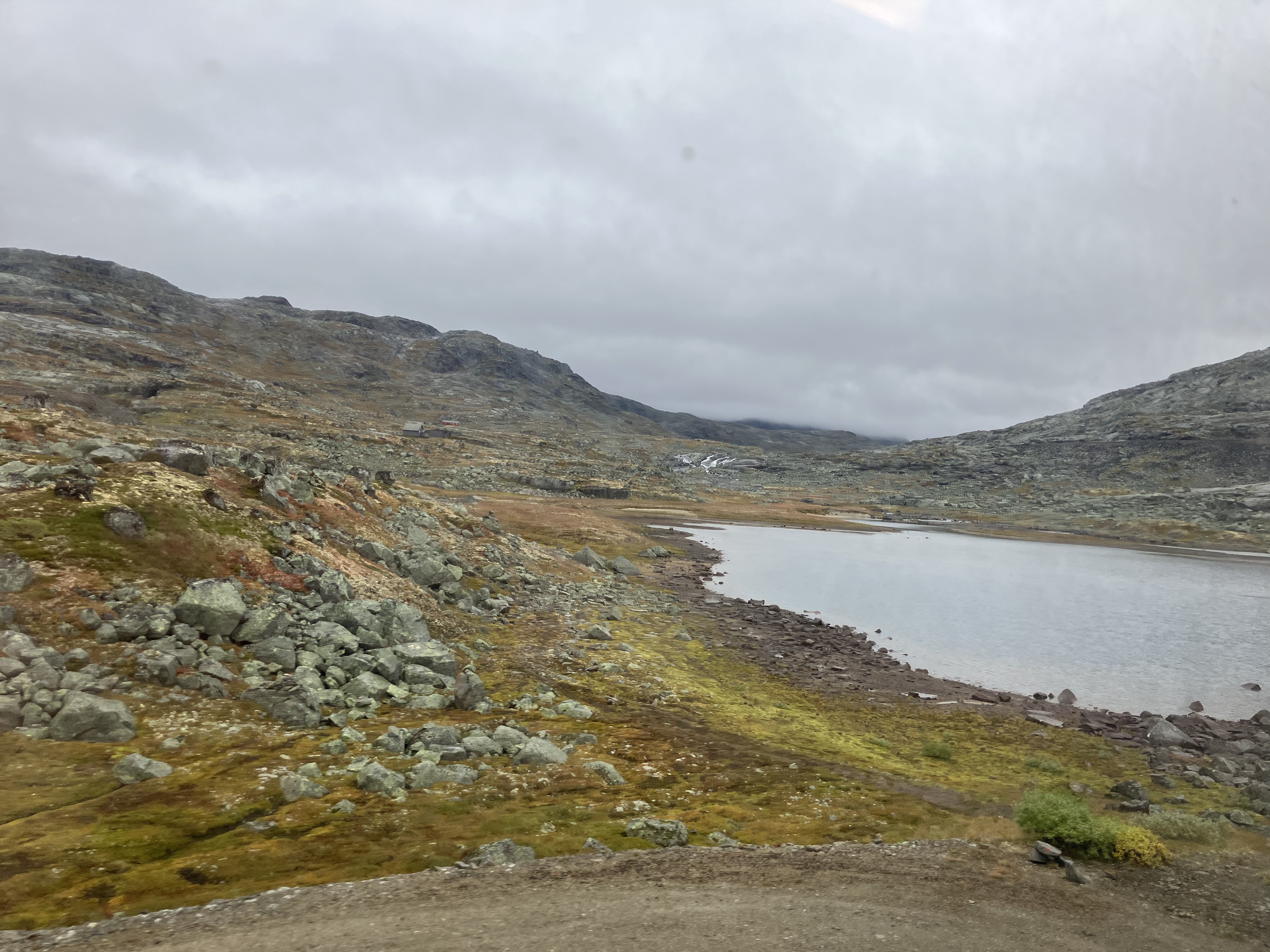
Like the Pacific Northwest, there are plenty of green forests, though they can turn to contrasting tundra with rocky crags in a matter of minutes as you venture up the mountain ranges. While traveling on the train, one minute the setting like the Oregon Coast and the next minute it’s like Brooks Range in Alaska.
The transit system in Norway is very robust and efficient, better than anything I’ve experienced in the U.S. Like many train rides I’ve taken from on the east and west coasts of the United States, my seat mate was an international whom I struck up conversation with. She was from South Korea, around my age, and a Hyundi Engineer. She, like myself, was new to Norway, on a holiday. She also was planning on visiting one of the fjords. The allure of the famous glacial fjords of Norway is very prevalent for tourists heading to Bergen, as we later encountered some of the same people on the train on the boat that would eventually take us to the Bøyabreen glacier that runs into Lake Brevatnet near Fjærland.
It took a little more than six hours for our train to reach Bergen. Finding our way to the Hostel International took us longer than expected. We realized that we need to pre-prepare our meals with basic sandwiches by doing a grocery run at one of Norway’s grocery chains for the day-long journey towards the fjords the following day. This day trip exploring the fjord would require two buses, one large ferry and one steamship. Beforehand, at the train station we met some young adult locals whom we chitchatted a while to get some information about the public transportation system, namely the application one needs to download on one’s phone to quickly get anywhere in Bergen. Strangely, the bus drivers have so far barely checked whether we had fare. I assure you that we’ve been paying the fee, however.
It was early evening by the time we arrived at the hostel. I’m no stranger to hostels, so I took advantage of meeting some of the guests, mostly younger college students from across the globe. Notably, we managed to chat with some older Ugandans who were global health professors invited to Bergen as guest lecturers to speak at one of Bergen’s well-known universities. Speaking of universities, Bergen is apparently the college town of Norway with over 30,000 students, almost one out of ten residents in this city.
My lack of multilingualism wasn’t as transparent when I managed to speak with an extraverted hostel volunteer from Spain, whom I practiced my mediocre Spanish conversation skills with. I also met young folks from the UK, Germany, Brazil, Switzerland, Belgium, Ireland, France, and the Netherlands. I deduced that German is perhaps the second-most common language next to English in this part of the world, when conversing with these peoples. I’ve always felt slightly ashamed of the Americans, Canadians, British, and whatnot having the benefit of not having to learn a lingua Franca language when they travel to countries like Norway. While I’ve been using Duolingo to practice Norwegian and Swedish, it’s proven only to be a perhaps courteous gesture but ultimately an unnecessary tactic when traveling on this trip, since even the least educated here can have conversational English.
This of course was different when Sam and Bill visited this country in the 30s. Bill documented creatively communicating with Norwegians using sign language and drawing in the sand or other alternatives to break language barriers, especially with older residents in those smaller towns in the deeper interior away from the cities.
Bill opined in his journals that Norwegians, particularly the women, are noticeably healthier and more educated than Americans by and large, as I opine likewise in modern times. While I would never make such a claim in this work in the modern cultural climate, for amusement, Bill does document a conversation with the sailors on the ship he sailed on, where the soldiers compared and contrasted the beauty of women in the three major port cities, Oslo, Stavanger, and Bergen, claiming that Bergen women were the most beautiful.
I admit it would be interesting to rub elbows with a crew of Norwegian maritime workers as my grandfather and Bill did, as it would make me feel more like an anthropological writer and perhaps inspiring enough to create a maritime themed fiction like the works of Joseph Conrad.
If I was more serious about this trip being a job, I can imagine spending even just a few days with one of these Norwegian oil crews would be an eye-opening experience to understand the true grit of the Norwegian character.
One key difference between the 1930s and Modern times is the two events that would dramatically shift Norway’s destiny: World War II and the discovery of offshore oil. Many of Norway’s buildings would be bombed by the Germans and much of the modern buildings brought about by oil wealth starting in the 1960s and booming in the 1980s would be absent in the 1930s. When I return to the U.S.A., we should have some photos taken of the various cities to compare, but that will have to wait for now.
The following early morning, while still dark, we made our way downtown to catch the first bus of our fjord tour. The bus driver, an elderly gentleman with a thick Bergen accent, would also serve as our tour guide for about three fourths of the trip, providing us basic facts about the towns and landmarks we would pass.
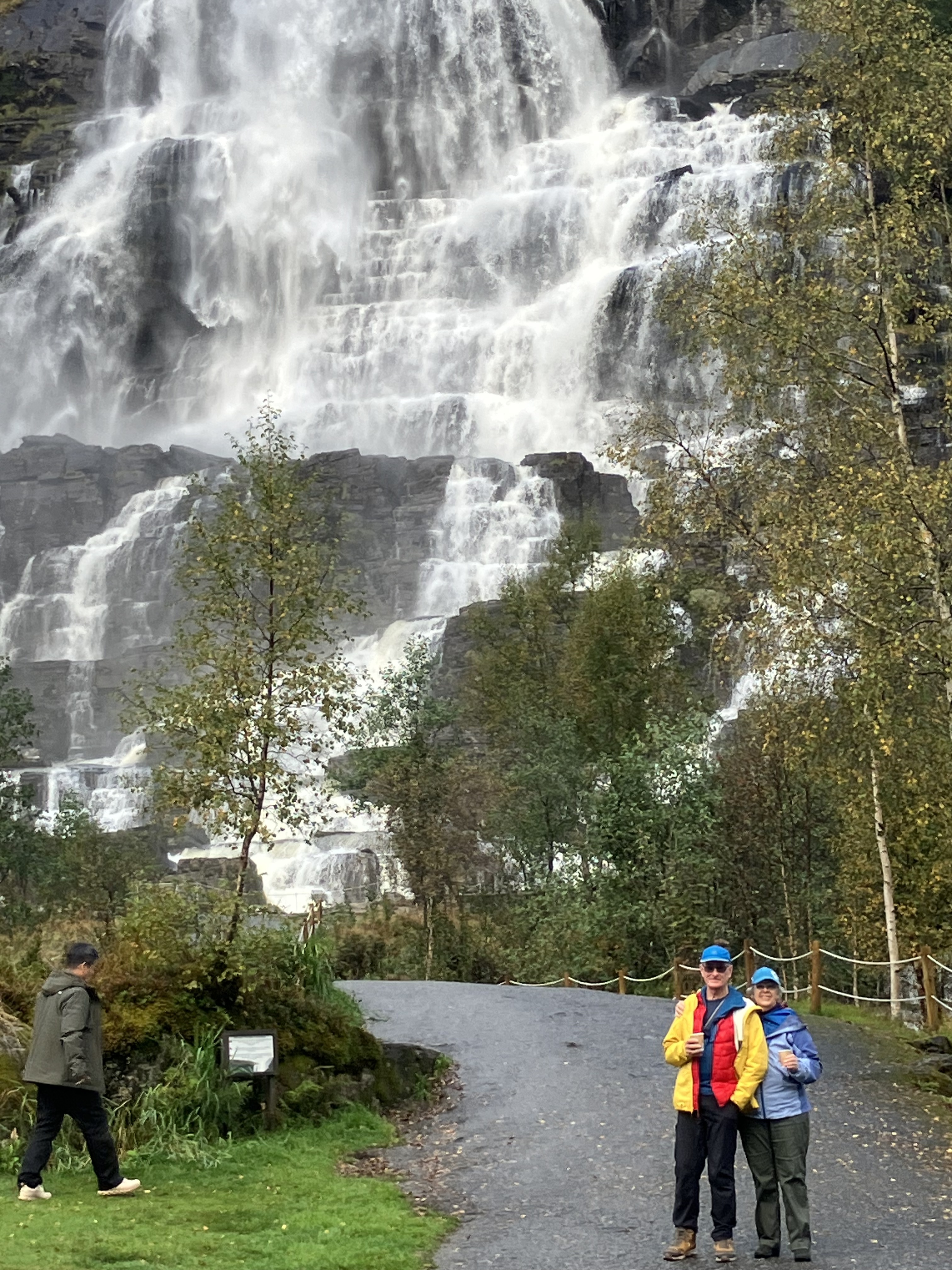
Norway is the land of waterfalls, perhaps the most I’ve seen per capita than any other nation I’ve visited. Naturally, up to 90% of the energy produced is hydroelectric, including smaller turbine units to service the most remote of fjord towns which can only be accessed by boat. We made a few pit stops along the way, one of which featured a very large and majestic waterfall as pictured below. Apparently, even location as sparsely populated were not sparred by the war, as the guide noted that many of these locations served as air runways that were bombed by the Nazis.
Along the way I chatted with some Belgian women in their mid-twenties who were travelling to Norway for the first time. I erroneously tried my best French, but it turns out they were from the Dutch-speaking part of Belgium. One of the ladies, a teacher, spoke English almost completely like an American, which surprised me. Perhaps streamed American media has transformed even the culture of Europe.
The Belgians asked me an interesting question; how did I compare Norwegian culture with American. I answered honestly that the differences were greatly exceeded by the similarities at a glance, but after thinking about it and returning to the subject, I pointed out that I as someone who grew up in Washington State had more in common culturally with European values than perhaps someone from Texas or Arkansas or perhaps even California. One of the ladies referenced her experience from an American she met in California. She remarked that this Californian always tried to put on a positive demeanor regardless of whether this was his true demeanor, a character quality she enjoyed. I nodded in recognition, admitting that this was one feature of contemporary America I recognized as well. We both admitted in our amateur analysis that these were stereotypes and should be taken with a grain of salt, but nonetheless it was refreshing for me to have a philosophical debate from different backgrounds, which can tire my parents mentally in contrast, dare I say.
Similarly, we met two English tourists, a highly educated, retired couple from the UK near Cornwall. After talking with the woman, I discovered she had left some important legislative public service marks serving the Labor Party as she worked with Blair administration in creating education legislation. Unfortunately, I can’t remember the act she wrote, otherwise I would have cited it for reference. We compared notes about both our countries, which we both agreed were in undesirable directions due to the Trump and the British architects of Brexit being key catalysts. In my biased opinion, Norway perhaps can feel like a kind of retreat from the right-wing disruptions that prevent progressive reform in the US and the UK, as even the rural interior, evidenced by the abundance of electric vehicles, hydroelectric power, deep consciousness of climate change, and no feedlots or slaughterhouses, just open pastures for livestock, mostly sheep and a few cows from time to time.
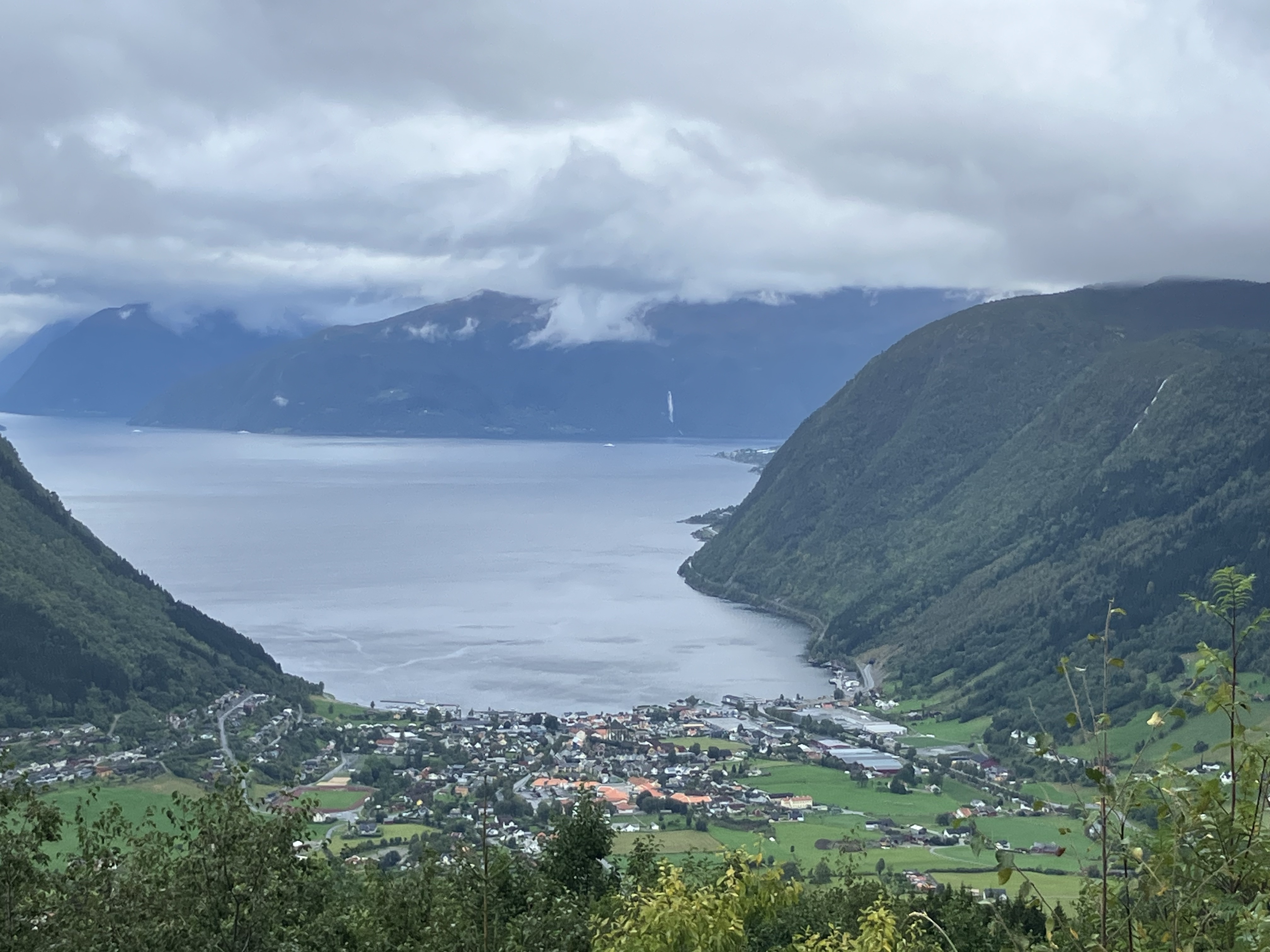
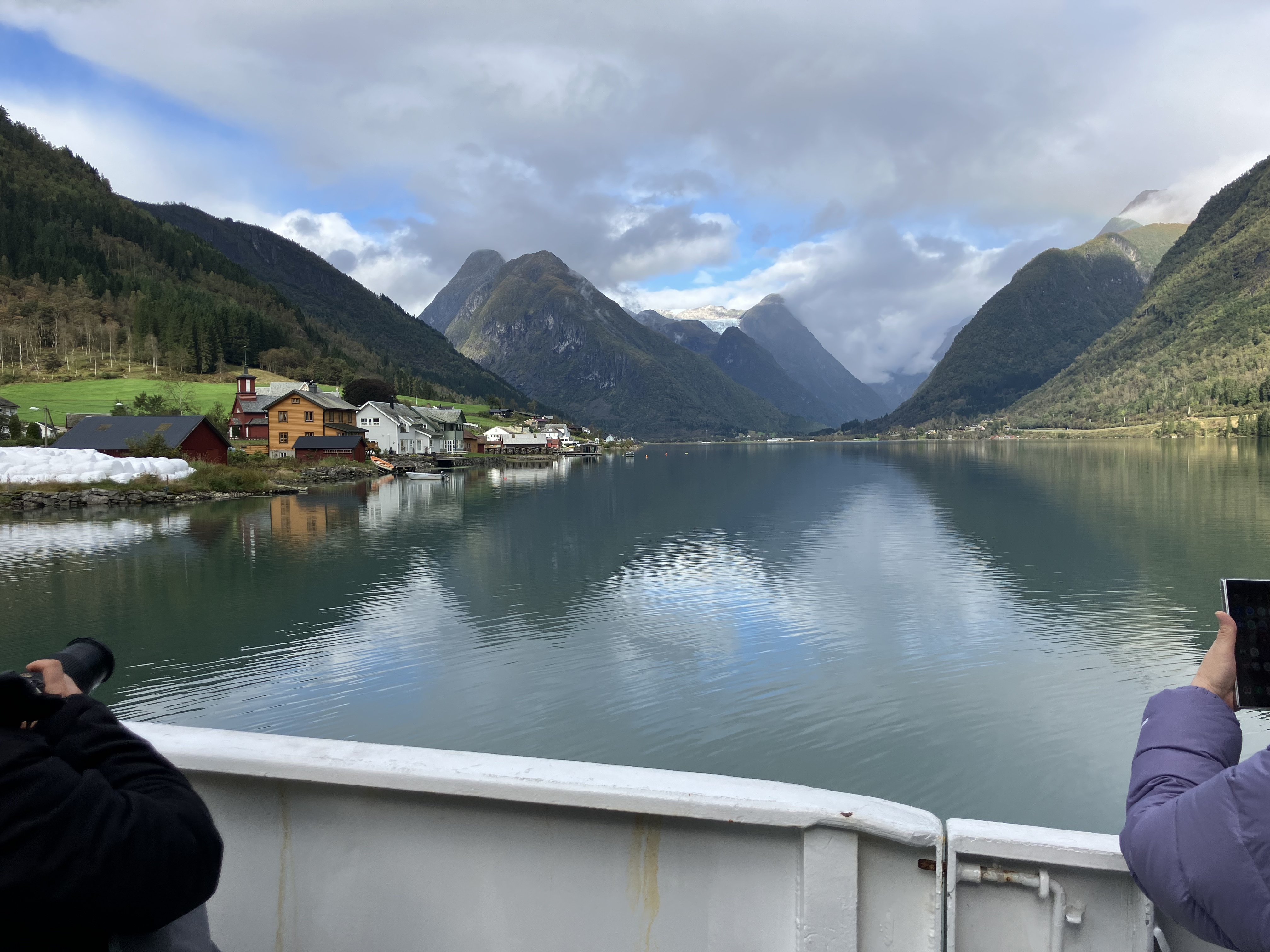
We arrived in Vikøyri to catch a ferry before departing on a smaller steamboat from the town of Balestrand through the fjord towards Fjærland to visit the museum and lastly look at the glacier from the base of the cliff on lake Brevanet. The ferries in Norway are very similar to the ferries one would catch on the Puget Sound, except they are electric, as shown in the apparatus pictured below. I also find the ships cleaner and better serviced.
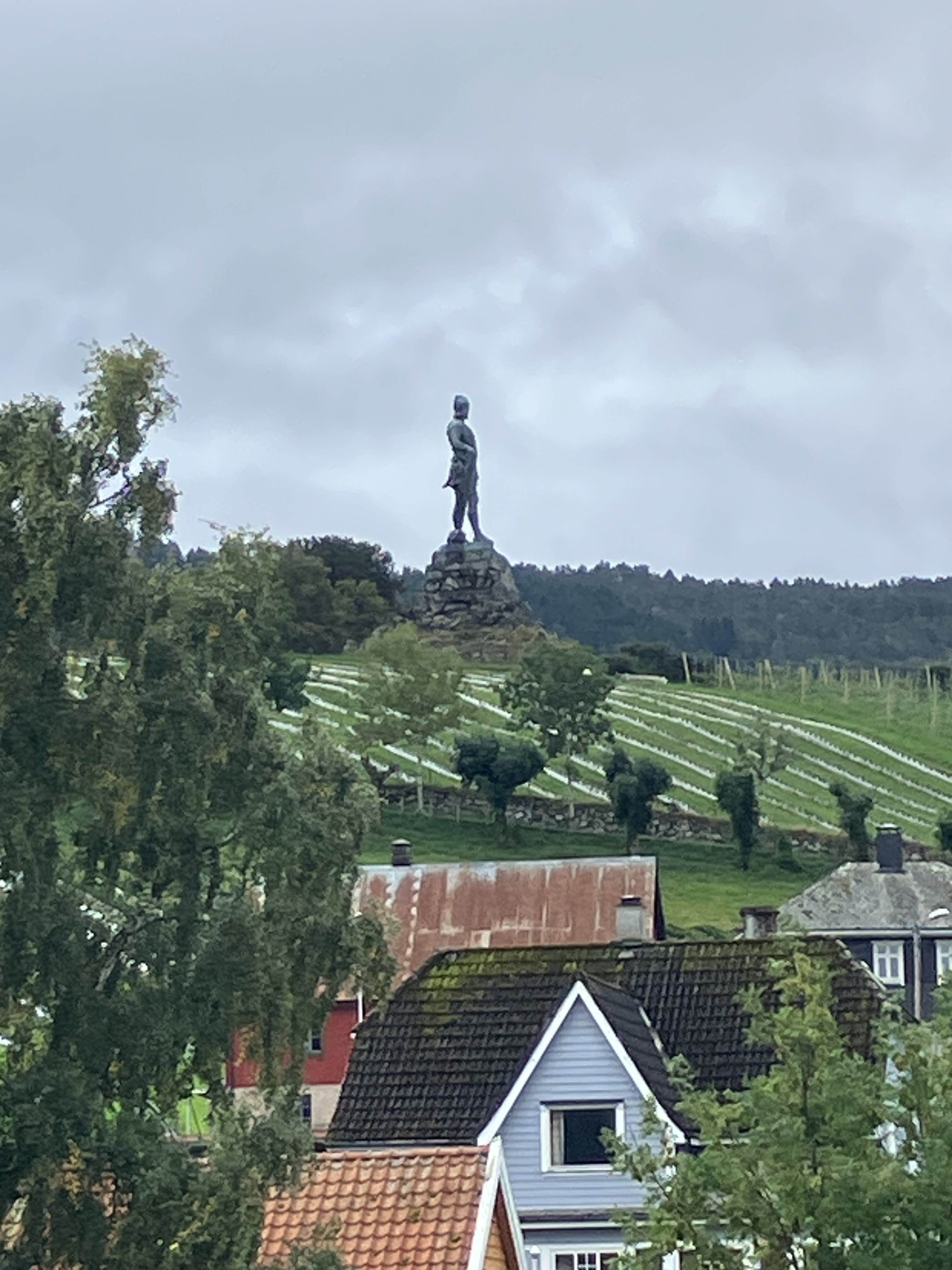
The ship we departed from the iconic town of Vikøyri sometimes know as simply Vik was approximately 40 meters in length with two decks. According to our guide, the Kaiser Wilhelm II loved traveling to Norway and had an estate built here, erecting a Viking monument, the first I’ve so far seen in Scandinavia pictured below. Apparently to get Norse-themed iconography in these Nordic countries, you need a German patron, though at least it’s not a false depiction like Vaughner’s operas.
There was another tour party that joined us from another location outside of Bergen, including a couple from South Carolina we had encountered on the train ride from Oslo to Bergen, but must have transferred. Altogether, our tour group was approximately twenty people, which is far smaller than the summer tour groups, a benefit from travelling in the Autumn months.
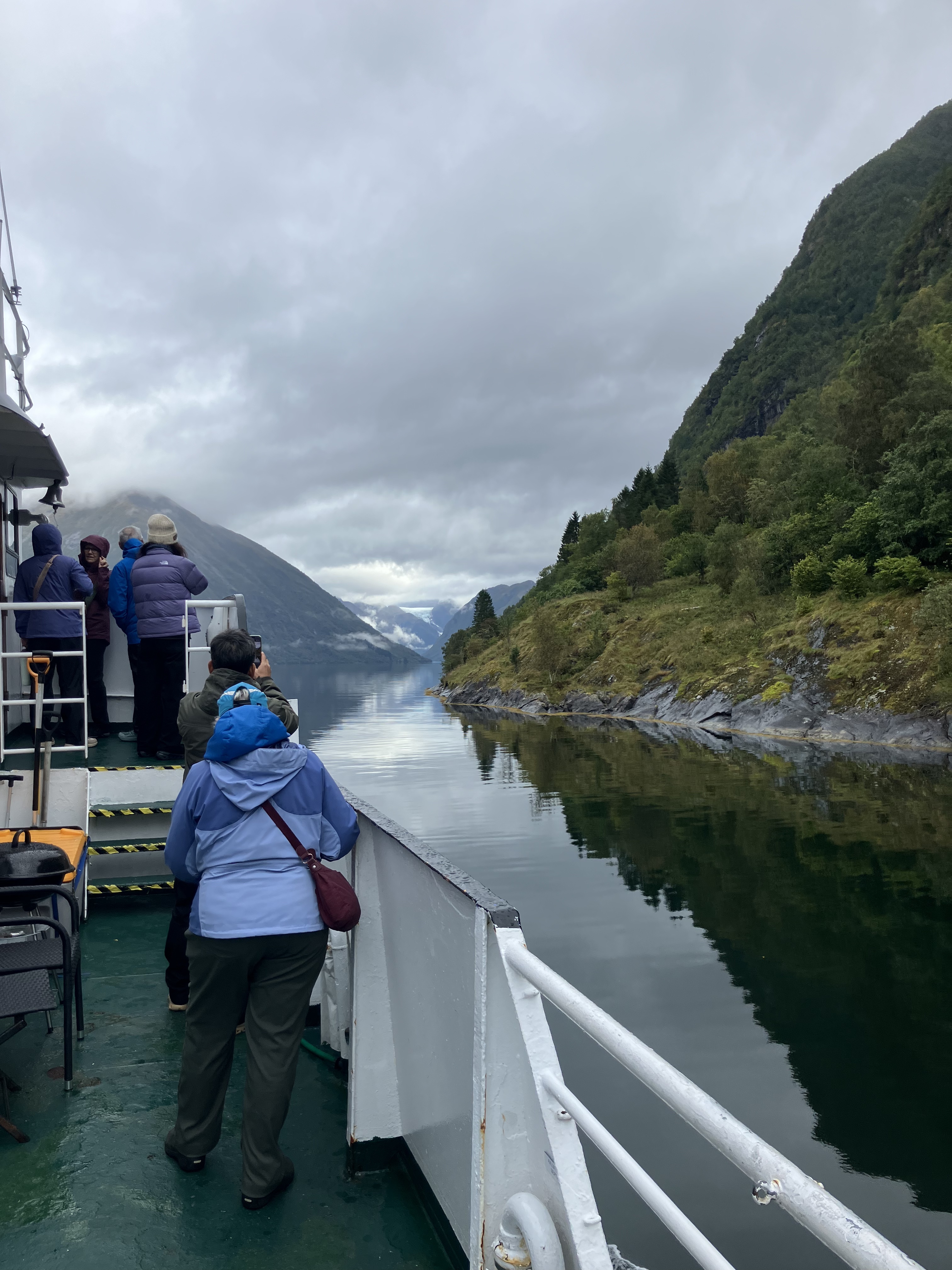
The color of the glacial water is unlike any water I’ve encountered, a shimmering sky-blue color absent of green coloration I would expect from sea-adjacent water. The glacier itself is sight to behold. You can almost hear the ambient cracking you would expect to hear underneath the behemoth ice sheet if you dared.
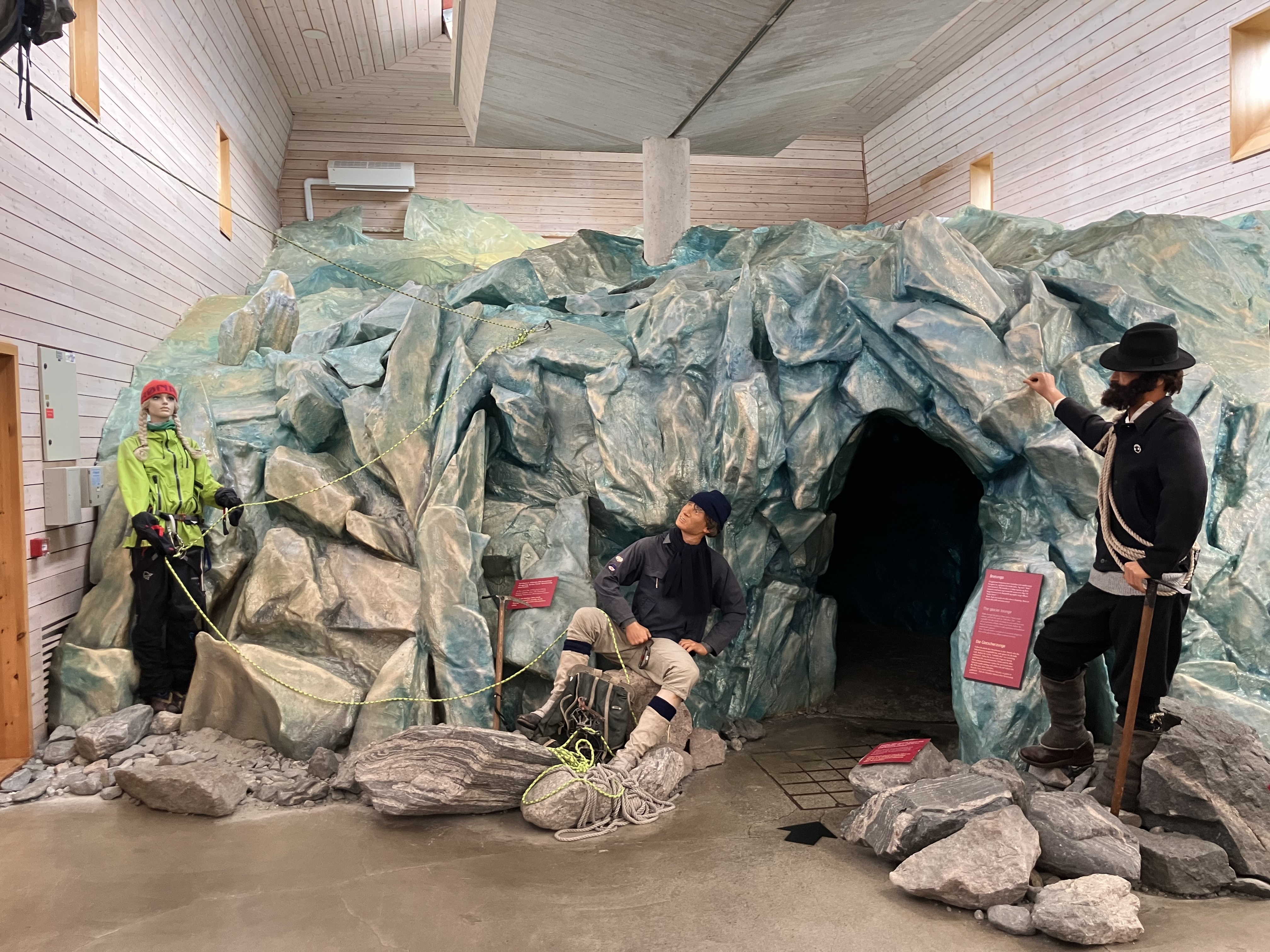
This Fjærland glacier museum featured a brief Imax movie which thankfully didn’t have any dialogue and only documented the best views of the glacier via drone and/or mountaineering which would require even more training and money. The mountaineering is treacherous, as one of the scenes featured a crevasse rescue after one of the tied in mountaineers fell. It reminded me that I still have a lot to learn before I attempt a summit of Mt Adams or Mt Rainier, which is on my bucket list.
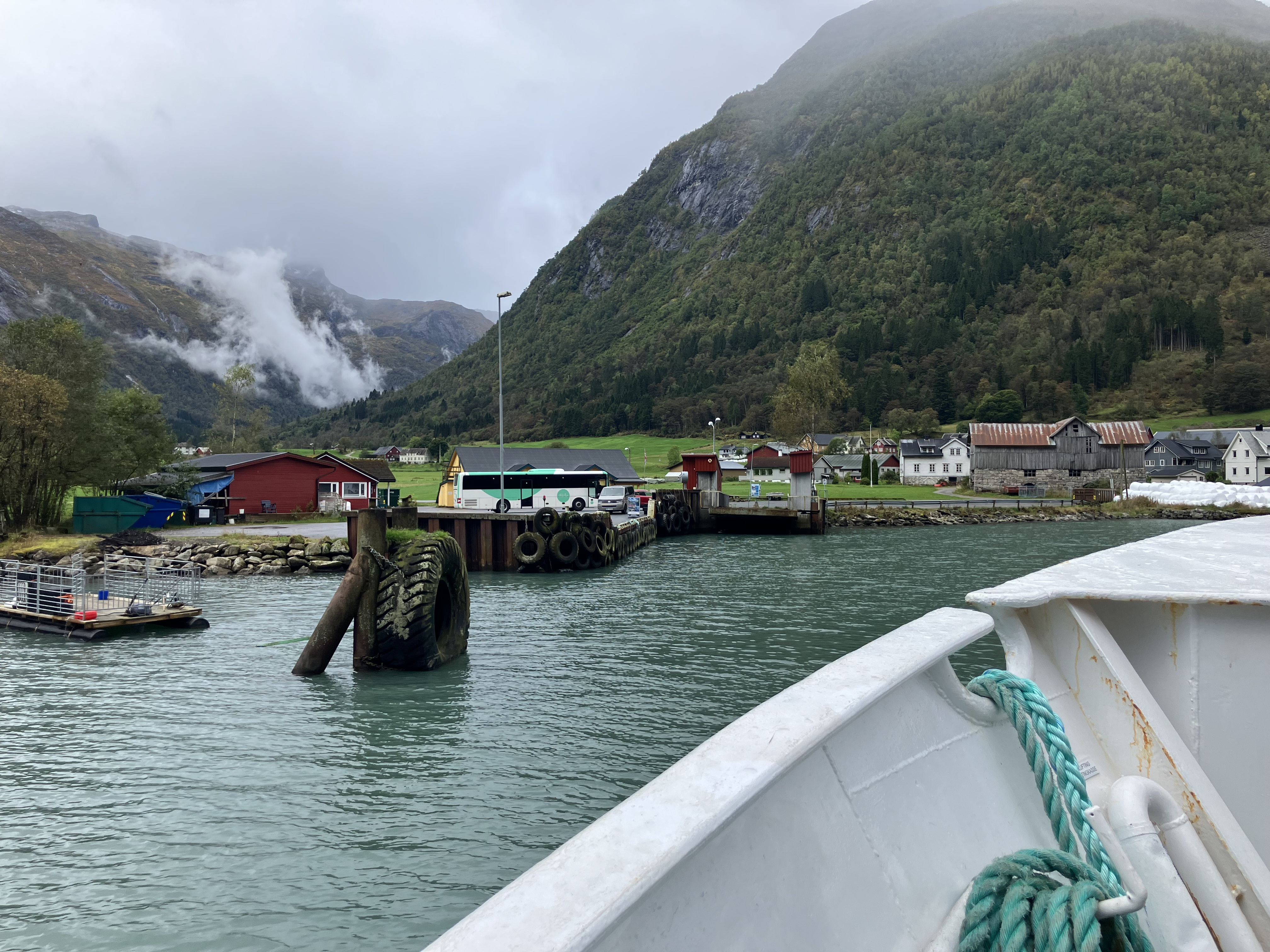
Coming to the base of the Bøyabreen glacier by bus after taking the steamer, we were all given a chance to snap pictures and wander around the camp sites and hiking trails. These trails, however, if you can call them that, were treacherously slick as I discovered. Not satisfied with only snapping photos and taking in the view, I decided to go for a brief run and record the mileage on my app, I ended up falling on my ass on one of the trails leading to one of the waterfalls left of the glacier, but thankfully no injuries, and I managed to get some snaps from that vantage point.
I thought about what it’s like to hike above these fjords. It’s strange to admit, but this part of Norway does remind me of the Hawaiian island of Kuai. While obviously not the same climate, Kuai’s jungle hiking also has some of the most dangerous terrain to tread simply because of the combination of mud and thick wet vegetation as slippery and perhaps even more treacherous than ice climbing since an ice ax is even more useless in slick mud.
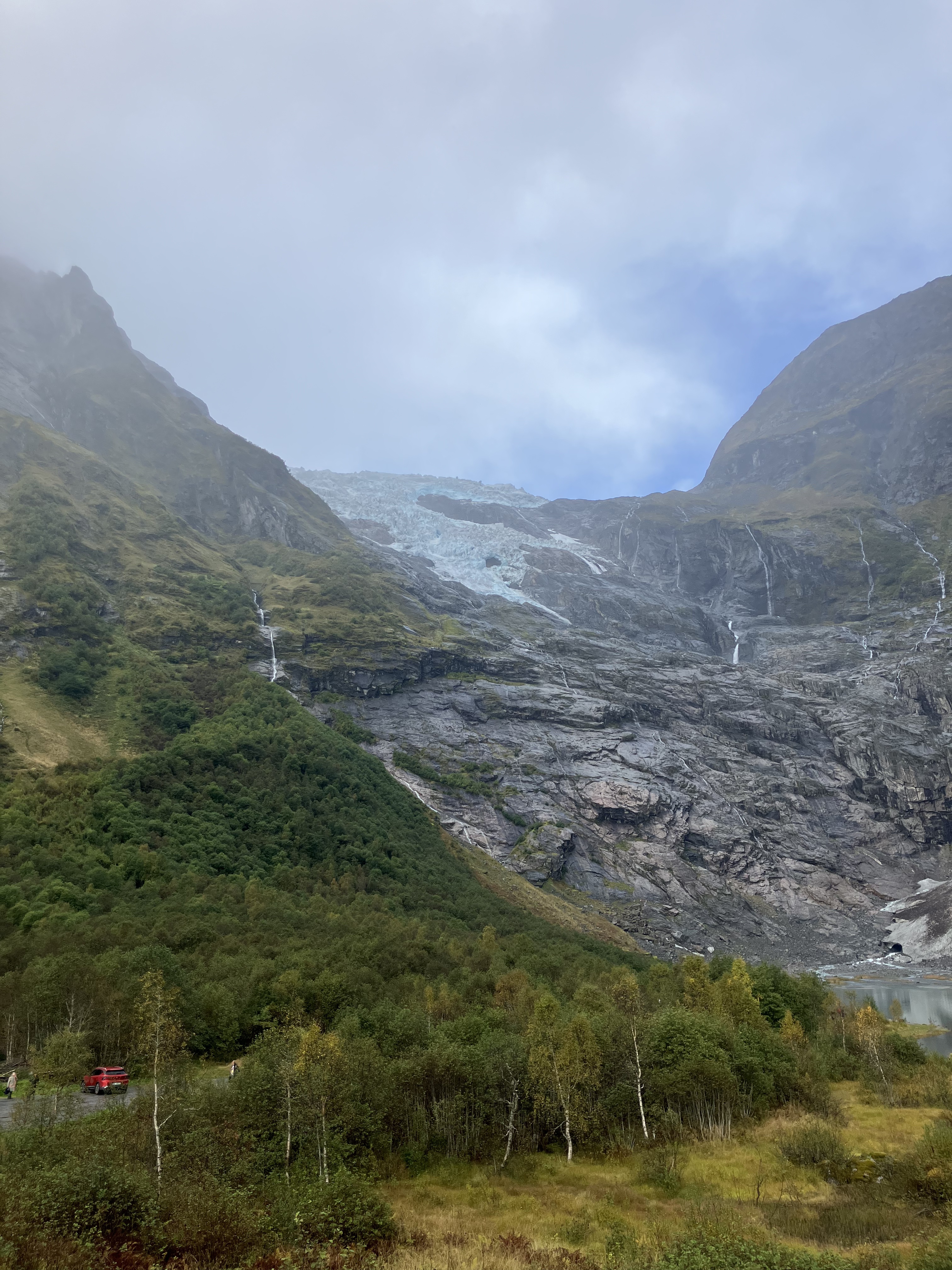
While I thought about this beforehand, I was feeling a little dirty soaked at the end of the journey, since I didn’t have another set of dry clothes to switch into as a result, but all things considered I’m glad I got to experience this fjord tour a little outside of the ordinary with my added run, and I’m glad I didn’t become hypothermic as a result of the sweat.
We almost went back the exact way we came to Bergen, except one of our detours was to see one of the oldest Stave churches in Norway. I’m honestly now confused which church is truly the oldest in Norway, as I’ve seen so many so far, but nonetheless these relics hold a significant part of Scandinavia’s past.
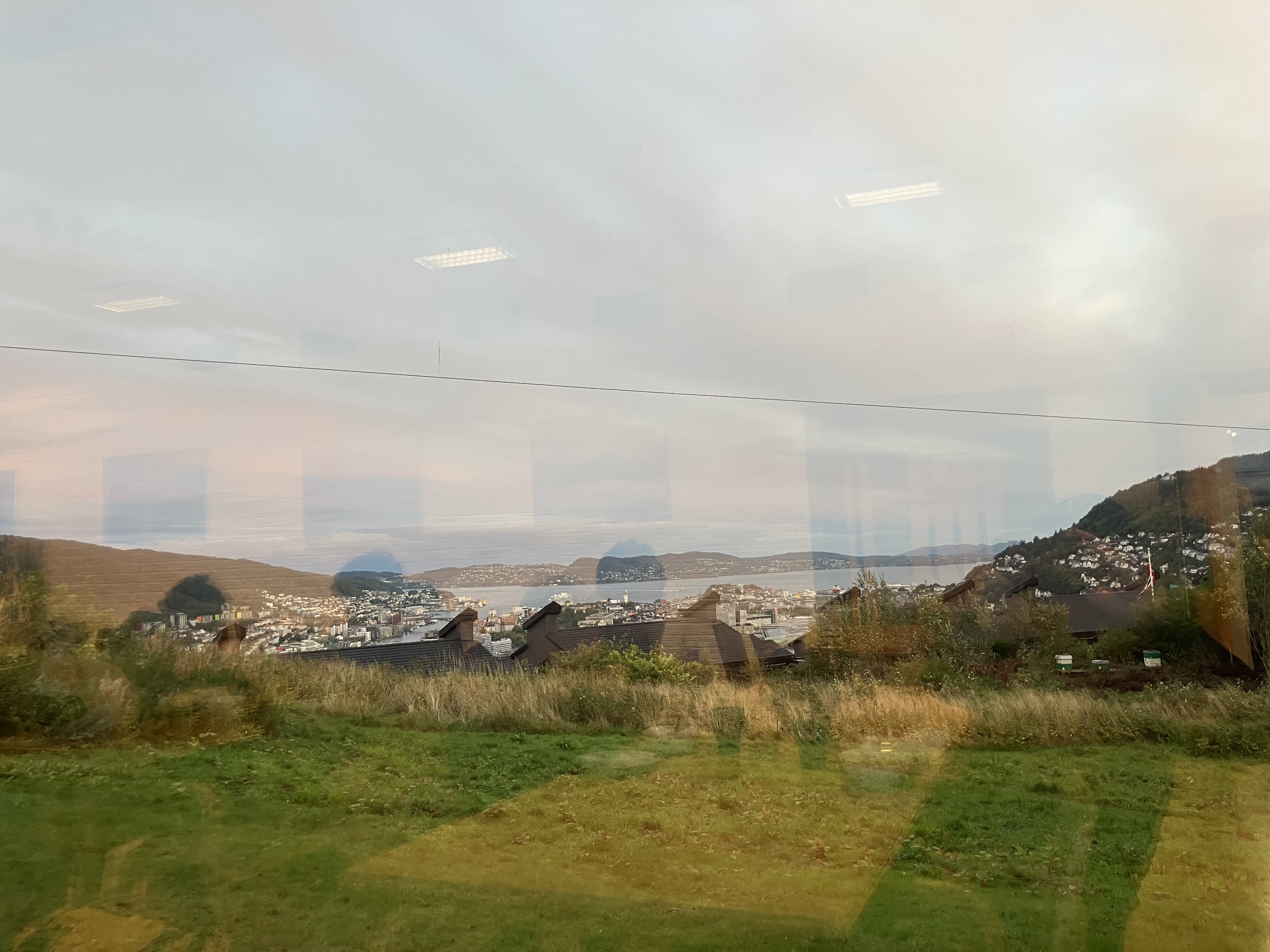
We arrived in Bergen after dark with a recommendation from the bus driver to try a specific Norwegian seafood restaurant. He recommended that we not fall into the tourist trap of the fish markets near where our bus arrived at the port. These tented fish markets reminded me of Seattle’s Pike Street markets, so that was a bummer, as I like the vibe of a fish market. Our guide also mentioned that if we were stretched for cash to consider the local McDonald’s which has been nicknamed the US embassy. Bill Clinton came to Bergen for some diplomatic trip in the 90s and became so sick of Norwegian cuisine that he insisted on a McDonald’s cheeseburger or whatnot.
This seafood restaurant was expensive, and I felt slightly underdressed in my running sweats and down jacket. Nevertheless, considering how hungry we were and how late it was we decided to splurge a little. The seafood stew platter I ordered had some of the largest prawns I’ve eaten.
One item on the menu that caught my eye was Whale steak, which I decided not to order out of principle, but out of curiosity I asked what species it was to the server. He answered that it was mink whale, and without me asking, he noted it was controlled whaling, regulated similar to any protected fish species in US markets, like Salmon. The only time I’ve heard of legal whaling in the US is on the Macaw reservation in the Puget Sound, so this was probably the closest I came during this trip to a cultural anomaly with some controversy. I’m not sure, but the fact that the waiter assured me that the meat market was controlled does make me wonder if he’s encountered foreigners who expressed how aghast they were at how a people could abide such a practice, even such a progressive nation as Norway. On the other hand, I have seen menus in Norway and Sweden similar to select restaurant menus in the US that take efforts to show how their meat is harvested and produced.
The following morning, we left for Stavanger, a city that brings us closer to Bill and Sam’s travels, but only marginally. Stavanger was where Bill and Sam docked the Norwegian freighter they took from Montreal and where the young men spent some time on a beach and bought bicycles. Otherwise, most of their trip was spent in the less populated areas in the interior north of Stavanger, some where there were no hostels or hotels, and they had to board with families on request. While this kind of bicycle trekking is not impossible to replicate, as I’ve considered when planning this trip of, I doubt I’d be able to do a similar experience with two elderly folks’ needs, which is why much of my experience will not directly parallel the locations visited by Sam and Bill.
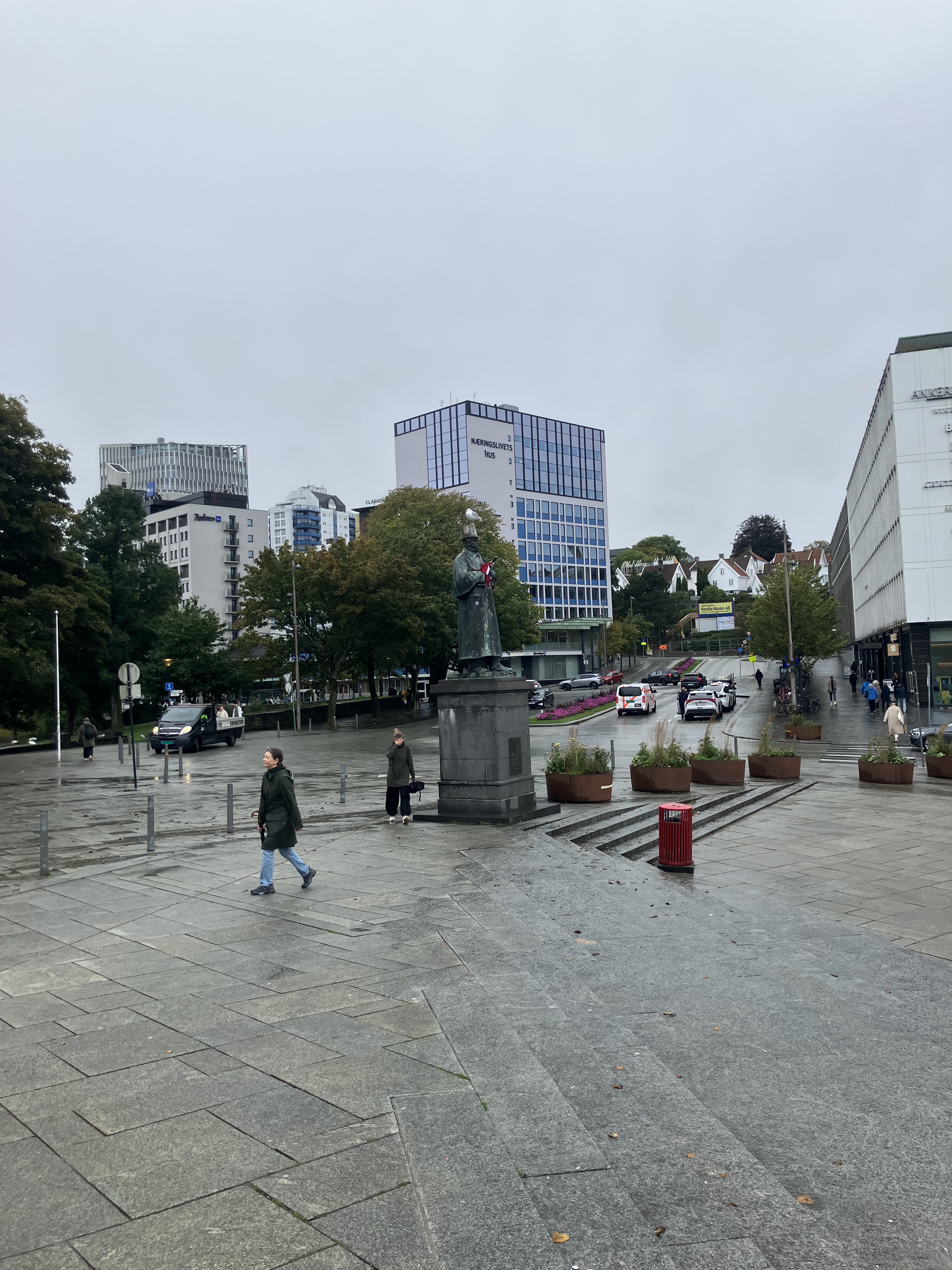
We took a relatively long bus drive that required two ferries from Bergen to Stavanger. I’m having a difficult time going to bed, even with the jet lag mostly dissipated, so I often drink quite a bit of coffee each morning. Like in Washington state, every transit station has an ample supply of coffee products. The coffee is decent for the most part, maybe not as robust or gourmet as France or Italy, but coupled with a nice cinnamon bun, it helps brightens the morning drudgery.
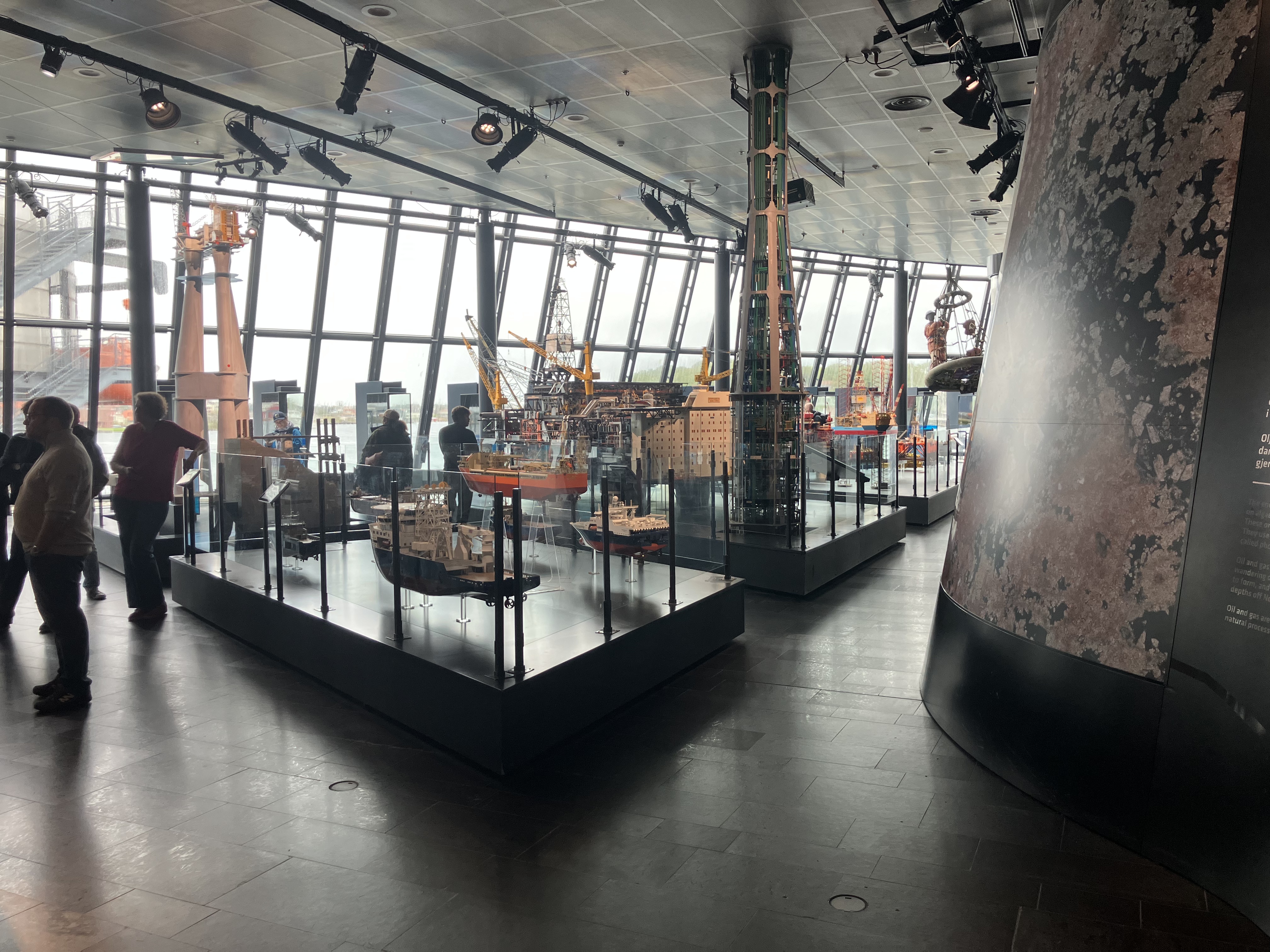
We only stayed a night in Stavanger, but we managed to go to its most unique museum, the Petroleum museum. Stavanger is the gateway to Norway’s wealth, the oil discovered in the 60s that would catapult Norway to being one of the wealthiest in the world. There is a dynamic consciousness about the ethics of oil production in Norway, despite it celebrating its infrastructure and technological progress coinciding with its black gold. The film that summarized industry wasted no time in introducing its controversy, as the film was both was both a documentary and a short drama. The drama side of the film could have been nominated for best short film at the Oscars. The protagonist that narrated the history of oil in Norway after he stated “I am an oil baby,” since his father worked the gigantic rigs that gave Norway’s it’s serendipitous fortune was reconciling with his father after not speaking for 10 years with his father. The protagonist drove to his father’s cabin in a previously gifted but rejected Ford Mustang — the protagonist noted he drove a Tesla — to his father’s cabin out in the fjord country not unlike what we had visited the day previous. The son clearly had his reservations and conflicts with his father’s points of view. It’s also possible that the father was dealing with some post-traumatic stress disorder and/or survivor’s guilt as it was alluded that he had survived the major accident in 1980 on the Alexander L. Kielland platform in the North Sea which killed 123 people.
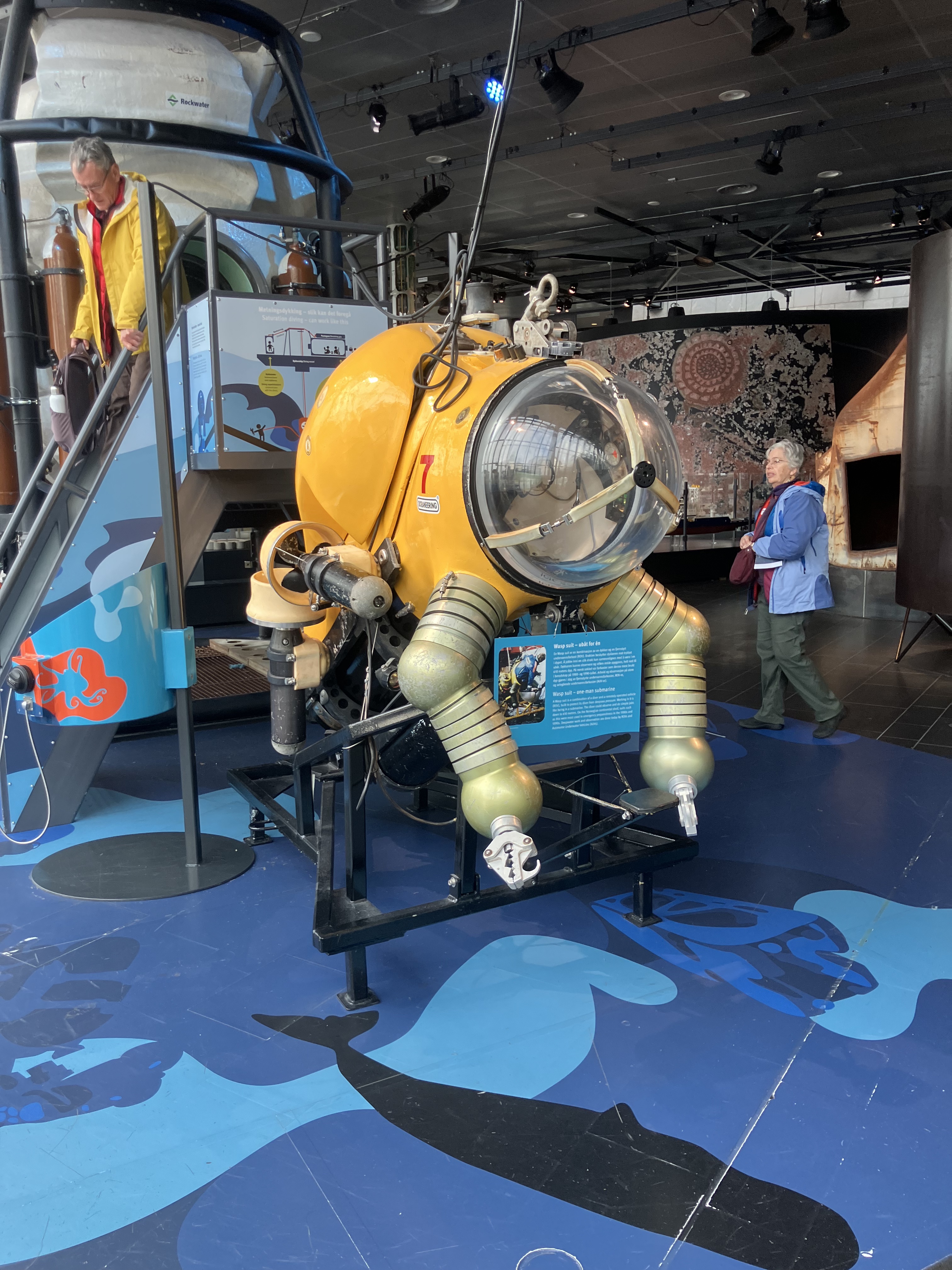
Most of the museum consists of large models of ships, rigs, and whatnot and like going to an aircraft museum, the experience to climb abord the submarine work vessels under the rigs. There’s also an entire section of the museum on climate change. In sum, I gathered the sense that the Norwegians understand that the source of the wealth that they thrive on isn’t without its controversy. One key difference between Norway’s oil production history compared to, say, Saudi Arabia, is the power that the labor unions have in policy implementation, overriding the government at times, as safety equipment and infrastructure are top of the line, and I’m sure the trade is still lucrative per worker, as it provides Norway with very lucrative pensions as I later learned from conversations with locals.
I have not been to many engineering museums in the US, but the contrast in theme may be apparent. I’m not positive how much emphasis on climate change is present in, say, a oil technology museum in Houston, Texas, but I doubt it’s as salient in the US frankly.
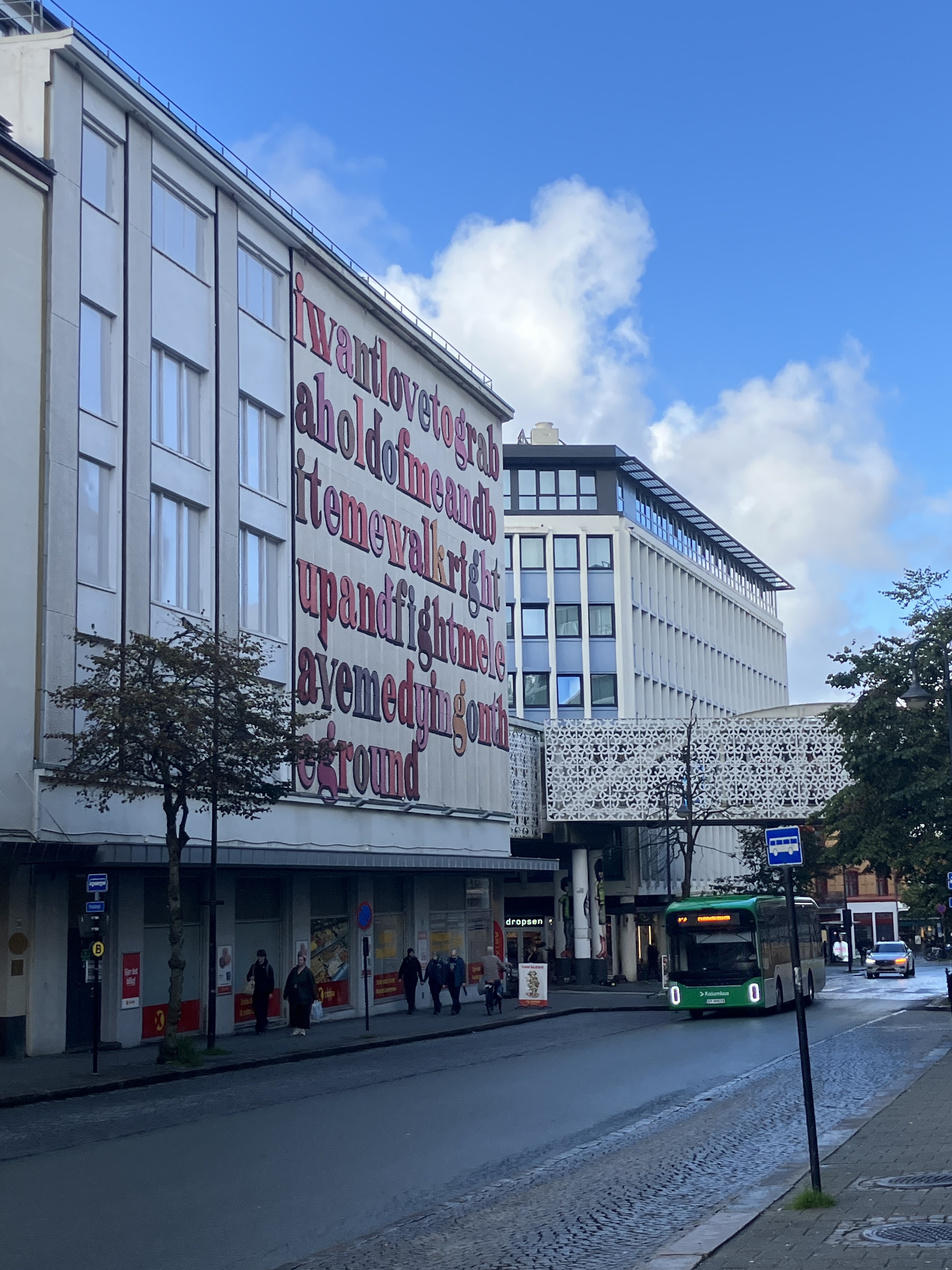
We stayed at the first hotel of our voyage in Stavanger. It was a nice change of pace from hostels and VRBOs, though I realize I’ll need to be extra-conscientious about costs, especially as I depart for Germany when my parents fly out of Copenhagen in a few days.
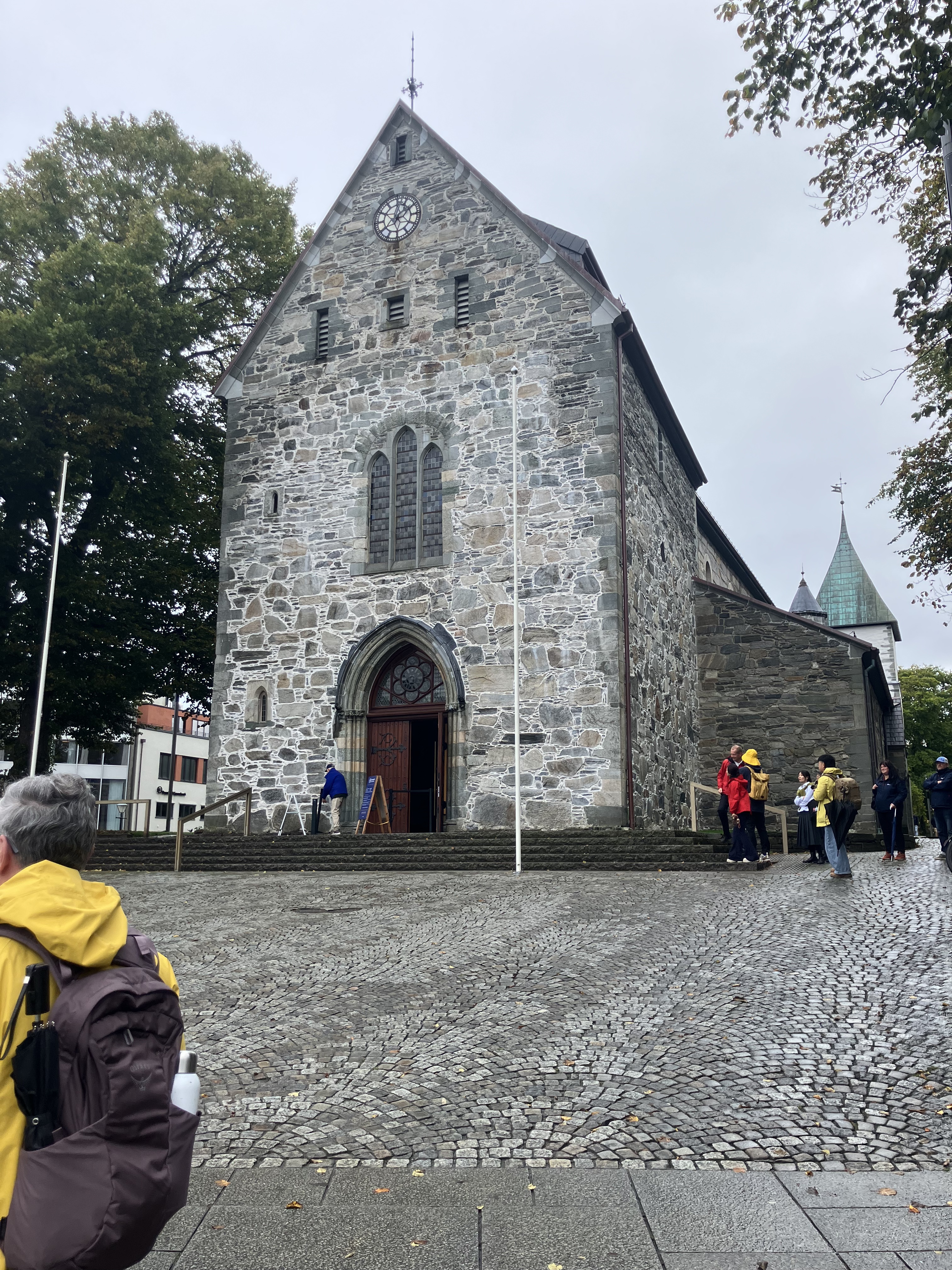
I also considered my training regimen for my upcoming marathon, and I decided that if I was going to only spend one night in Stavanger, I may as well go for a run, now that the constant rain we had experienced this day had finally taken a break. I went for a six-mile or approx. 10-kilomter run back and forth from east to west from where our hotel was. Near the hotel is one of Norway’s oldest cathedrals. There were actually several noteworthy cathedrals in Stavanger which I managed to snap photos of, as well as the large ships in the bay on my run. Also present was the opera house near the harbor and to the west the old town or historical section of the city. I only stopped in this part of town briefly on my run. I honestly felt a little out of place in my running garb and camelback pack for the other tourists. It does appear, however old these structures are, that people still live in these older-styled homes, evidenced by the modern household amenities in the structures.
We ate dinner at the hotel restaurant, another gourmet meal, despite my vow to keep loans I’d have to eventually pay my parents light for footing the bill. Nevertheless, I ate some good pork tenderloin with seasonal roasted vegetables, a good hearty meal after a long day of traveling, running, and writing.
I wrote this entry while traveling by bus, first to Kristiansand, and then transferring to one night in Olso. I met a young Norwegian Theology student in her early twenties in the seat ahead of me near the driver. While writing I specifically asked what the cheer I heard during my 10-kilometer run for Greta during the Oslo Marathon events meant, “Jei A” – like “High yah” to which she answered that it was a little like an American saying “Go!” or a Latin saying “Olay!” during a race. She claimed she wasn’t a sports fan, but she recalled similar cheers for ski racing. She started asking me and my parents about ourselves and our trip which helped the time pass, as she seemed genuinely curious about these American strangers, the only foreigners on the bus. While I can only imagine why, after about 30 minutes of chatting, the bus driver decided to request that we not converse so much in the front, as he claimed it was a distraction and a safety hazard, so my parents and I abided without arguing. Perhaps the driver became irritated with translating to much English than his Norwegian brain could handle, as he continued to talk with the Norwegian girl in their native language with ease, ironically. This ride to Kristiansand was also the first time a bus driver gave a warning to some passengers in the back who were under the influence.
I’ve experienced even less comfortable external scenarios play out on Greyhound buses in the US. Still, we were a little disappointed and eager to get to Oslo, because we originally had planned to go by train, planned months in advance, but apparently track construction had halted the routes twice. I had bought a first-class ticket until the second train ride had cancelled, so I’ll need to go through the arduous refund process after transferring the tickets to take the bus.
We later learned that strikes have started delaying trains due to a recent merger of the transit company not providing the previous benefits to workers. This is something to keep in mind for any European travel, as a final word of advice for first-timers.
 In the footsteps of Bill and Sam