Our third day of Oslo was one of the rare days where my father and mother would separate into different activities, as she would go to the ballet and my father and I would venture towards the ski Museum at Holmenkollen. Despite how that may sound initially, my father and I are not disinterested in ballet, as I’m sure the acoustics in that opera house were fantastic, nor is my mother uninterested in Nordic skiing, as she grew up skiing in Michigan. My father is nevertheless an avid skier, having grown up in Northern Idaho, and after touring Holmenkollen, so it’s safe to say that his attention was fully invested in this location; what many skiers their Mecca.
My father and I took the bus for the first time in Oslo towards the ski museum and tower. While not unlike American city buses I’ve taken, except frankly for the cleanliness, I don’t believe I’ve traveled to a major city with such close proximities to a ski hill or as in the case in this season, mountain biking. On that note, I wouldn’t be surprised if this temperature for September is abnormal, due to climate change.
We saw several mountain bikers, mostly high school- and middle school-age taking advantage of their weekend. Naturally these buses are very accommodating for carrying multiple bicycles in the buses’ interior.
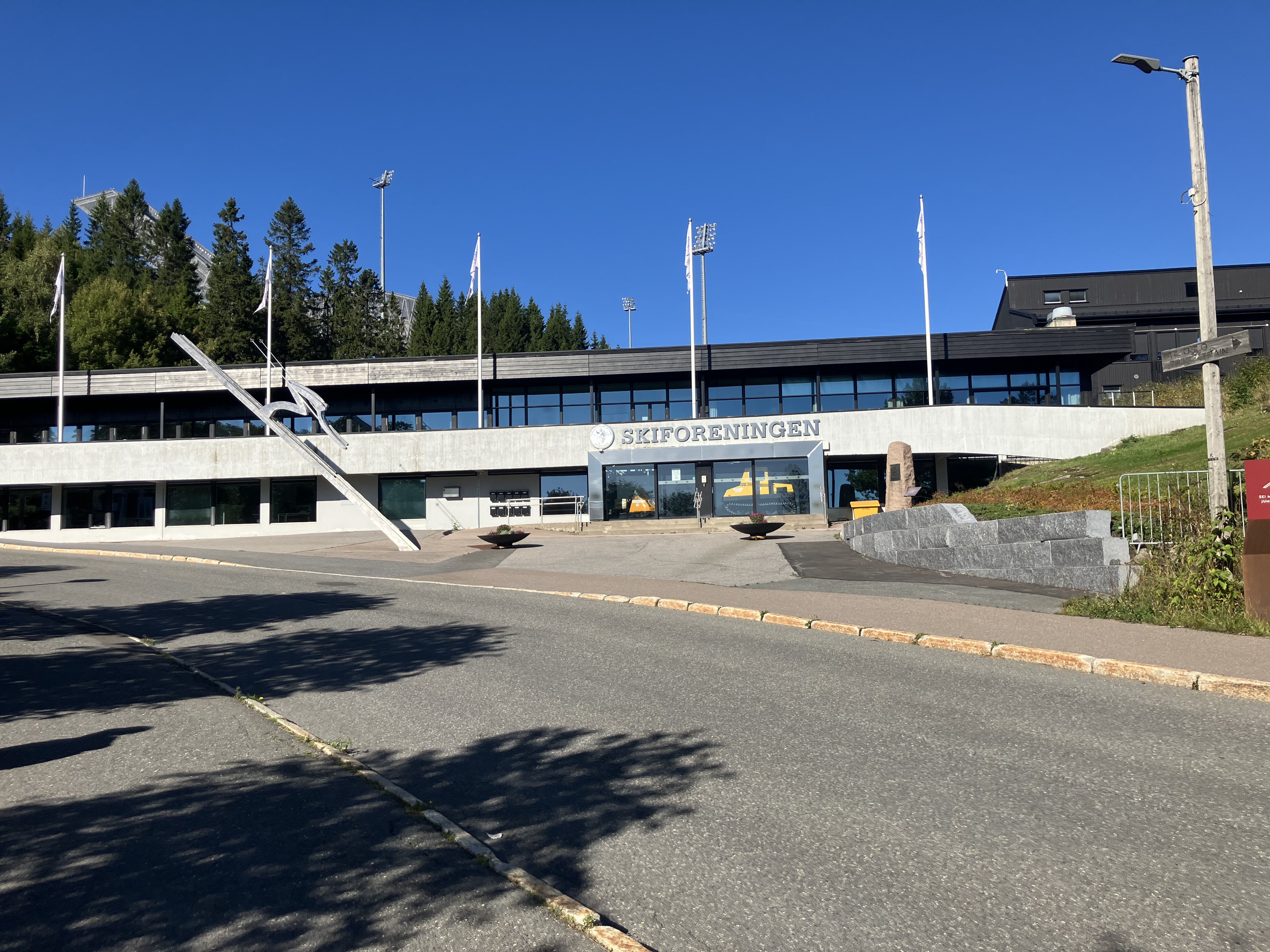
After hiking towards the ski jump, we arrived at this location, which makes me wonder if people use skis during the winter. While the Holmenkollen is a sports museum, it’s no doubt a cultural museum as well as the significance of skiing in Norway is paramount.
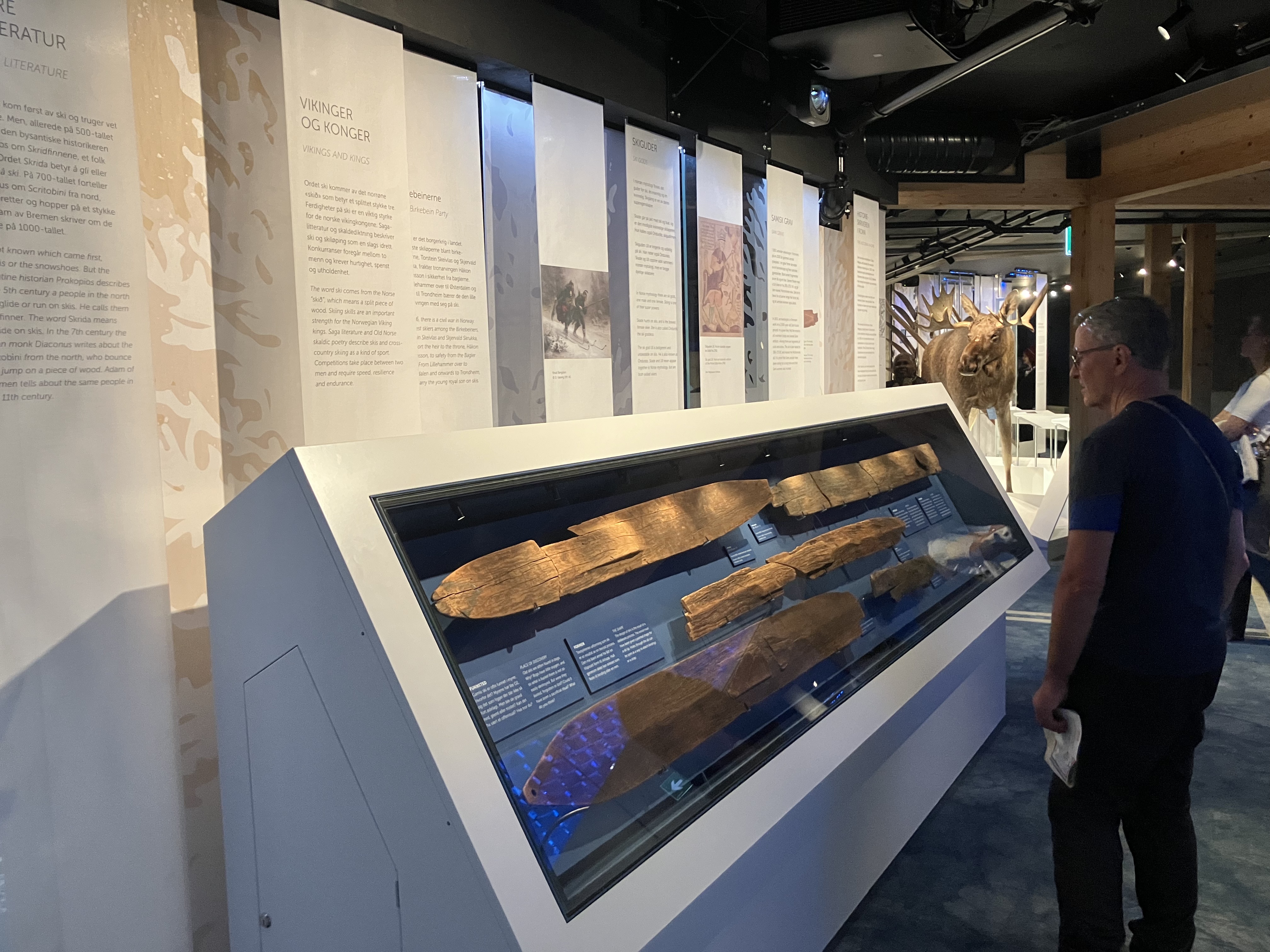
Skiing to Norwegians is like Baseball is to Americans; perhaps not as popular today as Soccer or Basketball, but it holds an undeniable cultural legacy. Archeological remains of ancient skis, alpine solider artifacts that led to the biathlon, photos of the Norwegian Royals flaunting their ski trips, and other displays showcased the historical significance of skiing in Nordic life.
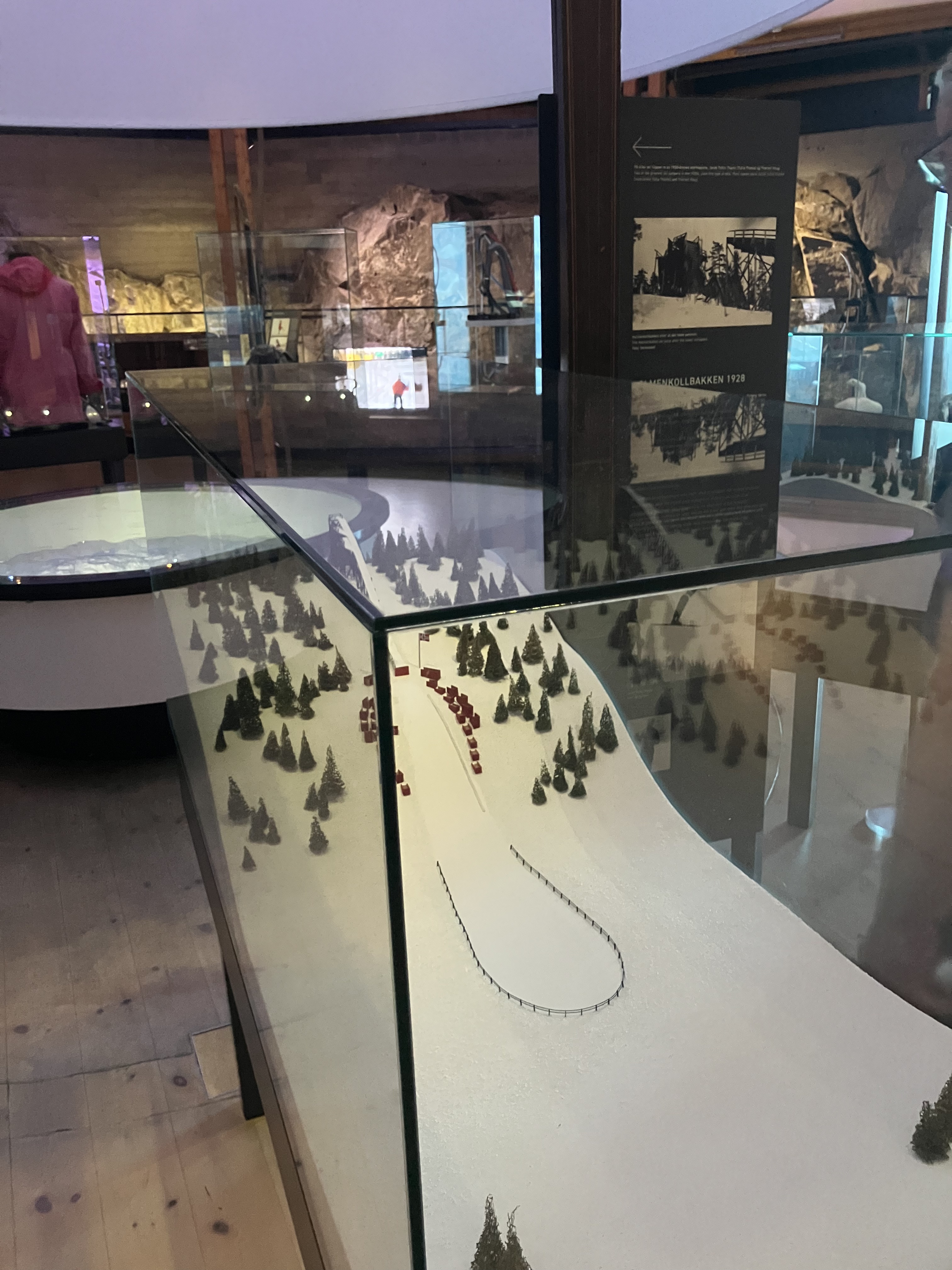
According to the journal entries, Bill had traveled to this ski jump and climbed it, which isn’t possible now with its updated structure, but to get a sense of what the ski jump which has been used in many Winter Olympics, this replica of the ski jump from 1928 in the image above should suffice. My grandfather and Bill were avid skiers, being from Michigan and New Hampshire.
While skiing itself isn’t as of interest to me compared to my father, I nonetheless enjoyed some of the history shared at this museum, particularly the story of Birkebeiner warriors Skjevla and Skjervald Skrukka and their ski escort/rescue of infant prince Haakon Haakonsson to secure the Norwegian throne in 1206.
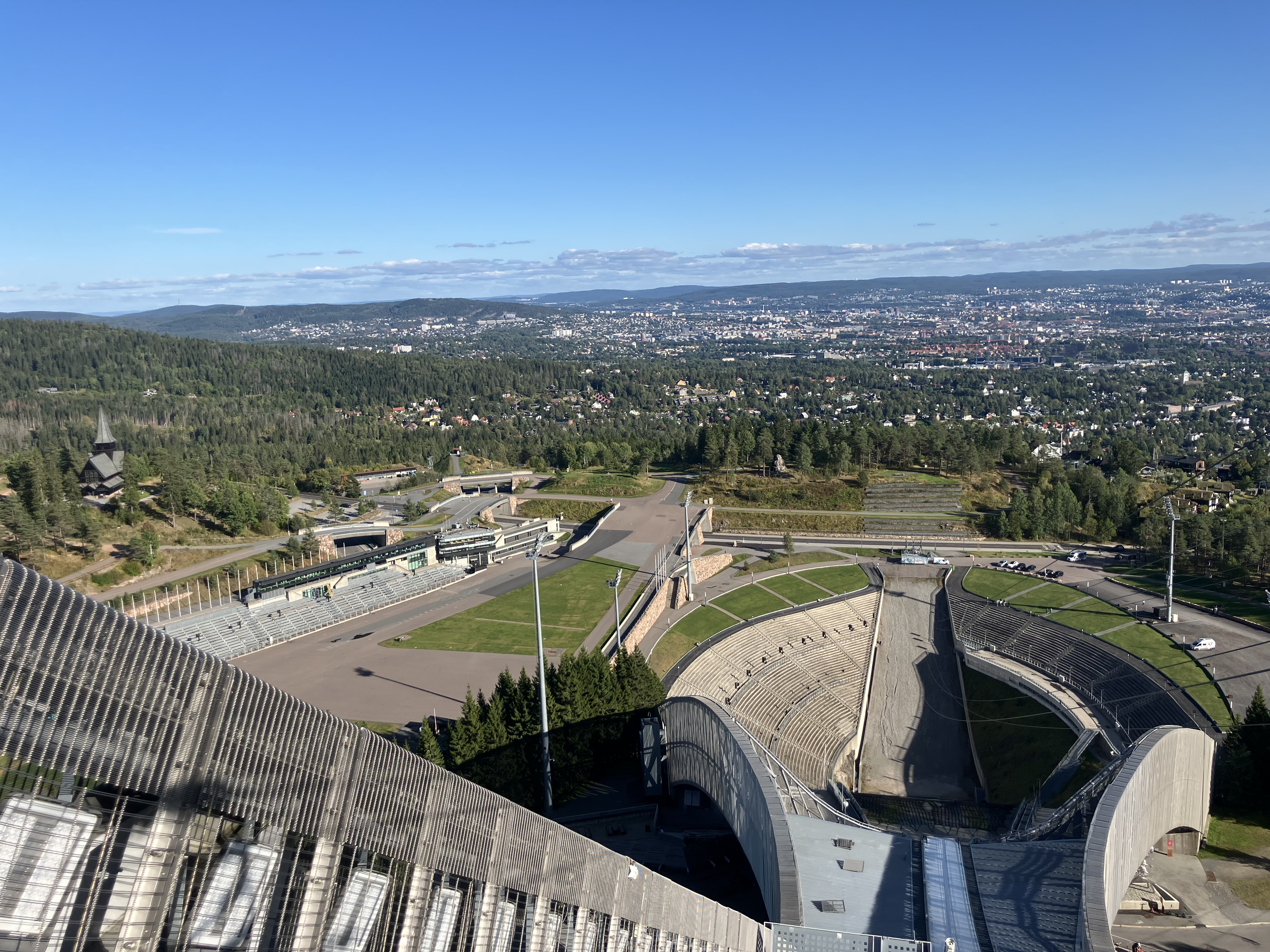
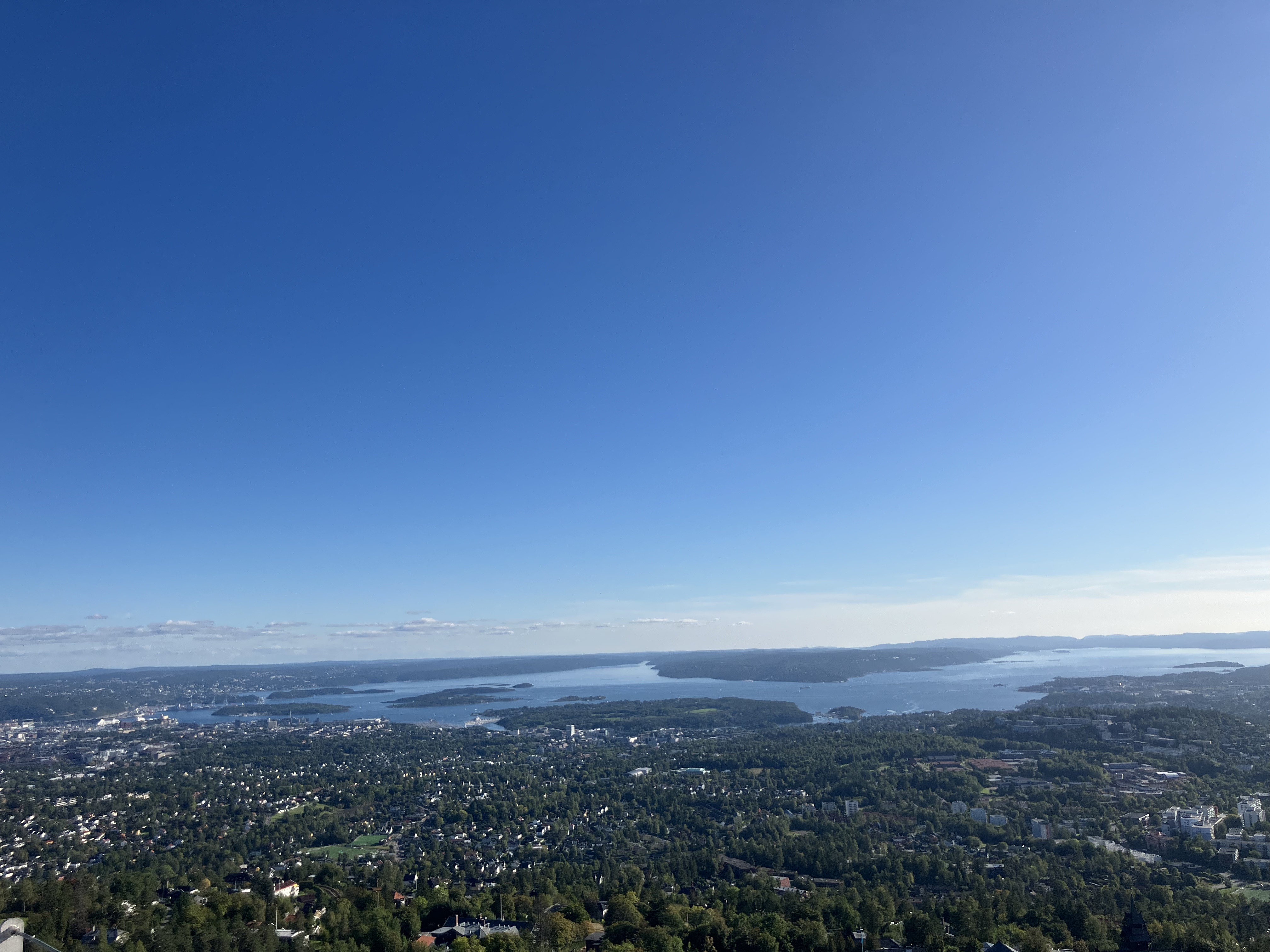
The top of the ski jump includes a good view of Oslo. It also highlights that despite Oslo being the largest/most populated city in the country, this is a sparsely populated nation relative to most of Europe, and that what’s not covered in cityscape is a thick green forest in summer, and I’m sure a white-capped wilderness in winter. If Stockholm has a population comparable to Seattle or Denver, Oslo has a population comparable to Minneapolis or Omaha, dwarfed by most European capitals/largest cities. I’m sure when I reach the vastly larger cities of Hamburg and Berlin, I’ll see a stark contrast.
There was an option to take a zip line down the ski jump for approximately $80 U.S. It was tempting but not within my budget. By the time we had wrapped up our tour of the museum, my mother had texted us indicating there was an intermission for Romeo and Juliet, which was the perfect cue to return downtown.
After we had reunited at the opera house, my mother felt the need to go out to eat, and we decided on an Italian restaurant. Outside of the restaurant two expensive Italian sports cars, one a Ferrari and the other a Lambourgini, if I recall correctly, were driven outside the restaurant’s patio, where camera crews did photoshoots of models, probably advertising some luxury clothing brand.
The following day was more tourism to wrap up our wish lists for Oslo. My mother had been to the Vigeland sculpture gardens on her last trip to Norway 39 years ago, and I can see why she wanted to revisit them.
Another fair warning, these following photos will contain nudity in artwork. I will point out that Oslo has a variety of nude sculptures and artwork throughout the city, though I opine not erotic because of no depictions of intercourse and/or sexuality. I surmise that these sculptures, such as in this sculpture gardens are effectively to show the humanist spirit of Norway, as each statute showcases various emotions, actions, and reactions of regular humans’ behavior. To speculate further, I would venture that the artists intended to showcase the non-exclusivity of humans with other wildlife in its relationship with nature, a stark contrast in the narrative in much Christian artwork often found in Europe which juxtaposes Mankind’s superiority over the other species and inferiority to the divine.
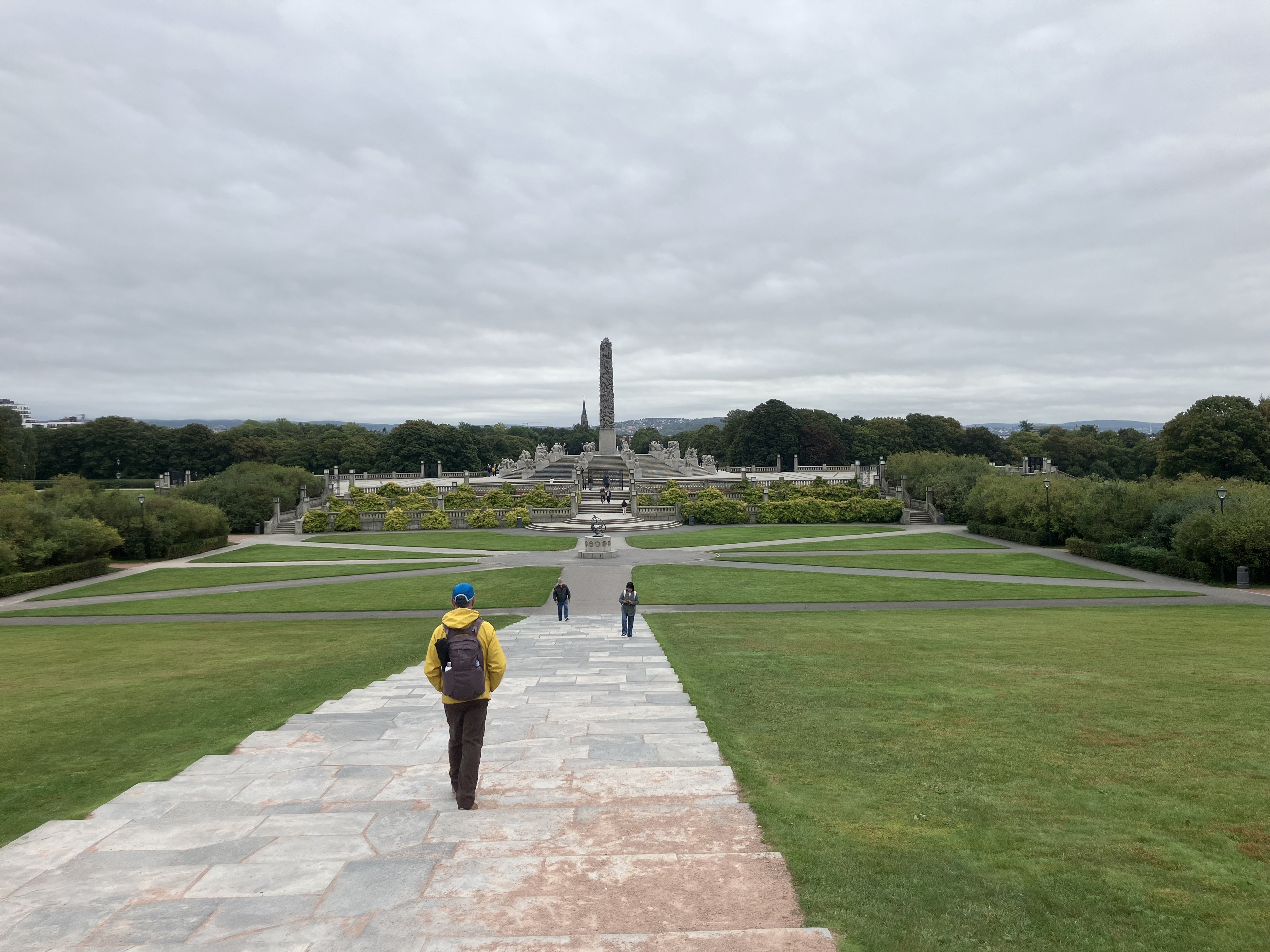
One observation I’ve made about Scandinavia so far is the lack of icons from Norse mythology, as I’ve discovered no public statues of Odin, Freja, Thor, etc., as these roots of Scandinavia’s pagan past appear to be reserved to the museums. I’m sure there are historical reasons, since the rise of Christianity in Europe often involved some cultural integration but nonetheless a renouncement of other gods and deities. On the other hand, though I haven’t been to Italy or Greece, in contrast, Christianity’s replacement of pagan worship hasn’t removed the Greek/Roman mythos from that public artwork, so perhaps there’s something in the history I’m missing.
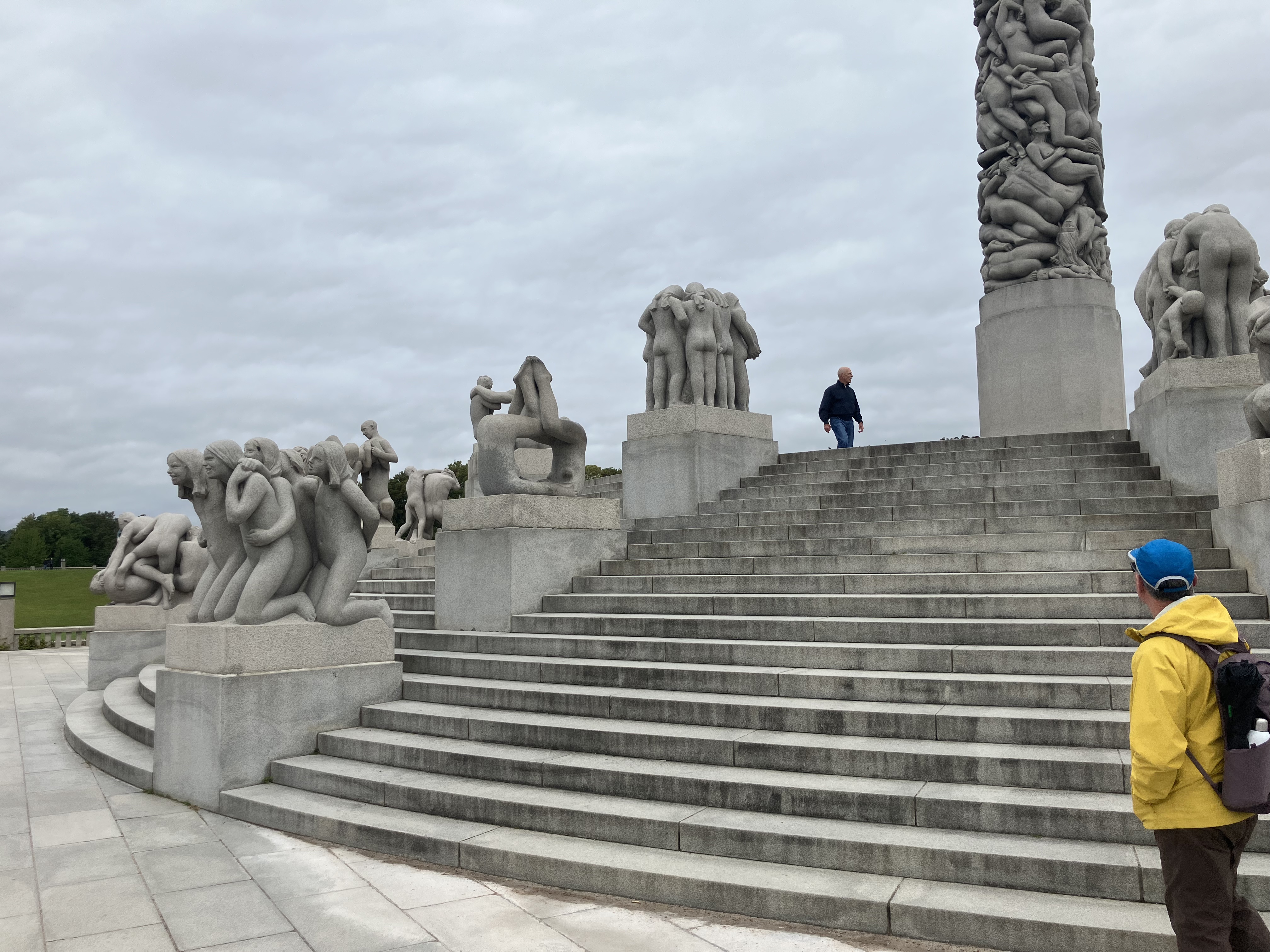
After touring the sculpture gardens, we decided to move towards the museum district of Oslo on the Bygdøy peninsula. We decided to visit the Fram museum first.
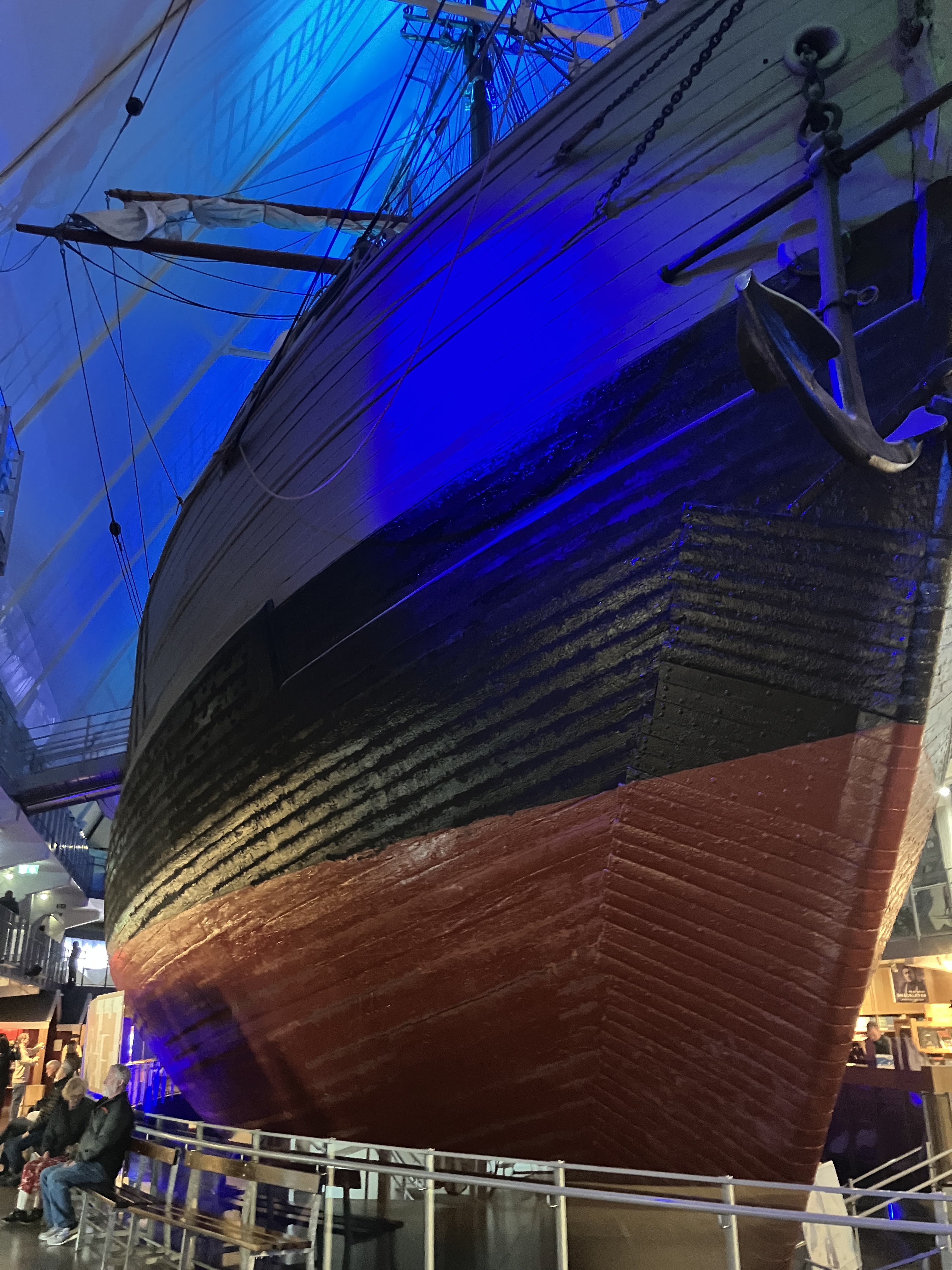
I hope you’re not tired of museums with ships/boats, but like the Vassa this particular ship is worth the visit.
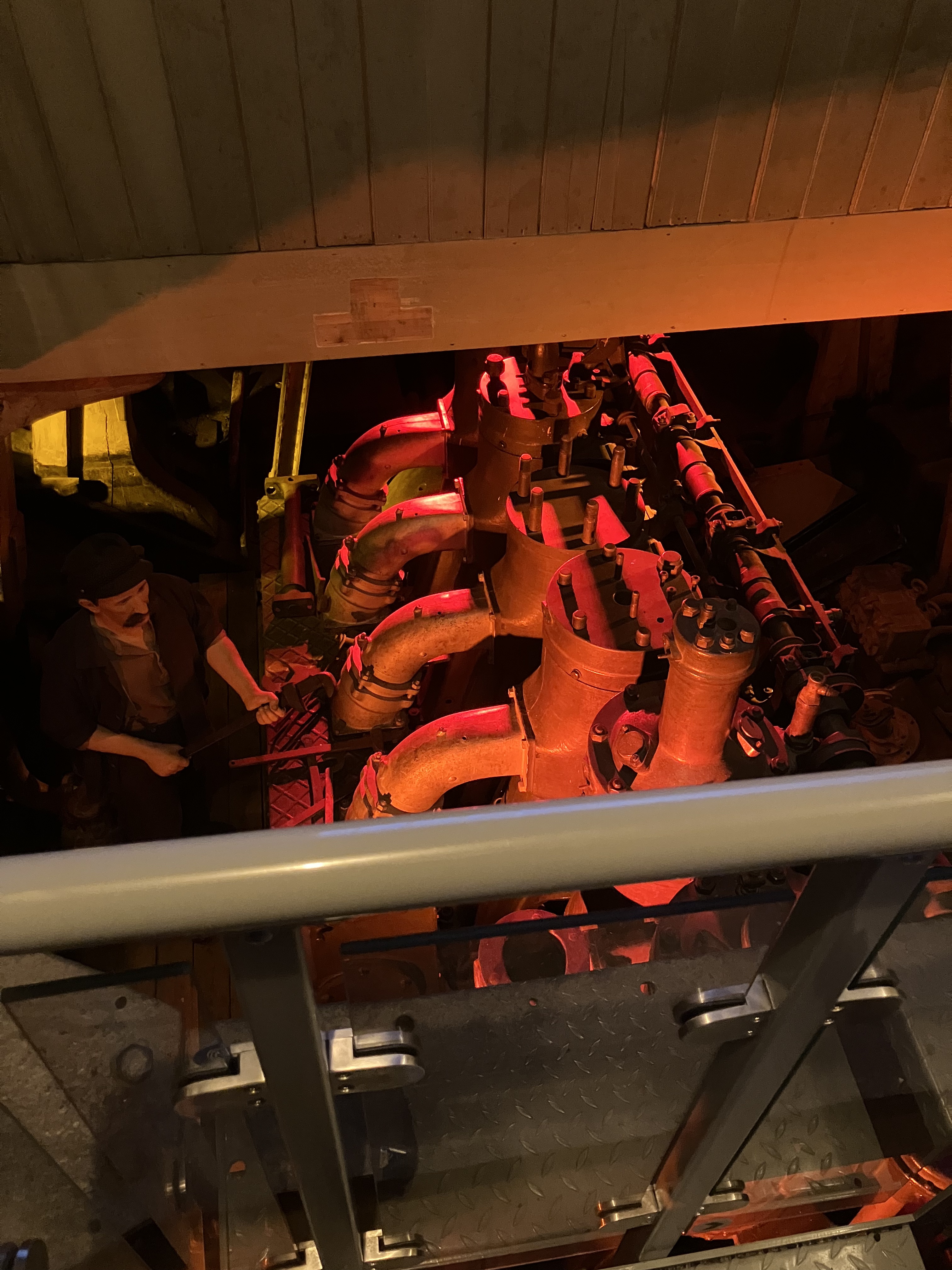
While not as epic in scale as the Vassa, the Fram allows a more immersive experience as one can go on and below deck. Norway’s cultural pride in Arctic and Antarctic exploration is showcased here similarly to America and The Former Soviet Union’s space exploration accomplishments. One of the two prominent patrons/explorers memorialized at this exhibit, Fritdtjob Nansen, who reminds me of America’s John Glenn, with his role as a statesman and explorer. I have made a note to look up a biography of him reading during times of long transit.
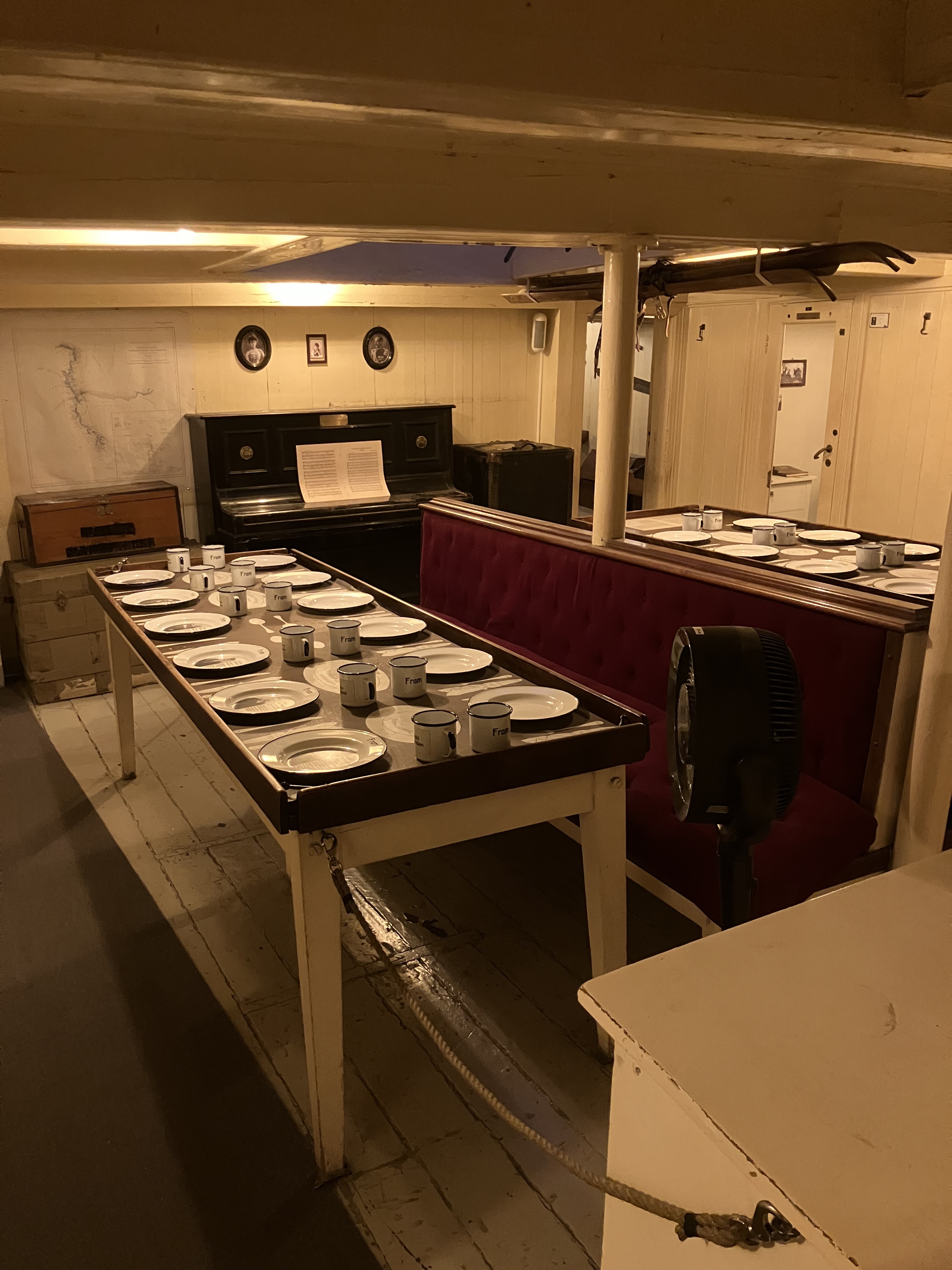
I admit that the intrepid and rigorous nature of an arctic expedition and to be limited to a vessel such as the Fram will be needed more than ever if humanity truly desires to expand civilization beyond earth in our solar system or perhaps further. The daunting experience of spending years with the same people with sparse resources, space, and choices, not to mention the dire need to react to and solve dire problems and emergencies requires grit I have yet to find in most individuals. The only silver lining is that future space exploration will hopefully have more women which these polar voyages appeared to have had none.
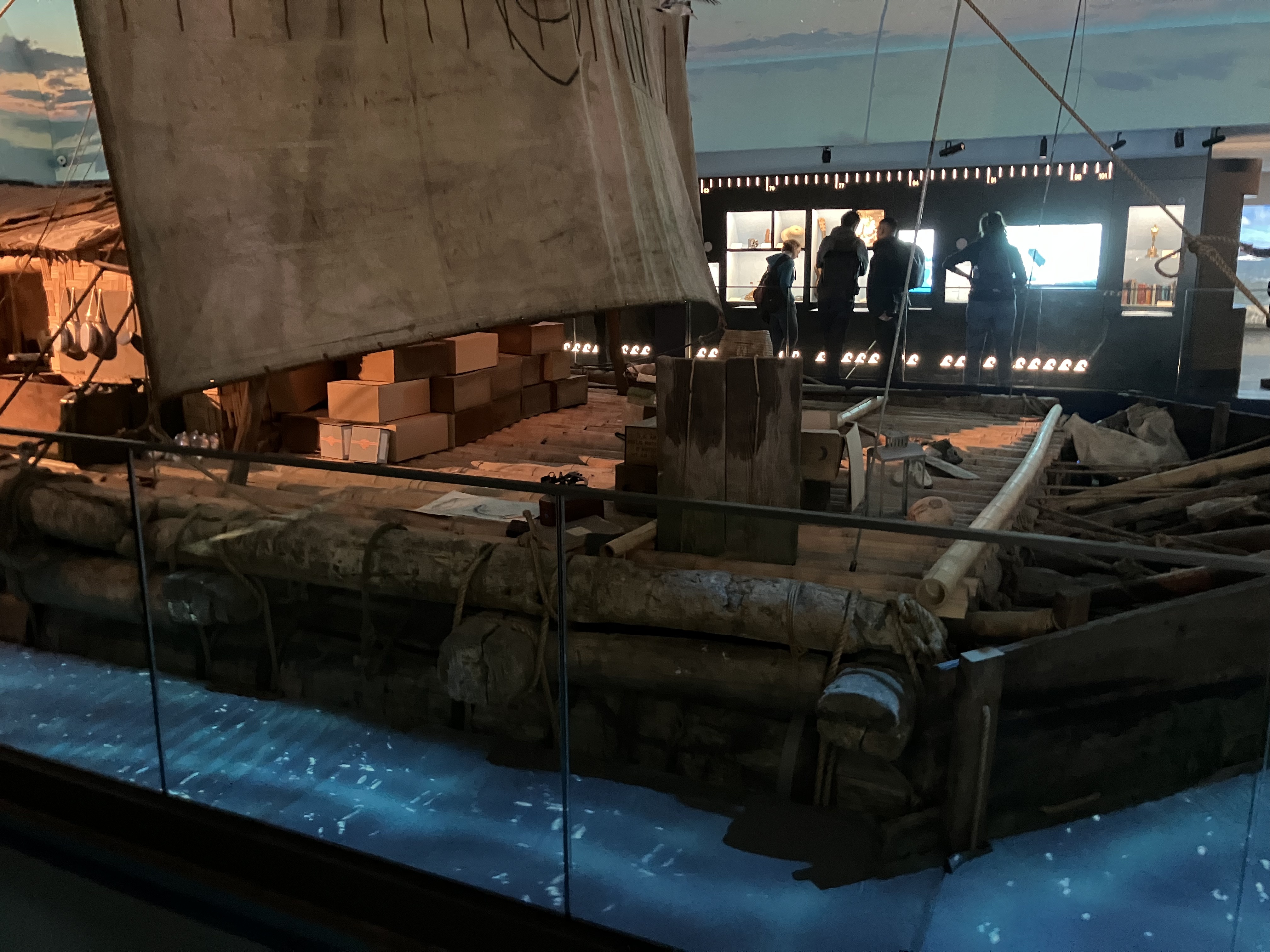
After the Fram exhibit, my parents decided to rest while watching the bay and the ships outside the museum, but since I had the energy and curiosity, I decided to visit the Kon-Tiki museum, a tribute mostly to another one of Norway’s heroes, Thor Heyerdahl. I had read and watched TV and movies about the Kon-Tiki voyage, but I had not been informed about the other recreation voyages, such as the Ra I and Ra II over the Atlantic using an ancient Egyptian Reed Boat.
Also unknown to me at the time was Heyerdahl’s role as a diplomat to the peoples of the Pacific. For example, on Easter Island from 1955-1956, he became one of the first foreigner to be granted access to ancestral caves which part of the exhibit replicated.
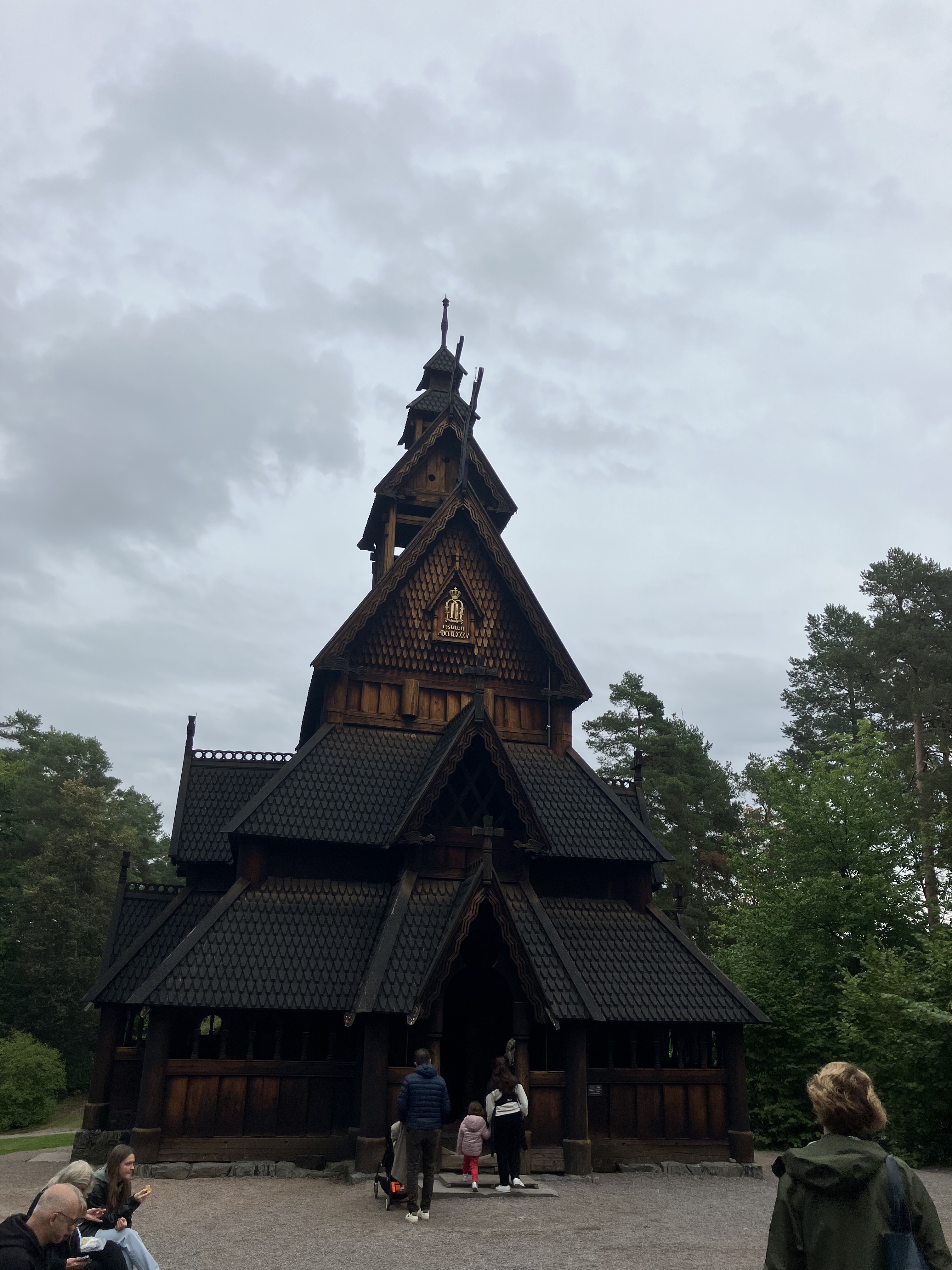
As the final part of our museum tour, we finally crossed another destination off the list which Sam and Bill visited, the Norwegian folk museum. Like any recreation museum, one can tour a farm estate that includes museum guides dressed in period-specific garb. The main attraction highlighted in Bill’s journal entries was Norway’s oldest standing church, the Urnes Stave Church built around 1130 AD.
We also stopped into a large room with a banquet hall with a large public table. I asked the guide if this was a communal room, and she answered it was almost the opposite as it was a means for rich members of the community to showcase their wealth, which was mostly made from timber production, probably much of it to England to literally fuel their industrial revolution.
As we talked, my mother came into the room to join in the conversation, mentioning that I was writing about my grandfather and Bill’s trip. When we departed, the guide mentioned, “Good luck writing your book,” to which I didn’t bother to correct the fact that I’m working on a travel blog, but I suppose writing a book about this isn’t a foregone conclusion.
Returning downtown, I decided to go for a run around Oslo to keep up with my training regimen to prepare for the Spokane Marathon which occurs shortly after my return to the U.S. Unlike in Stockholm, where I kept to the coastline of the Island we stayed, I traveled north past where I picked up my bib and a little beyond, finding several runner-friendly trails, despite the constant presence of pedestrians and cyclists. One will notice way more bicycle commuters in Oslo than even Portland, OR, to keep vigilant of while taking a run in Oslo. I imagine basic bicycle mechanics are a must as a resident in a Scandinavian country, as there’s probably not enough mechanics to keep up. One may also notice, as with Stockholm, the lack of houses in Oslo’s downtown, even if you move into the residential districts that I ran towards, mostly large apartment complexes. In a way, this run was a bird’s eye view of the day-in-the-life of a Norwegian as people were also started to commute from work and school during my run, and I don’t believe anyone suspected I was a tourist due to the abundance of runners as well.
I had planned to try a sauna after my run as there are several spas on and beside the wharfs surrounding the opera house and the Munch museum. Sadly, I discovered that I came at a time when many Norwegians make reservations for such an activity after a good day’s work, naturally. I thought this could be a good experience to meet some locals, but perhaps that will have to wait until Bergen and/or Stavanger.
 In the footsteps of Bill and Sam